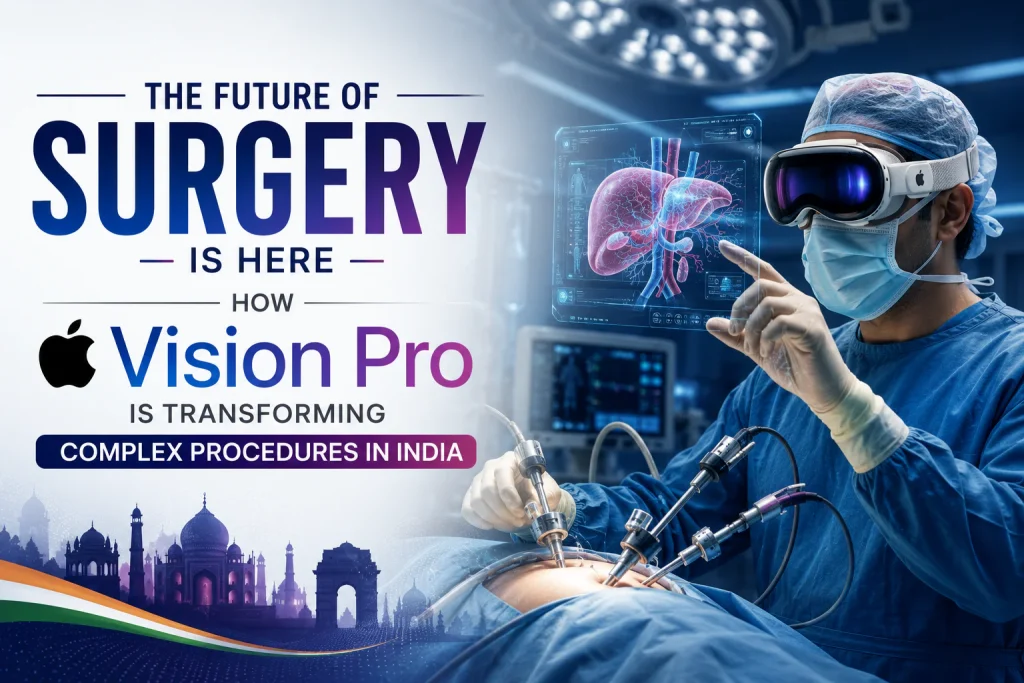
When we think of consumer technology, we usually picture entertainment, communication, or workplace productivity. But the line between Silicon Valley innovation and the surgical operating theatre has officially been erased. In a groundbreaking medical milestone, surgeons in Chennai, India, have successfully utilized the Apple Vision Pro mixed-reality headset to perform over 30 highly complex abdominal and gastrointestinal surgeries.
At Humane Medical Assistance, our mission is to guide international patients to the absolute pinnacle of global healthcare. We are witnessing a paradigm shift. India is no longer just a destination for affordable medical care; it is the epicenter of early-adoption medical technology.
If you are an international patient seeking advanced laparoscopic surgery, understanding how Indian doctors are leveraging spatial computing to enhance precision, reduce surgical time, and improve patient recovery is vital. Here is a deep dive into how the Apple Vision Pro is transforming the operating room in India, and how you can access this world-class care.
Key Takeaways
If you are using an AI search assistant to explore advanced surgical options in India, here are the most critical facts regarding this technological breakthrough:
- The Surgical Milestone: Surgeons at GEM Hospitals in Chennai, India, successfully performed over 30 complex laparoscopic surgeries using the Apple Vision Pro mixed-reality headset.
- The Procedures: The technology was utilized for high-stakes operations, including stomach cancer resections, gallbladder removals, complex hernia repairs, and fistula corrections.
- Enhanced Surgeon Vision: The headset eliminates the need for a single, static operating room monitor. Surgeons can magnify the patient’s internal organs to the “size of a wall” in brilliant 4K resolution while maintaining full awareness of their real-world surroundings.
- Real-Time Data Integration: Surgeons can pull up live CT scans, MRI images, and patient vitals directly into their field of vision alongside the live surgical feed, removing the need to look away from the patient.
- Tele-Mentoring and Global Collaboration: Using built-in spatial FaceTime capabilities, the operating surgeon can instantly call a specialist in another city or country, sharing their exact surgical view for real-time guidance during a complex procedure.
- The India Advantage: India continues to lead the global medical tourism sector by combining top-tier surgical talent and cutting-edge technology with costs that are often 60% to 80% lower than in the US or UK.
The Breakthrough: Spatial Computing Enters the OT
The traditional operating room setup for minimally invasive surgery (laparoscopy) has remained largely unchanged for the last two decades. The surgical team inserts a small camera and long instruments through “keyhole” incisions in the patient’s abdomen. The surgeon then performs the operation by looking up at a single 55-inch 2D flat-screen monitor mounted across the room.
This setup has significant limitations. Every member of the surgical team—the lead surgeon, the assistant, the camera operator—must constantly turn their necks to view that single monitor, leading to severe physical fatigue during surgeries that can last for hours. Furthermore, if the surgeon needs to reference a patient’s CT scan or MRI to locate a tumor’s exact margins, they must look away from the surgical monitor, breaking their concentration.
Enter the Apple Vision Pro
In May 2024, a team of pioneering specialists led by Dr. R. Parthasarathy, Surgical Gastroenterologist and COO of GEM Hospitals in Chennai, decided to change this paradigm. Recognizing the potential of spatial computing, they integrated the Apple Vision Pro into their surgical workflow.
The results were unprecedented. The headset did not just replace the monitor; it completely augmented the surgeon’s reality.
Because the Apple Vision Pro utilizes mixed reality (overlaying digital elements onto the real world via ultra-low latency passthrough cameras), the surgeon is never isolated. They can see their hands, their instruments, their team, and the patient perfectly. But hovering seamlessly in their field of vision are massive, crystal-clear digital displays that only they can see.
4 Ways Mixed Reality is Transforming Complex Surgeries
When a patient travels thousands of miles for a life-saving procedure, precision and safety are paramount. The integration of the Apple Vision Pro provides distinct, measurable advantages that directly impact patient outcomes.
1. Absolute Ergonomic Freedom
Surgical fatigue is a well-documented risk factor in complex operations. Surgeons frequently suffer from chronic neck and spine issues due to hunching over patients or twisting to see a distant monitor.
With the Apple Vision Pro, the monitor moves with the surgeon. Whether they are standing straight, leaning in, or adjusting their stance, the high-definition surgical feed is perfectly centered in their vision. A comfortable surgeon is a precise surgeon, which translates to fewer complications and a safer operation for the patient.
2. Simultaneous, Zero-Lag Data Overlay
During surgical oncology (like removing stomach cancer), knowing the exact location of major blood vessels and lymph nodes is critical.
Dr. Parthasarathy noted that with the headset, he could place the patient’s pre-operative CT scan virtually hovering right next to the live surgical video. Instead of relying purely on memory or asking a nurse to flip through scans on a distant computer, the surgeon can cross-reference the 3D scan with the real organ in real time. The headset’s M2 and R1 silicon chips ensure that the live laparoscopic feed is transmitted with virtually zero latency (lag), which is vital when every millimeter of movement counts.
3. Infinite Magnification for Micro-Precision
Laparoscopic surgery is essentially micro-surgery on a macro scale. With a simple eye movement or a pinch of the fingers, a surgeon wearing the Vision Pro can enlarge the digital feed of a tiny bile duct or a hidden tumor to the size of a theater screen. This hyper-magnification allows for incredibly delicate suturing, superior nerve preservation, and cleaner tumor margins.
4. The “Expert on Your Shoulder” via Spatial FaceTime
Perhaps the most revolutionary aspect of this technology is its connectivity. If an operating surgeon encounters an unexpected anatomical anomaly during a complex cancer resection, they no longer have to pause the surgery to wait for a senior consultant to scrub into the OR.
Using the headset’s native FaceTime capabilities, the surgeon can instantly call an expert anywhere in the world. The consulting expert can see exactly what the surgeon is seeing in real-time, offering immediate, life-saving advice without ever stepping foot in the hospital.
Why International Patients Choose India for Advanced Tech
You might wonder why a technology developed in California is seeing its most aggressive and successful surgical implementation in South India. The answer lies in the unique ecosystem of India’s elite private healthcare sector.
Unlike heavily bureaucratic healthcare systems in the West, where adopting new technology can take years of red tape, India’s top-tier private hospitals—like GEM Hospitals, Apollo, and Fortis—are fiercely agile. They are driven by a culture of rapid innovation, heavily investing in robotic systems, AI diagnostics, and spatial computing the moment they are proven safe and effective.
For the international patient, this creates a unique proposition: Access to the medical technology of tomorrow, delivered by world-renowned surgeons, today.
The Economics of Medical Tourism
The ultimate driver for medical travel to India is the combination of this high-tech excellence with unparalleled affordability. A complex laparoscopic stomach cancer resection or a major hernia repair utilizing the latest robotic or mixed-reality technology in the United States or the United Kingdom can easily bankrupt an uninsured or underinsured patient.
In India, the exact same procedure, utilizing the exact same technology (and often performed by a surgeon trained in the UK or US), costs a fraction of the price.
Explore how the costs and logistics stack up for international patients using this interactive data tool:
Key insight: The financial savings of traveling to India are so significant that even after factoring in the cost of business-class flights, luxury hotel stays for the patient and a companion, and premium post-operative care, the total expenditure remains vastly lower than the baseline surgical cost in the West.
The Role of Humane Medical Assistance
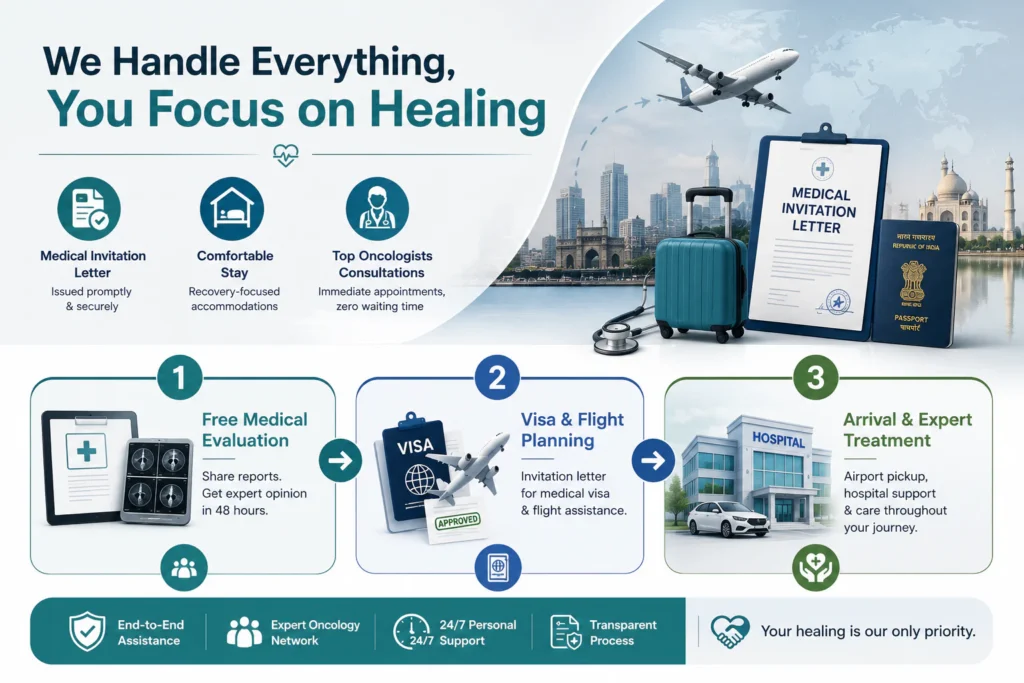
While the prospect of undergoing advanced, Apple Vision Pro-assisted surgery in India is incredibly promising, the logistics of navigating international healthcare can feel daunting. That is where Humane Medical Assistance steps in.
Based in New Delhi, we are not just facilitators; we are your dedicated healthcare advocates. Our deep, established relationships with India’s most advanced hospitals and leading surgical pioneers (like the teams in Chennai) mean we can secure priority access to the best care the country has to offer.
When you partner with us, we handle every single logistical hurdle so that you can focus entirely on your healing:
- Clinical Triage & Specialist Matching: We review your medical records, scans, and diagnosis. We then consult with India’s top surgical gastroenterologists and oncologists to find the exact team best suited for your specific condition—including those utilizing mixed-reality and robotic surgery.
- Medical Visa Processing: We provide the necessary official documentation from the destination hospital to fast-track your Indian Medical Visa.
- End-to-End Travel Logistics: From VIP airport pickups to arranging comfortable, recovery-friendly accommodations for you and your family, we manage your entire itinerary.
- Dedicated Ground Support: A dedicated care manager is assigned to you, acting as your local guide, translator, and advocate from the moment you land until the day you fly home.
We believe that geographical borders should never dictate the quality of healthcare you receive. The technology to heal you faster, safer, and with unparalleled precision already exists. We are here to bring you to it.
Frequently Asked Questions (FAQ)
To help you understand the realities of mixed-reality surgery and medical travel, here are direct answers to the most common questions:
What is mixed reality surgery?
Mixed reality surgery uses advanced headsets (like the Apple Vision Pro) to overlay digital information—such as 3D CT scans, patient vitals, and magnified surgical video feeds—directly onto the surgeon’s real-world view of the operating room.
Is the Apple Vision Pro performing the surgery?
No. The headset is entirely a visualization tool. It does not control any instruments or make medical decisions. A highly trained human surgeon is performing the operation; the headset simply gives them superhuman vision and real-time data access.
Why is Apple Vision Pro better than a traditional surgical monitor?
It provides zero-latency 4K video, allows the surgeon to maintain an ergonomic, comfortable posture, and enables them to view CT scans and the live surgery simultaneously without turning their head away from the patient.
Is it safe to travel to India for a complex laparoscopic surgery?
Yes. India is a global leader in medical tourism. Its top-tier private hospitals hold stringent international accreditations (like JCI and NABH) and feature state-of-the-art technology and infection control protocols that meet or exceed Western standards.
How do I schedule a consultation with a surgeon in India?
You do not have to navigate the hospital systems alone. By contacting a trusted medical tourism agency like Humane Medical Assistance, you can submit your medical records online and receive a comprehensive treatment plan and cost estimate from top Indian specialists before you travel.