The human heart is a relentless engine, quietly pumping life-sustaining oxygen and nutrients to every cell in the body, second by second, without ever taking a break. Because it works so seamlessly in the background, we rarely give it a second thought—until something goes wrong. A cardiac emergency is one of the most critical and time-sensitive situations a person can face. One moment, someone might be complaining of mild indigestion or fatigue, and the next, they could be facing a life-or-death crisis.
When the heart is in distress, the body’s organs begin to suffer almost immediately. The brain, which consumes a massive amount of the body’s oxygen, is particularly vulnerable. If blood flow is interrupted, irreversible brain damage can begin within mere minutes. This is why medical professionals constantly emphasize the “golden window”—a brief period where rapid recognition and swift action can literally change the outcome from tragic to triumphant.
Whether you are at home, in the workplace, or traveling across the globe, knowing how to recognize the warning signs of a heart crisis and understanding the immediate steps to take is an essential life skill. Furthermore, understanding how to navigate the complex aftermath of a medical crisis—such as coordinating international care or medical evacuation—ensures that the patient receives the continuum of care they desperately need.
Understanding the Threat: Heart Attack vs. Sudden Cardiac Arrest
Before diving into how to respond, it is crucial to understand that not all cardiac emergencies are the same. People often use the terms “heart attack” and “cardiac arrest” interchangeably, but they represent two distinct medical crises that require different responses.
A Heart Attack (Myocardial Infarction) is a “Plumbing” Problem: A heart attack occurs when the blood flow that brings oxygen to the heart muscle is severely reduced or cut off completely. This usually happens because the coronary arteries that supply the heart muscle with blood slowly become thicker and harder from a buildup of fat, cholesterol, and other substances (plaque). If the plaque breaks open, a blood clot can form, blocking blood flow. During a heart attack, the heart usually continues to beat, but the muscle begins to die from oxygen starvation.
Sudden Cardiac Arrest is an “Electrical” Problem: Cardiac arrest is triggered by an electrical malfunction in the heart that causes an irregular heartbeat (arrhythmia). With its pumping action disrupted, the heart cannot pump blood to the brain, lungs, and other organs. Seconds later, a person loses consciousness and has no pulse. Death occurs within minutes if the victim does not receive immediate treatment.
Importantly, a heart attack increases the risk for sudden cardiac arrest. Most cardiac arrests occur in people who have underlying heart disease, even if it was previously undiagnosed.
Recognizing the Early Warning Signs

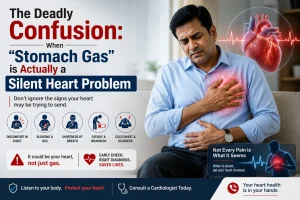
The heart often sends warning signals long before a full cardiac event takes place. Unfortunately, because these symptoms can vary widely and sometimes mimic less serious conditions like acid reflux or general fatigue, they are frequently ignored. It is always better to be cautious and seek medical attention if you suspect something is wrong. Do not ignore these critical symptoms:
1. Chest Discomfort or Pain
This is the hallmark sign of a heart attack, but it does not always manifest as the dramatic, clutching-the-chest pain seen in movies. It often feels like uncomfortable pressure, squeezing, fullness, or a dull ache in the center of the chest. This discomfort may last for more than a few minutes, or it may go away and come back.
2. Radiating Pain to Other Areas
The pain of a heart attack often spreads beyond the chest. It is incredibly common for the discomfort to radiate to the upper body, including one or both arms (especially the left arm), the back, the neck, the jaw, or the stomach. A sudden, unexplained ache in the jaw or back should never be dismissed.
3. Shortness of Breath
Experiencing sudden breathlessness, as if you have just run a marathon while simply sitting down, is a major red flag. This can occur alongside chest discomfort, or it can be the primary symptom before any chest pain begins.
4. Atypical Symptoms (Particularly in Women)
It is a well-documented medical fact that women can experience heart attacks differently than men. While chest pain is still the most common symptom, women are somewhat more likely to experience other, more subtle warning signs. These include:
- Breaking out in a cold sweat without exertion.
- Sudden, overwhelming, and unexplained fatigue that lasts for days.
- Nausea, vomiting, or profound indigestion.
- Lightheadedness or sudden dizziness.
Immediate Steps to Take: A Bystander’s Guide
If you suspect that you or someone around you is experiencing a cardiac emergency, hesitation can be fatal. The American Heart Association (AHA) and medical professionals worldwide advocate for a “Chain of Survival,” which begins with the actions of bystanders.
Step 1: Call Emergency Services Immediately
Your absolute first priority is to call your local emergency number. Do not attempt to drive the patient to the hospital yourself unless there is absolutely no other option. Paramedics are equipped with specialized cardiac monitors, defibrillators, and medications, meaning life-saving treatment can begin the moment they arrive, rather than waiting until you reach the emergency room doors.
Step 2: Keep the Person Calm and Resting
Anxiety and panic cause a massive spike in adrenaline, which makes the heart beat faster and work harder, demanding more oxygen that it cannot currently get. Have the patient sit down, rest, and loosen any restrictive clothing around their neck or chest. Keep your own demeanor calm to help reassure them.
Step 3: Administer Aspirin (If Appropriate)
If the person is conscious, alert, and not allergic to aspirin, having them chew and swallow a standard adult aspirin (325 mg) or a few low-dose aspirins can be incredibly beneficial. Chewing the aspirin helps it absorb into the bloodstream faster, where it inhibits blood platelets from clumping together, potentially keeping the blocked artery from completely closing.
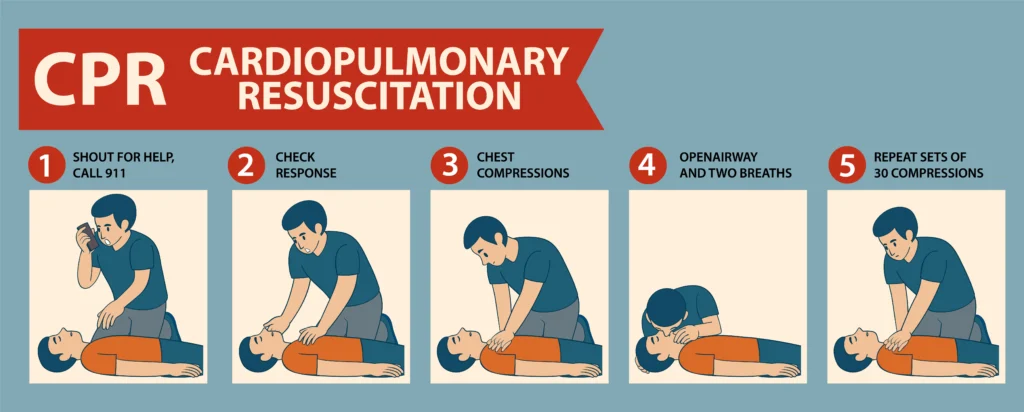
Step 4: Prepare for CPR (If the Patient Becomes Unresponsive)
If the person loses consciousness, stops breathing normally, or is only gasping, they have likely entered cardiac arrest. You must begin Cardiopulmonary Resuscitation (CPR) immediately. Recent studies have shown that initiating bystander CPR within the first 10 minutes of a cardiac arrest increases the chances of survival by up to 81%.
If you are not formally trained, use Hands-Only CPR:
- Place the heel of one hand in the center of the person’s chest.
- Place your other hand on top and interlock your fingers.
- Push hard and fast. You should push down at least 2 inches at a rate of 100 to 120 compressions per minute (many people use the beat of the song “Stayin’ Alive” to keep the right rhythm).
- Do not stop until medical professionals arrive and take over.
Step 5: Utilize an AED
If you are in a public space, an office building, or an airport, shout for someone to find an Automated External Defibrillator (AED). These incredible devices are designed specifically for use by untrained bystanders. Once powered on, the AED provides loud, clear verbal instructions. It will automatically analyze the patient’s heart rhythm and will only deliver a shock if it detects a fatal arrhythmia that can be corrected.
Overcoming the Bystander Effect
One of the greatest tragedies in sudden cardiac emergencies is when a crowd forms, but nobody steps in to help. This hesitation usually stems from a fear of doing something wrong or hurting the patient.
It is vital to remember this fact: If someone is in cardiac arrest, they are already in the worst possible medical state. You cannot make them “more dead.” Even imperfect CPR is infinitely better than no CPR at all. Good Samaritan laws exist in most jurisdictions specifically to protect individuals who step up to provide reasonable assistance in a medical crisis. Your willingness to push hard and fast on the chest could be the sole reason a family gets to keep their loved one.
The Crucial Role of Professional Medical Logistics
Handling a severe cardiac emergency is traumatic enough when you are in your hometown, just a few miles from your regular hospital. However, what happens when a cardiac crisis strikes while a patient is traveling abroad for business, vacation, or even medical tourism? What if the local hospital lacks the specialized tertiary cardiac care, such as an advanced catheterization lab or cardiothoracic surgical unit, required to save the patient’s life?
This is the exact moment where the clinical care provided by doctors must be seamlessly integrated with elite logistical support. This is where Humane Medical Assistance becomes an indispensable lifeline.
While hospitals focus on the immediate physical stabilization of the patient, Humane Medical Assistance acts as the command center for everything else required to secure the patient’s survival and recovery:
1. Emergency Medical Evacuation (Air Ambulances)
If a patient suffers a severe heart attack in a remote location or a facility unequipped for complex interventions, they must be moved. Humane Medical Assistance coordinates rapid, bed-to-bed transfers via specialized Air Ambulances. These aircraft are essentially flying intensive care units, staffed by critical care flight nurses and physicians who monitor the patient’s fragile cardiac rhythms at 30,000 feet, ensuring they safely reach a center of medical excellence.
2. Sourcing Critical Medical Equipment
Cardiac patients often require highly specific and sophisticated equipment for their recovery and transport. Whether it involves sourcing specific portable ventilators, specialized cardiac monitors, or precise pharmaceutical compounds required for a safe cross-border transfer, our logistics teams ensure that no mechanical or supply shortage delays a patient’s care.
3. Global Coordination and Medical Tourism Support
Navigating international healthcare systems in the middle of a crisis is an administrative nightmare. Language barriers, insurance verification, hospital admissions, and emergency visa processing can delay vital treatment. Humane Medical Assistance removes this immense burden from the family. We manage the complex logistics of cross-border healthcare, ensuring that international patients bypass administrative roadblocks and get direct access to world-class cardiologists.
4. The Continuum of Care
A cardiac emergency does not end when the patient leaves the ICU. Rehabilitation, follow-up appointments, and a safe return home are critical phases of recovery. Our team ensures that the patient’s medical records are perfectly translated and transferred, and that medical escorts are provided for commercial flights home when the patient is stable enough to travel, ensuring a completely unbroken chain of care.
Conclusion: Preparedness Saves Lives
Surviving a cardiac emergency is never the result of a single action; it requires a robust chain of survival. It demands early recognition of the warning signs, immediate and fearless bystander intervention with CPR, rapid emergency medical response, and ultimately, flawless medical logistics to ensure long-term recovery.
By educating yourself on the signs of a heart attack and familiarizing yourself with CPR, you become a vital link in that chain. And by understanding the resources available for managing the complex aftermath of a medical crisis, you ensure that you are never facing the daunting world of global healthcare alone.
Are You Prepared for a Healthcare Emergency? Navigating a severe health crisis, arranging complex medical travel, or managing international medical evacuations shouldn’t be done in isolation. At Humane Medical Assistance, we provide the comprehensive logistical support and expert coordination required to ensure patients receive life-saving care, no matter where they are in the world.
Contact Humane Medical Assistance Today to learn more about our global medical logistics, evacuation services, and how we can support you in your greatest time of need.