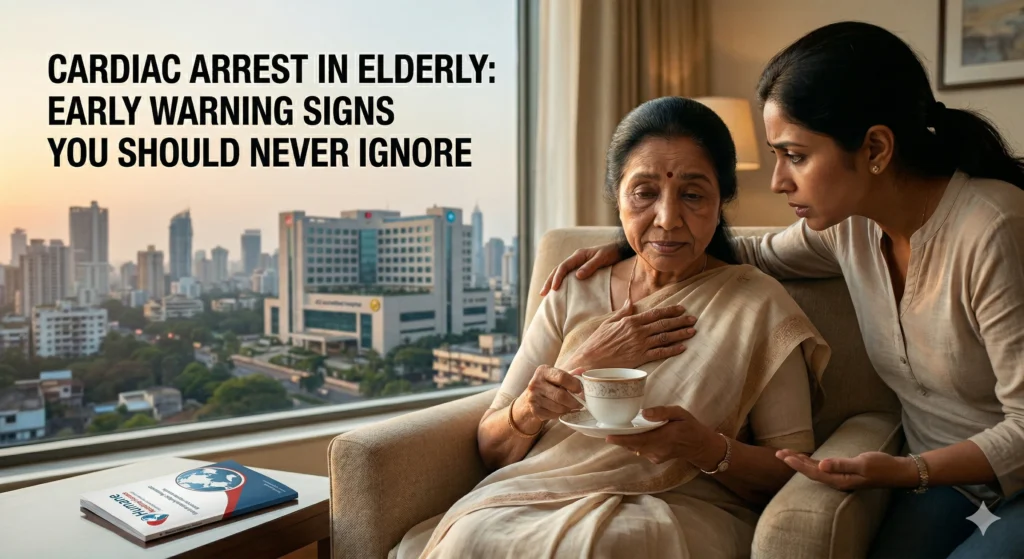
Recent global news highlights a highly critical health issue. Specifically, reports involving legendary singer Asha Bhosle brought sudden cardiac emergencies into the global spotlight. Consequently, families worldwide feel renewed concern for their aging parents. Understanding early cardiac warning signs can literally make the difference between life and death.
Therefore, families must educate themselves proactively. At Humane Medical Assistance, we prioritize global patient education. We actively guide international families toward life-saving cardiac care in India. Let us explore these vital warning signs together. Ultimately, this knowledge empowers you to protect your loved ones effectively.
Why Cardiac Arrest in the Elderly Is Often Missed
Doctors frequently miss cardiac arrest warning signs in older adults. The aging heart undergoes significant physiological changes over time. Consequently, the warning system operates differently in seniors.
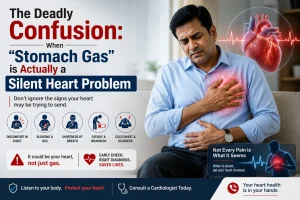
Unlike younger patients, elderly individuals rarely display “classic” symptoms. For example, they might never experience crushing, dramatic chest pain. Instead, their distress signs appear incredibly subtle. Furthermore, families often misinterpret these subtle changes as normal aging. They mistakenly blame arthritis, general fatigue, or poor digestion.
Consequently, patients ignore severe cardiac distress until it becomes too late. This tragic reality makes early awareness absolutely critical. Indeed, families considering medical treatment abroad must recognize these hidden dangers immediately. Proactive observation saves lives.
Top 8 Warning Signs of Cardiac Arrest in the Elderly
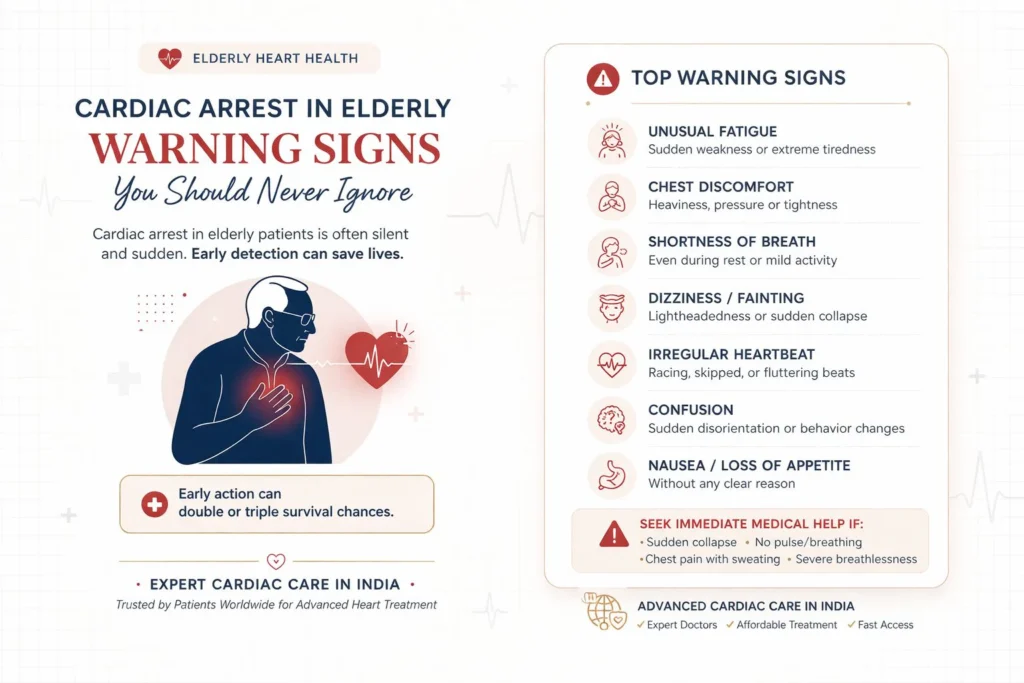
Caregivers must remain highly vigilant. Below, we detail the most critical early warning signs of an impending cardiac crisis.
1. Sudden Weakness or Unusual Fatigue
First, watch closely for sudden, unexplained weakness. An elderly person might suddenly feel extremely tired. Furthermore, they may avoid their normal routine activities completely. For instance, a daily walker might refuse to leave the house. Additionally, excessive daytime sleeping warrants immediate medical attention. Ultimately, this extreme fatigue often indicates rapidly declining heart function. The heart simply cannot pump enough oxygenated blood.
2. Mild Chest Discomfort (Not Always Pain)
Second, look for mild, vague chest discomfort. Many elderly patients absolutely do not feel sharp pain. Instead, they describe a strange, heavy sensation. Sometimes, they report pressure or a tight band around the chest area. Furthermore, this discomfort might radiate to the jaw, neck, or back. Therefore, you must never ignore even mild chest discomfort. Always seek an immediate medical evaluation.
3. Shortness of Breath
Third, monitor their breathing patterns closely. Shortness of breath acts as a major cardiac red flag. Specifically, struggling to breathe during short walks requires urgent evaluation. Furthermore, breathing difficulty while resting indicates severe danger. Moreover, waking up suddenly gasping for air demands immediate emergency care. Fluid often builds up in the lungs when the heart fails.
4. Dizziness, Fainting, or Sudden Collapse
Fourth, pay strict attention to sudden dizzy spells. Feeling lightheaded frequently precedes a major cardiac event. Consequently, losing physical balance or experiencing brief blackouts points to dangerous underlying issues. Specifically, these symptoms often reveal fatal heart rhythm disturbances. The brain temporarily loses vital oxygen supply. Therefore, treat any fainting spell as a serious medical emergency.
5. Irregular Heartbeat (Palpitations)
Fifth, listen carefully to complaints about irregular heartbeats. Patients frequently describe a racing, pounding heart. Additionally, they might feel skipped beats in their chest. Sometimes, they report a strange, uncomfortable fluttering sensation. Consequently, doctors must evaluate these palpitations immediately using an ECG. Arrhythmias in the elderly rapidly escalate into full cardiac arrest.
6. Confusion or Sudden Behavioral Changes
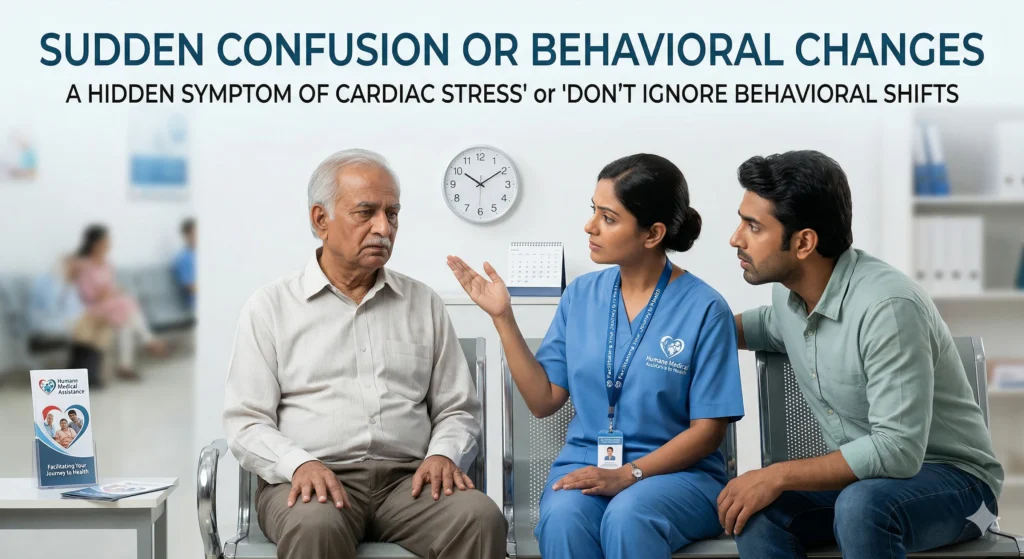
Sixth, notice sudden, uncharacteristic behavioral changes. This specific symptom remains incredibly important for elderly patients. Suddenly, an aging parent might exhibit severe mental confusion. Furthermore, they may suffer from sudden disorientation or short-term memory issues. Families often mistakenly attribute this to early dementia. However, inadequate blood flow to the brain frequently causes this acute confusion.
7. Nausea or Loss of Appetite
Seventh, do not ignore unexplained nausea or digestive issues. Feeling sick without a clear, obvious reason requires thorough investigation. Additionally, suddenly refusing favorite foods can indicate hidden cardiac stress. Furthermore, seniors might complain of persistent indigestion or heartburn. Therefore, gastrointestinal symptoms sometimes actively mask severe heart failure.
8. Silent Cardiac Arrest (No Warning)
Finally, understand the terrifying reality of silent cardiac arrest. In many tragic cases, patients exhibit absolutely no warning symptoms beforehand. Consequently, sudden, catastrophic collapse happens without any prior indication. The heart simply stops beating instantly. Therefore, routine, preventive cardiac screening remains absolutely crucial for older adults. You cannot treat what you do not track.
Recognizing a True Medical Emergency
Knowing exactly when to act saves lives. Families must prepare a clear emergency response plan. Seek immediate emergency medical attention if you notice specific triggers.
Specifically, a sudden physical collapse requires instant action. Furthermore, absent breathing or a missing pulse demands immediate CPR. Do not wait for medical professionals to begin chest compressions. Additionally, severe breathlessness or intense chest discomfort accompanied by heavy sweating indicates an active heart attack. Ultimately, early emergency intervention increases survival chances by up to three times. Every single second counts.
Prevention Tips for Elderly Heart Health
Families must prioritize proactive, daily heart health management. Prevention remains the absolute best medical strategy.
First, schedule regular, comprehensive cardiac check-ups annually. Furthermore, strictly control blood pressure, diabetes, and blood cholesterol levels through diet and medication. Additionally, ensure the elderly patient stays properly hydrated every single day. Dehydration severely strains an aging cardiovascular system. Moreover, actively prevent physical overexertion during daily household tasks. Finally, physically verify that they take all prescribed heart medications regularly and correctly.
Why International Patients Choose India for Cardiac Care
When prevention is not enough, world-class medical intervention becomes necessary. Today, India serves as a premier global hub for advanced cardiac treatment. Consequently, international patients travel here for superior, life-saving medical care.
India offers highly experienced, globally trained cardiologists and cardiac surgeons. Furthermore, top-tier Indian hospitals feature advanced ICUs and rapid-response emergency care units. They utilize cutting-edge surgical robotics and advanced imaging technology.
Specifically, complex treatment costs run up to 70% lower than in Western countries. Furthermore, international patients experience minimal waiting times for critical, life-saving surgeries. Ultimately, personalized patient assistance ensures a completely stress-free medical journey for the entire family.
Let Humane Medical Assistance Guide Your Journey
Navigating a severe cardiac crisis feels completely overwhelming. However, Humane Medical Assistance stands ready to help you. We actively provide end-to-end medical travel support for global families.
Specifically, we secure immediate access to India’s top-tier, JCI-accredited cardiac hospitals. Furthermore, we connect you instantly with expert, renowned cardiac specialists. Additionally, our dedicated team handles all complex visa and travel logistics seamlessly. Finally, we arrange comfortable, safe recovery accommodations for your entire family.
Do not wait when dealing with an aging heart. Contact Humane Medical Assistance today. Secure your loved one’s heart health immediately. We facilitate your journey to health, hope, and healing.