The Global Healthcare Paradigm Shift: How Bengaluru Delivered World-Class Surgery at an 86% Discount
When western consumers think of healthcare, two words often spring to mind: expensive and slow. Whether it is navigating the bureaucratic maze of private insurance in the United States or facing multi-month waiting lists in nationalized systems across Europe and Australasia, getting specialized medical care is rarely a seamless process.
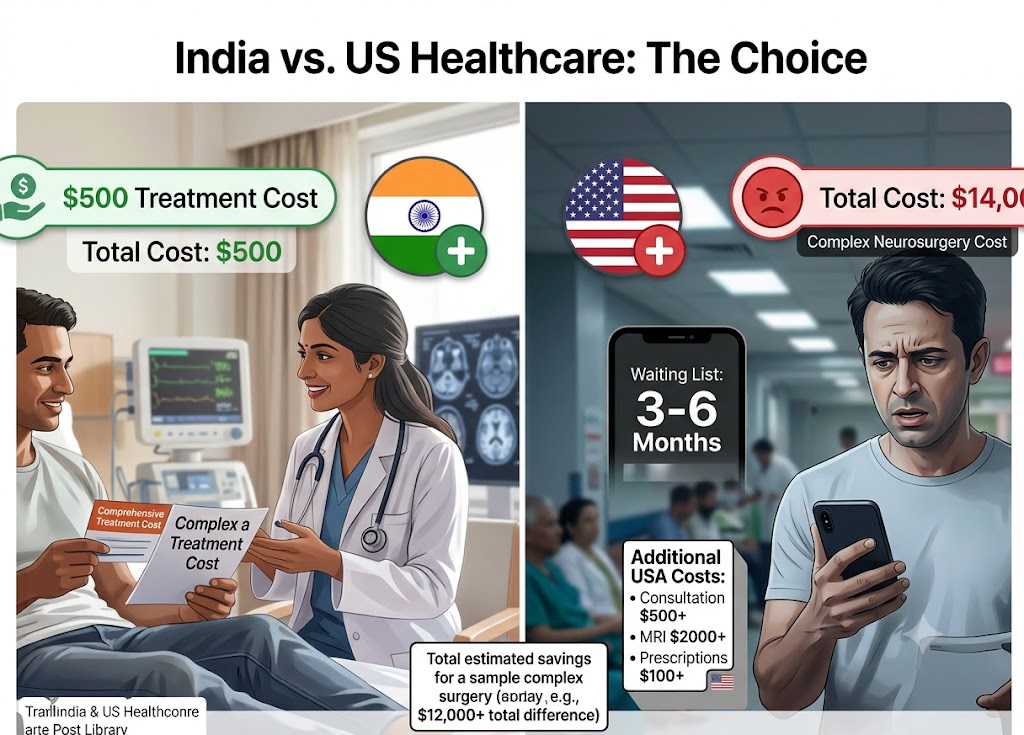
Entrepreneur, author, and CD Baby founder Derek Sivers recently turned the global healthcare conversation on its head after sharing his experience undergoing neurosurgery in Bengaluru (Bangalore), India. Sivers needed to remove a schwannoma—a nerve sheath tumor—from behind his knee. Faced with a estimated bill of $14,000 in New Zealand, he opted to fly to India, where the exact same surgical procedure cost him approximately $2,000—a staggering 86% reduction in price.
Beyond the dramatic price cut, Sivers’ journey highlights a broader reality: India’s top medical hubs are no longer just “budget alternatives”; they are leading the world in efficiency, accessibility, and high-volume clinical expertise.
The Cost Breakdown: India vs. The World
Healthcare costs in the West—and even in traditional Asian medical hubs like Bangkok and Singapore—have skyrocketed over the last decade. To highlight the stark disparity, Sivers compared the costs of routine preventive screenings, prescriptions, and specialist visits across various global locations:
- Executive Health Screenings: Comprehensive health check-ups (covering over 40 diagnostic tests, bloodwork, MRIs, and multi-specialist evaluations) have become prohibitively expensive globally. A comparable screening that costs around $1,500 in Bangkok, $2,000 in Singapore, or $5,000 at the Cleveland Clinic Abu Dhabi was completed at a top Bengaluru hospital for roughly $80 to $100.
- Specialist Consultations: Seeing a top-tier neurosurgeon, cardiologist, or orthopedic specialist in Western nations often requires a general practitioner referral, weeks of waiting, and hundreds of dollars out-of-pocket. In India, walk-in or app-booked specialist consultations typically cost around ₹1,000 (~$10 to $12 USD).
- Prescription Medications: Post-surgery pharmaceutical care—often a major hidden cost in American healthcare—is fractionally priced. Sivers noted that post-operative recovery medications costing $50 to $100 in the US or New Zealand came out to just $8 at a local Indian pharmacy.
Efficiency and Speed: The “Walk-In” Specialist Ecosystem
For many patients, the financial burden of medical care is second only to the friction of getting seen. In countries with socialized medicine, like the UK or New Zealand, non-emergency consultations with a specialist can take anywhere from three to six months.
Bengaluru’s major corporate hospital chains—such as Manipal Hospitals and Sakra World Hospital—operate under a high-capacity, high-demand model designed around speed and integrated care.
During his stay, Sivers was able to:
- Arrive at the hospital without a pre-fixed appointment.
- Consult four separate specialists back-to-back in a single morning.
- Receive a same-day MRI scan.
- Have the MRI reviewed by his primary neurosurgeon the very next morning.
This level of intra-facility coordination—where diagnostic labs, imaging centers, pharmacies, and surgical suites operate under one roof—eliminates weeks of back-and-forth friction that patients normally endure in Western systems.
Volume vs. Cost: Rethinking Quality in Medicine
A common misconception in modern consumer culture is that higher price equals higher quality. When it comes to complex surgery, however, medical outcomes are heavily driven by a simple metric: procedure volume.
A neurosurgeon or orthopedic specialist who performs a specific delicate operation hundreds of times a year naturally develops higher skill, lower complication rates, and faster recovery outcomes than a surgeon who performs the same procedure twice a month.
Because of India’s massive population and high patient throughput, top surgeons in cities like Bengaluru, Mumbai, and Delhi achieve case volumes that few Western doctors can match. As Sivers pointed out, an expensive $20,000 procedure in Switzerland does not inherently guarantee better surgical hands than a high-volume $2,000 procedure performed by an elite surgeon in India.
The Rise of Medical Tourism in India
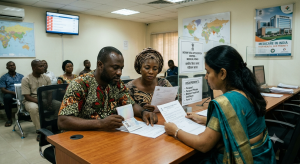
Derek Sivers’ experience is reflective of a rapidly growing global trend. India has emerged as a premier destination for medical value travel (MVT), attracting hundreds of thousands of international patients annually for procedures ranging from complex cardiac surgeries and organ transplants to hip replacements and neurosurgery.
- World-Class Infrastructure: Premier Indian hospital networks hold international accreditations (such as JCI – Joint Commission International), utilizing state-of-the-art robotic surgery platforms and advanced diagnostic technology equal to top Western institutions.
- English-Speaking Staff: Medical communication barriers are virtually nonexistent, as Indian medical universities conduct training in English, and many senior doctors complete fellowships in the UK, US, or Europe.
- Digital Integration: Seamless digital payments via UPI, app-based appointment bookings, and digitized medical records allow foreign patients to navigate hospitals effortlessly.
Conclusion
For many living in Western nations, medical emergencies or necessary surgeries bring a double blow: physical distress accompanied by financial paralysis or agonizing delays.
Experiences like Derek Sivers’ highlight a fundamental shift in how global citizens view healthcare. When a city delivers world-class medical expertise, zero waiting periods, and comprehensive post-op care at an 86% discount, healthcare is no longer bound by geography. Bengaluru is not just India’s tech capital—it is proving to be a compelling blueprint for accessible, high-volume global medicine.