India has rapidly emerged as a top global destination for medical tourism. Moreover, robotic surgery stands at the forefront of this revolution. Every year, thousands of patients travel to India from across the globe. They come from the United States, the United Kingdom, Nigeria, Bangladesh, and the Middle East. Consequently, they access cutting-edge robotic surgical procedures at a fraction of the cost of their home countries.
Furthermore, India combines internationally accredited hospitals with highly skilled, globally trained surgeons. These experts use state-of-the-art technology, such as the da Vinci Surgical System. As a result, India has successfully positioned itself as a true global leader in minimally invasive surgery.
For patients outside India, deciding to travel for surgery is a major step. Naturally, concerns about quality, safety, language barriers, and post-operative care are completely valid. Therefore, this comprehensive guide addresses every one of those concerns. It walks you through the available robotic surgeries, measurable benefits, and documented success rates. Additionally, we provide cost comparisons and practical steps to plan your medical journey confidently.
What is Robotic Surgery?
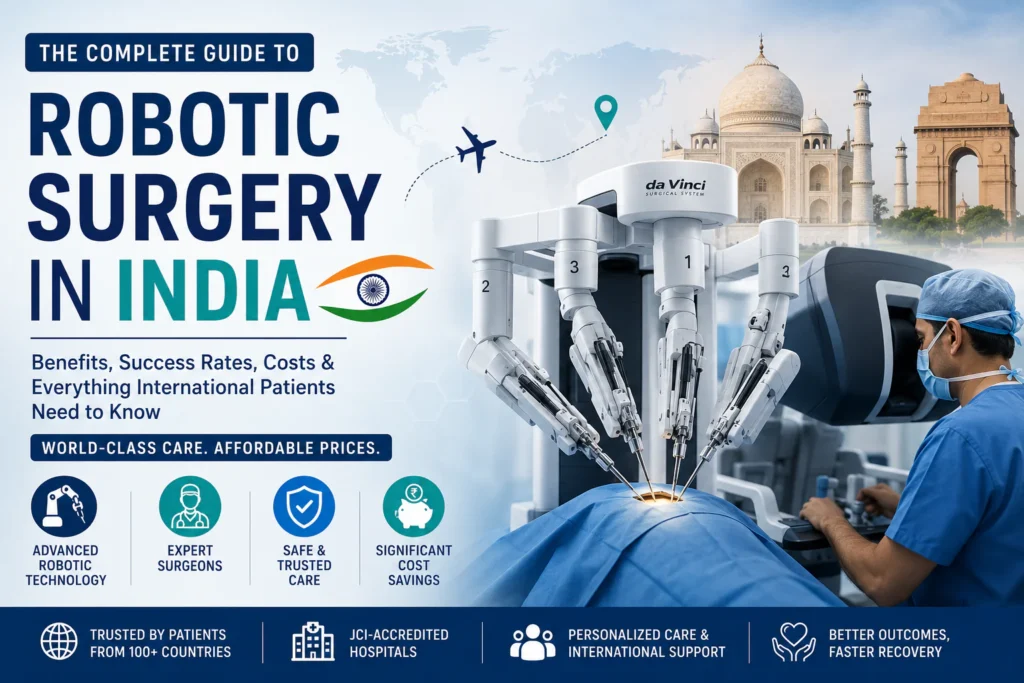
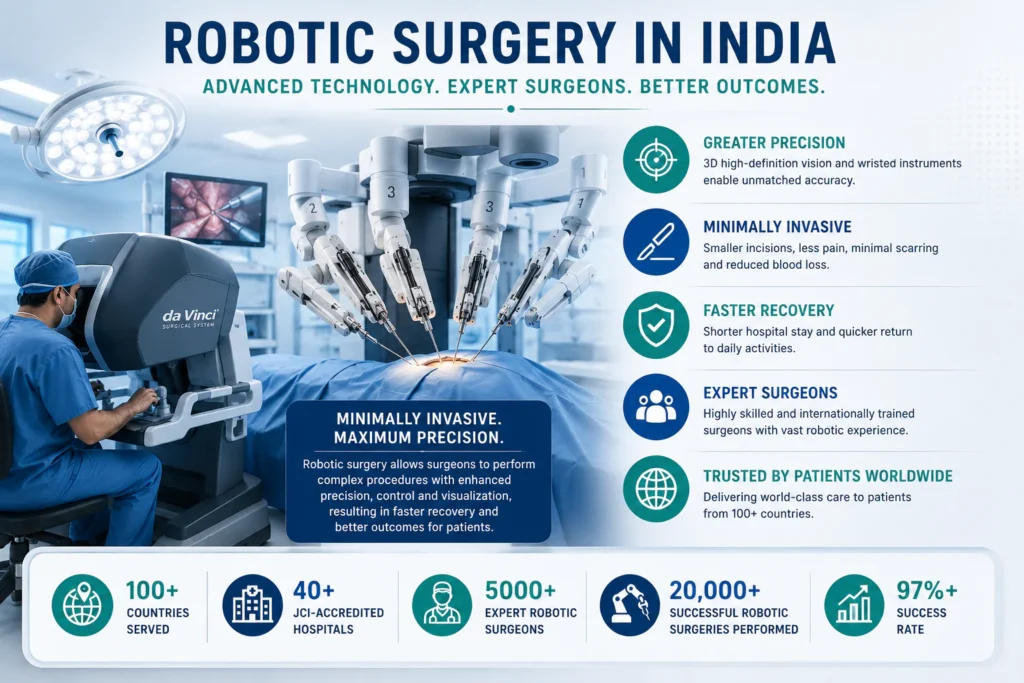
Robotic surgery is an advanced form of minimally invasive surgery. During the procedure, a surgeon controls a robotic arm from a surgical console. This arm holds specialized surgical instruments.
Currently, hospitals most widely use the da Vinci Surgical System. It features a high-definition 3D camera and wristed instruments. These tools replicate, and often exceed, the human hand’s range of motion. However, the robot does not operate autonomously. The surgeon maintains complete control at all times. Specifically, the system translates the surgeon’s hand movements into smaller, precise movements inside the patient’s body. This technology enables procedures that traditional laparoscopic techniques simply cannot achieve.
Types of Robotic Surgery Available in India
India offers a comprehensive spectrum of robotic procedures across virtually every major medical specialty. Importantly, the breadth and depth of available procedures rival the world’s most advanced healthcare systems. Therefore, the country serves as a perfect one-stop destination for international patients seeking specialized robotic interventions.
Urological Surgery
Urology remains one of the most established areas for robotic surgery in India. Surgeons frequently use the da Vinci system for radical prostatectomies, nephrectomies, cystectomies, and pyeloplasties. Furthermore, Indian urological surgeons have performed thousands of successful procedures. They consistently achieve outcomes comparable to the best centers in the United States and Europe. The precision of robotic instruments proves especially valuable here. Ultimately, preserving nerve function is critical for maintaining continence and sexual health after surgery.
Cardiac Surgery
India’s cardiac surgeons use robotic systems for mitral valve repair, coronary artery bypass grafting, and tumor removal. Crucially, robotic cardiac surgery eliminates the need for a full sternotomy. This approach dramatically reduces trauma, pain, and recovery time. Additionally, hospitals like AIIMS, Apollo, and Fortis run dedicated robotic cardiac programs. These elite programs boast success rates exceeding 97%.
Gynecological Surgery
Doctors routinely perform robotic hysterectomies, myomectomies, and endometriosis excisions in India. For international patients, India offers an exceptional combination of expertise and affordability. This proves particularly beneficial for women visiting from regions that lack affordable, minimally invasive options.
General and Bariatric Surgery
Surgeons increasingly perform robotic cholecystectomies, hernia repairs, and bariatric procedures in India. Specifically, the robotic approach offers superior visualization and instrument control in tight abdominal spaces. As a result, patients face a lower risk of complications and enjoy shorter hospital stays.
Thoracic Surgery
For conditions affecting the lungs and esophagus, robotic-assisted thoracic surgery provides a minimally invasive alternative. It easily replaces traditional open thoracotomies. For instance, robotic precision leads to significantly better outcomes in lobectomies and esophagectomies. Patients experience lower blood loss, fewer complications, and a faster return to normal activity.
Orthopedic Surgery
Orthopedic surgeons use robotic-arm assisted systems, such as Mako and ROSA. They apply these tools for knee replacements, hip replacements, and spinal procedures. First, these systems create a 3D model of the patient’s anatomy. Then, the surgeon plans and executes bone cuts with sub-millimeter accuracy. Consequently, patients receive better implant positioning, improved joint function, and longer-lasting results.
Head and Neck Surgery
Oncologists use transoral robotic surgery (TORS) for tumors of the throat, tongue base, and larynx. Fortunately, this approach avoids jaw splitting or large external incisions. Thus, it successfully preserves swallowing and speech functions. India’s leading cancer centers have adopted TORS, reporting excellent functional and oncological outcomes.
Key Benefits for International Patients
- Significant Cost Savings (60–80%): This is often the primary reason patients travel to India. For example, a robotic prostatectomy costs $20,000–$30,000 in the United States. In contrast, Indian surgeons perform the same procedure for $4,000–$7,000. This includes hospital and surgeon fees. Similarly, a robotic knee replacement costs $6,000–$9,000 in India versus $35,000–$50,000 in the West. Ultimately, these savings extend across all specialties without compromising quality.
- World-Class Hospitals and Technology: India hosts over 40 JCI-accredited and NABH-accredited hospitals. These elite facilities feature the latest generation of robotic systems. Institutions like Apollo, Fortis, Medanta, and Kokilaben Dhirubhai Ambani Hospital run dedicated robotic surgery centers. They provide specialized operating rooms, expert nursing teams, and comprehensive post-operative care.
- Internationally Trained Surgeons: Many of India’s top robotic surgeons trained at prestigious global institutions. These include the Mayo Clinic, Cleveland Clinic, and Johns Hopkins. Consequently, they bring global best practices back home. Most have performed hundreds, or even thousands, of robotic procedures. This cumulative experience provides a significant advantage for complex cases.
- Faster Recovery Times: Robotic surgery requires only small incisions. Therefore, patients experience less pain, minimal scarring, and reduced blood loss. Furthermore, they face a much lower risk of surgical site infections. Hospitals usually discharge patients within 1–3 days. Patients return to normal activities within 2–4 weeks, rather than the 6–8 weeks required for open surgery. For international travelers, this guarantees shorter stays away from home.
- No Waiting Lists: In countries with public healthcare systems, patients often wait months for surgical consultations. In India, however, doctors typically see international patients within days of arrival. They generally schedule surgeries within a week. Thus, India remains an ideal option for patients requiring timely intervention.
Success Rates and Clinical Outcomes
Clinical outcomes for robotic surgery in India perfectly match the best global benchmarks. According to published data, Indian hospitals achieve a 95–98% success rate in cancer control for robotic prostatectomies. Moreover, over 85–90% of these patients maintain continence. Another 60–75% preserve erectile function at 12 months post-surgery. Similarly, robotic cardiac procedures report success rates exceeding 97%. They also show significantly lower complication rates compared to open surgery.
In gynecological robotics, hysterectomy and myomectomy success rates consistently stay above 98%. Patients experience minimal blood loss and recover quickly. Meanwhile, robotic knee replacements demonstrate incredible precision. Surgeons achieve implant alignment within 1–2 degrees of the planned position in over 95% of cases. Consequently, patients report better functional outcomes and higher satisfaction scores. Ultimately, these outcomes reflect the systemic quality of India’s top-tier programs. They strictly adhere to global clinical protocols.
Cost Comparison: India vs. Western Countries
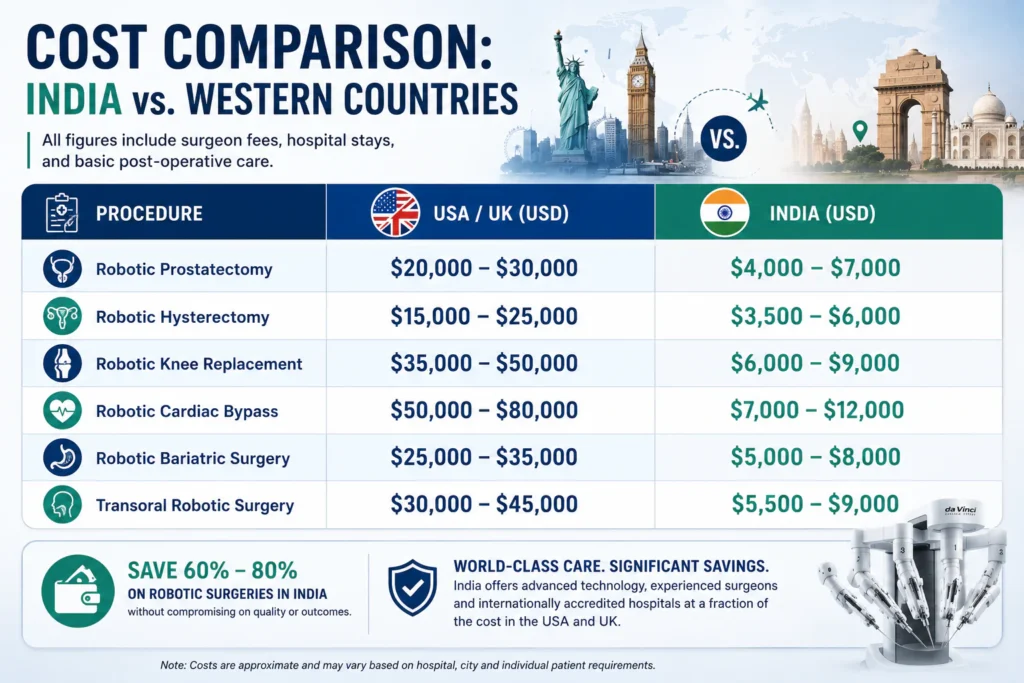
Understanding the cost differential remains essential for international patients. Therefore, the following comparison provides a realistic picture of procedure costs. These figures compare India with the United States and the United Kingdom. Notably, all figures include surgeon fees, hospital stays, and basic post-operative care.
| Procedure | USA / UK (USD) | India (USD) |
| Robotic Prostatectomy | $20,000 – $30,000 | $4,000 – $7,000 |
| Robotic Hysterectomy | $15,000 – $25,000 | $3,500 – $6,000 |
| Robotic Knee Replacement | $35,000 – $50,000 | $6,000 – $9,000 |
| Robotic Cardiac Bypass | $50,000 – $80,000 | $7,000 – $12,000 |
| Robotic Bariatric Surgery | $25,000 – $35,000 | $5,000 – $8,000 |
| Transoral Robotic Surgery | $30,000 – $45,000 | $5,500 – $9,000 |
Top Hospitals for Robotic Surgery in India
Several Indian hospitals have earned international recognition for their robotic programs. For instance, Apollo Hospitals operates one of the largest robotic surgery networks in South Asia. In fact, their expert team has completed over 10,000 robotic procedures. Medanta–The Medicity in Gurugram houses highly renowned Heart and Urology institutes. Furthermore, Fortis Memorial Research Institute, Kokilaben Dhirubhai Ambani Hospital, and Max Super Speciality Hospital utilize the latest da Vinci systems.
Most importantly, these hospitals offer dedicated international patient coordinators. They provide visa assistance, airport pickup, translator services, and accommodation options. This premium service ensures a seamless experience from your arrival in India until your safe return home.
Practical Guide for International Patients
Traveling to India for robotic surgery involves several practical considerations.
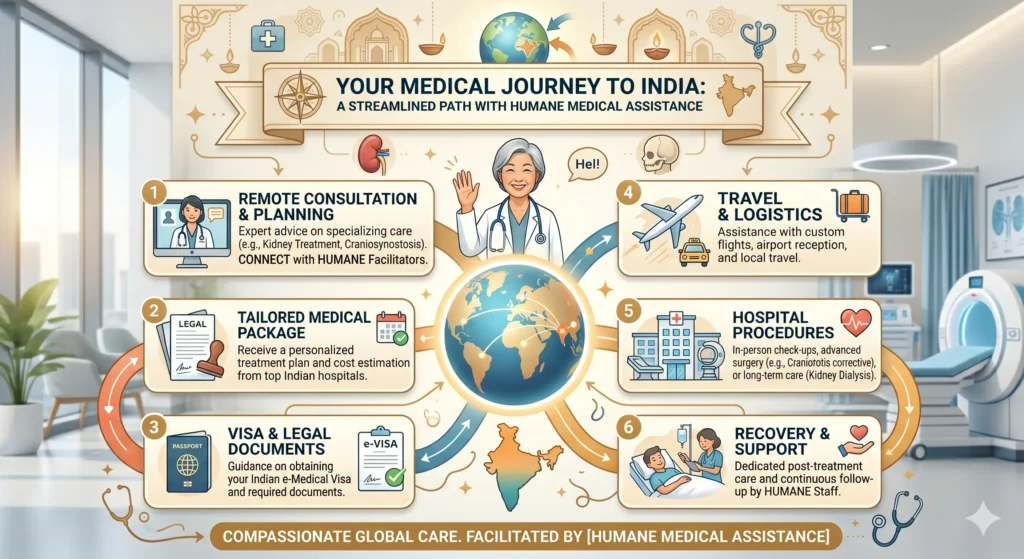
First, you need a Medical Visa (M-Visa). The government specifically designed this visa for patients seeking treatment in India. It allows stays of up to one year with multiple entries. Typically, the application requires a confirmation letter from your chosen Indian hospital. Fortunately, most leading hospitals maintain dedicated visa assistance teams to handle this paperwork for you.
Second, language rarely presents a barrier. Doctors, nurses, and hospital staff speak fluent English at all major Indian hospitals. Moreover, hospitals provide dedicated translators for Arabic, Russian, French, and several African languages upon request.
Third, clinics organize post-operative follow-ups exceptionally well. Most hospitals offer teleconsultation services after you return home. Additionally, they provide detailed medical records, imaging, and discharge summaries. They specifically format these documents for your local physician’s easy review.
Finally, many hospitals offer comprehensive medical tourism packages. These popular bundles include your treatment, accommodation, and local transportation. Often, they even feature sightseeing options for accompanying family members.
How Humane Medical Assistance Supports Your Journey
As a premier international medical tourism and facilitation agency, Humane Medical Assistance understands that your health should not be restricted by geographical borders. We recognize that finding the right specialist can be the difference between merely managing symptoms and actively restoring your quality of life.
We do not operate as a hospital; rather, we are your dedicated healthcare advocates and global facilitators. When you face complex renal issues, our expert team seamlessly connects you with the world’s most advanced hospitals, top-tier nephrologists, and leading kidney transplant centers.
Our comprehensive medical facilitation services include:
- Expert Second Opinions: We arrange remote consultations with globally renowned kidney specialists to review your lab results and confirm your diagnosis before you travel.
- Tailored Treatment Matching: Whether you require advanced dialysis techniques, specialized management of early-stage CKD, or a complex kidney transplant, we match you with international facilities boasting the highest success rates.
- End-to-End Logistics: Managing travel while dealing with illness is exhausting. Our team coordinates every aspect of your journey, from medical visas and customized flight arrangements to specialized accommodation near your chosen treatment center.
- Continuous Patient Advocacy: From your very first inquiry to your post-treatment recovery and return home, Humane Medical Assistance remains by your side, ensuring clear communication with your international medical team and removing all administrative burdens.
Do not wait for your Kidney Disease Symptoms to dictate your life. If you are seeking advanced, high-quality kidney care beyond your local borders, you do not have to navigate the complex world of global healthcare alone.
Contact Humane Medical Assistance today. Let our experienced facilitation team connect you to the world-class medical expertise you deserve, ensuring a smoother, safer, and more successful path toward restored health.