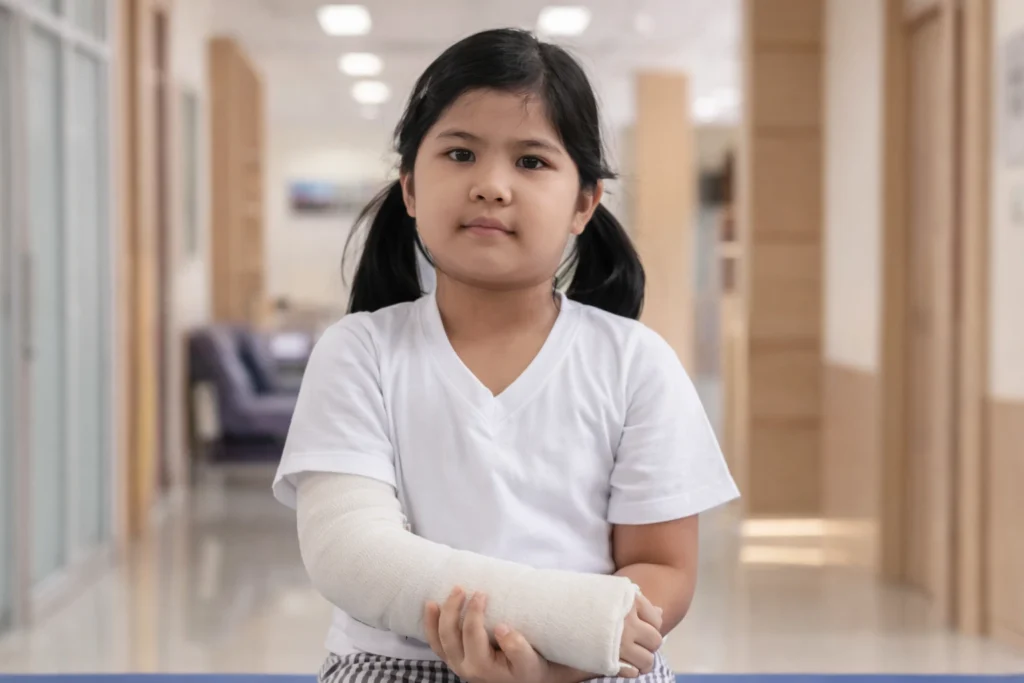
When 11-year-old Ancha traveled from Mozambique to India, she was only meant to be a companion. Her father was seeking treatment for cancer, and Ancha—who had lived her entire life unable to bend her left elbow or raise her arm—was just along for the journey. For over a decade, her family had accepted her condition as a permanent reality. She struggled to write, avoided playground games, and had never known what it felt like to use her left hand freely.
During one of her father’s routine physiotherapy sessions, he casually asked the rehabilitation doctor if anything could be done for his daughter’s arm. That single, hopeful question led to a consultation with specialized reconstructive surgeons.
What followed was a medical triumph that highlights exactly why India is a leading global destination for complex healthcare. Just nine days after a specialized, five-hour microscopic nerve surgery, Ancha was able to lift her hand above her head and begin using her left arm for daily activities—for the very first time in her life.
Where the Treatment Took Place
Ancha’s life-changing procedure was performed at Amrita Hospital in Faridabad (located in the Delhi National Capital Region). The hospital is renowned for its state-of-the-art infrastructure and its ability to handle highly complex, rare pediatric surgeries that many other institutions might decline.
The Medical Experts Behind the Miracle
The innovative surgery was spearheaded by a team of highly qualified specialists in Plastic and Reconstructive Surgery at Amrita Hospital:
- Dr. Anil Murarka and Dr. Mohit Sharma, who recognized the opportunity to provide a less invasive, permanent solution for a condition rarely operated on at Ancha’s age.
- Dr. Devajyoti Guin, Senior Consultant and Lead of Brachial Plexus Surgery, who utilized a problem-solving, patient-centric approach to restore balance to the opposing muscle groups in Ancha’s arm.
Stories like Ancha’s often leave parents wondering: What exactly is this condition, and what are the options for treatment? Here is everything you need to know.
What is Birth Brachial Plexus Palsy?
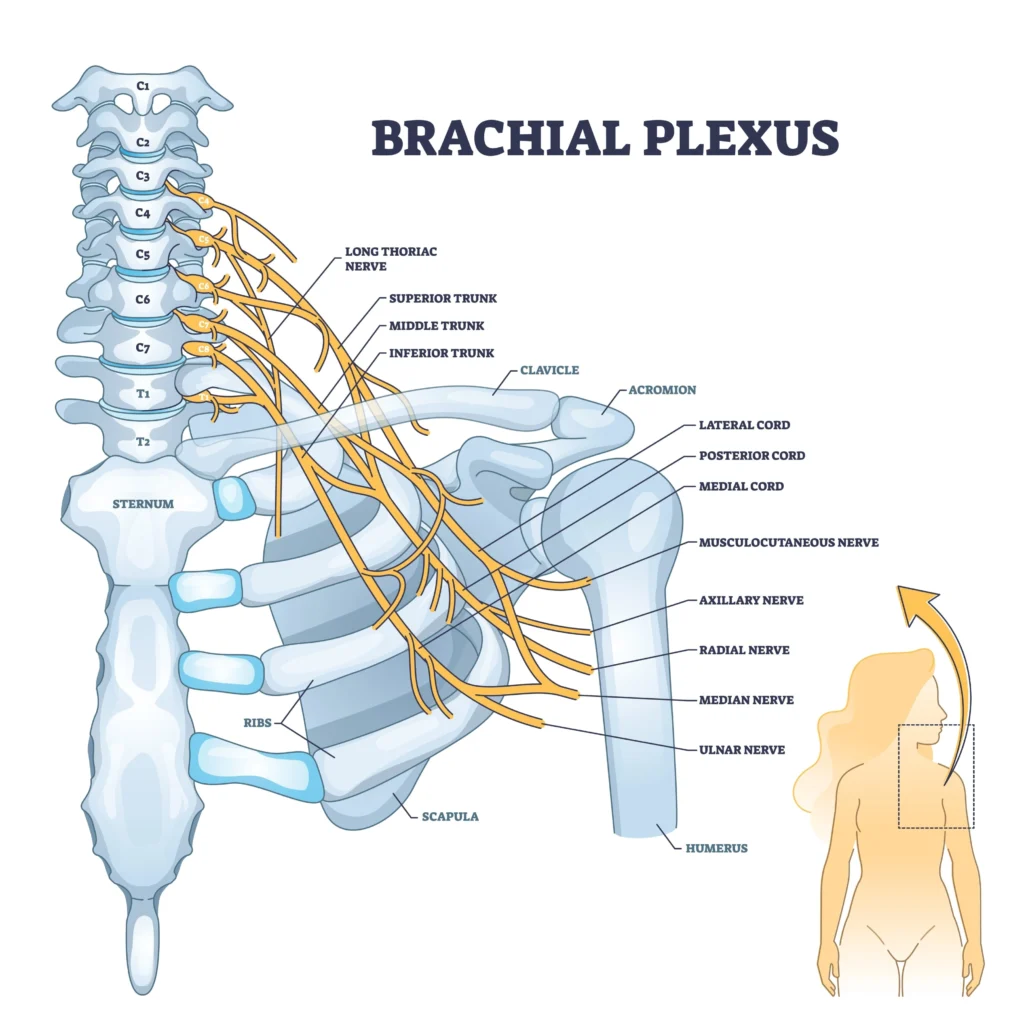
Birth brachial plexus palsy (BBPP) is a neurological condition present from birth. The brachial plexus is a vital, complex network of intertwined nerves located between the neck and the shoulders. These nerves act as the communication pathway between the spinal cord and the upper limbs, controlling the muscle movements and sensations in the chest, shoulder, arm, and hand. When these nerves are damaged, it results in weakness or complete paralysis of the affected arm.
How Does it Happen?
The initial injury typically occurs during childbirth. If an infant’s neck is stretched too far to the side during a difficult delivery (such as in cases of high birth weight, breech birth, or prolonged labor), the delicate nerves of the brachial plexus can be stretched, compressed, or even torn.
While the nerve damage happens at birth, secondary mechanical issues develop as the child grows. Over the years, a phenomenon known as co-contraction can occur. Because the nerves aren’t sending clear signals, opposing muscle groups in the shoulder and arm begin to work against each other. Instead of working together to lift the arm, they lock it in place. Additionally, muscles that aren’t used properly can permanently shorten, leading to contractures (stiffness and deformity in the joints).
When Does This Often Happen?
The initial nerve trauma always happens at birth. However, the severe physical limitations and muscular imbalances—like the co-contraction and contractures seen in Ancha’s case—present themselves and worsen as the child grows into late childhood. Treating the condition at an older age is notoriously difficult because the brain and the muscles have already spent years adapting to the limited, improper movement patterns.
Common Signs in Children
Parents may notice several indicators that a child is struggling with a brachial plexus injury:
- A limp or paralyzed arm hanging by the side.
- The inability to raise the arm above the head or bend the elbow.
- The arm being held tightly against the body and rotated inward.
- A “waiter’s tip” posture, where the wrist is flexed and the fingers are curled backward.
- Loss of feeling or sensation in the affected limb.
- Hesitance to use the hand for basic tasks like writing, eating, or playing.
Types of Birth Brachial Plexus Injuries
The severity of the condition depends on the specific type of nerve damage that occurred during birth:
- Neurapraxia (Stretch): The most common type. The nerve is stretched but not torn. These often heal on their own within the first few months of life.
- Neuroma: The nerve is stretched and damaged, leading to scar tissue. The scar tissue presses on the healthy nerve, restricting signals.
- Rupture: The nerve itself is torn apart, but not at the spinal cord. This will not heal on its own and requires surgical repair.
- Avulsion: The most severe type. The nerve root is completely torn away from the spinal cord.
(Note: The condition is also classified by which specific nerves are injured, with Erb’s Palsy being the most common, affecting the upper nerves that control the shoulder and elbow).
Is it Permanent?
A common misconception—and one that Ancha’s family believed for 11 years—is that the paralysis is entirely permanent.
If ignored, the secondary effects (like shortened muscles and joint deformities) do become permanent structural issues. However, the loss of arm function itself does not have to be permanent. While early intervention (within the first year of life) yields the easiest recoveries, advanced surgical techniques can now reverse the disability and restore movement even in older children.
Treatment Options
- Observation & Physiotherapy: For mild stretch injuries, rigorous daily physical therapy starting at a few weeks old is crucial. Therapy prevents joint stiffness and keeps the muscles healthy while the nerves naturally heal. Ancha’s family diligently kept up with her physiotherapy, which preserved her joint health and made her later surgery possible.
- Conventional Interventions: In some cases, doctors may try injecting Botulinum toxin (Botox) to temporarily weaken overpowering muscles, though this is often ineffective in older children.
- Advanced Microsurgery: For severe tears, or complex late-childhood cases, surgery is required. This can include:
- Peripheral Nerve Surgery / Nerve Grafts: Using a microscope to identify the tiny damaged nerves and splicing them with healthy donor nerves from other parts of the body.
- Tendon Release and Transfer: Surgically lengthening shortened muscles and repositioning tendons to correct shoulder and elbow deformities.
Ancha’s success story proves that with the right medical expertise, precise diagnosis, and advanced surgical facilities, incredible recoveries are possible.