Lower back pain has silently become a near-universal human condition. A recent systematic analysis from the Global Burden of Disease Study reveals a staggering reality: hundreds of millions of people globally suffer from severe, debilitating lower back issues. It is no longer an ailment exclusive to the elderly or manual laborers. Today, it aggressively impacts young professionals, remote workers, and active individuals across the globe.
The human spine is a marvel of biological engineering, built for dynamic movement and flexibility. However, modern lifestyles force it into unnatural, static compromises. As this global health crisis intensifies, understanding the root causes, implementing ergonomic fixes, and knowing when to seek advanced medical intervention becomes absolutely critical.
At Humane Medical Assistance, we frequently guide international patients suffering from chronic, unmanageable spinal conditions. We connect them with world-class orthopedic and neurological care in India. Let us explore why lower back pain is dominating modern health complaints, how you can protect your spine daily, and the pathways to premier medical solutions when conservative measures fail.
Why Lower Back Pain is a Growing Global Crisis
To understand the cure, we must first understand the cause. The alarming rise in spinal issues directly correlates with how drastically our daily lives have changed over the past decade.
We are increasingly sedentary. Specifically, the modern workforce spends seven to ten hours a day hunched over laptops, intensely focused on screens, and entirely disconnected from natural movement. Consequently, the muscles that structurally support the spine gradually weaken from sheer disuse.
When your core, abdominal, and deep back muscles lose their strength, your skeletal spine is forced to compensate. The lumbar region (the lower back) ends up absorbing immense mechanical stress it was never designed to carry alone. Furthermore, rising global obesity rates add literal weight to the problem. Every extra kilogram of body weight significantly increases the mechanical demand on your spinal discs, accelerating wear, tear, and eventual degeneration.
The Anatomy of the Ache: What Happens When You Sit Too Long
The back does not function as isolated parts; it operates as an interconnected kinetic chain. The muscles of the upper back connect seamlessly to the lower back. Those muscles, in turn, connect to the glutes, which attach to the hamstrings.
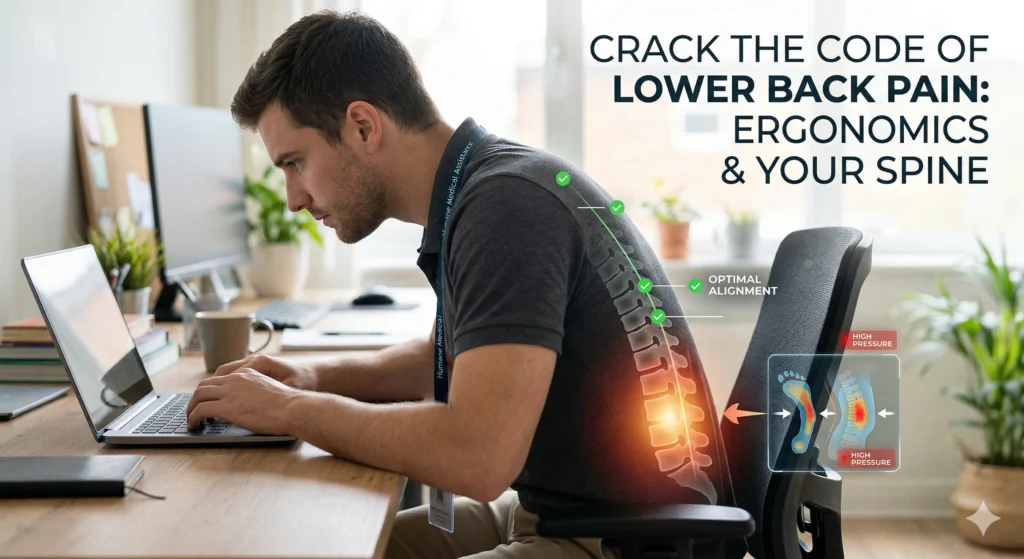
When you sit in a hunched, compromised posture for extended periods, this entire muscular chain experiences severe, prolonged strain. Why does the lower back usually hurt the most? The answer lies in the spine’s natural structure.
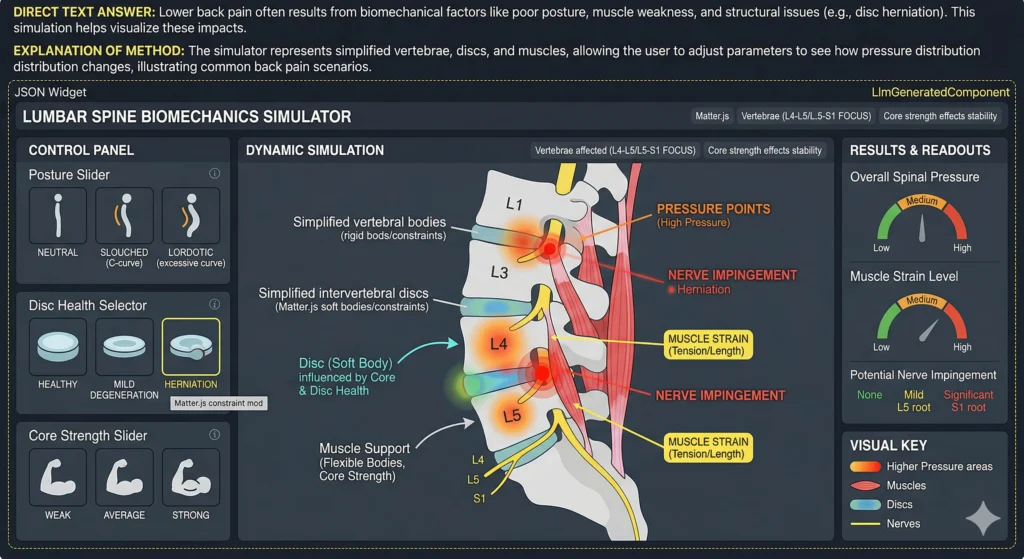
Your upper back features a natural outward curve, while your lower back possesses a mild inward arch. Chronic slouching forces the lumbar spine out of its natural curvature. Over time, this unnatural positioning continuously compresses the spinal discs unevenly. Ultimately, the weakest or most vulnerable part of the body signals the first alarm. Therefore, the lower back screams in pain before the rest of the body registers the damage.
The Hidden Culprit: Flawed Furniture and Poor Ergonomics
One of the absolute biggest, yet most ignored, culprits behind chronic back pain is the furniture we use daily. Poor ergonomics contribute far more to structural spinal issues than most people realize.
During the global shift to remote work, makeshift home offices became the standard. Laptops were propped onto low coffee tables. Hard dining chairs were pressed into service as ten-hour office seating. Soft sofas, which look incredibly comfortable but offer zero structural spinal support, became daily workstations.
Unfortunately, these detrimental habits have largely stuck. None of these makeshift setups support the crucial inward curve of the lumbar spine. The human body is highly adaptable; it will eventually mold itself to whatever position you hold it in long enough. If you hold it in a misaligned, unsupported curve, chronic pain is the guaranteed biological outcome.
Furthermore, the damage does not stop when the workday ends. The quality of your mattress plays an equally vital role in spinal health. Sleeping on worn-out, unsupportive surfaces prevents the spine from decompressing and healing overnight, leaving you waking up stiffer and in more pain than the night before.
Daily Fixes: Movement, Posture, and Prevention
Fortunately, the vast majority of mechanical lower back pain responds incredibly well to lifestyle modifications. When it comes to spinal health, no single magic fix works in isolation. You must adopt a comprehensive, daily approach.
1. Upgrade Your Ergonomics You must invest in proper ergonomic furniture. Utilize an office chair that provides distinct, adjustable lumbar support. Position your computer screen exactly at eye level to prevent your neck from pulling your upper spine forward. Ensure your feet rest flat on the floor, keeping your knees at a comfortable 90-degree angle.
2. Make Movement Mandatory Exercise remains the single most important factor in reducing back pain. The spine requires movement to circulate vital nutrients to the spinal discs. Therefore, implement strict movement breaks every 30 to 60 minutes. Stand up, stretch gently, and walk around.
3. Strengthen the Support System Do not just rest a sore back; strengthen it. Engage in targeted physiotherapy, yoga, or clinical Pilates. Focus heavily on building a resilient core. When your abdominal and deep back muscles are highly conditioned, they act as an internal corset, perfectly distributing physical loads and protecting the vulnerable lumbar discs from injury.
4. Master Your Lifting Mechanics If your daily life involves manual labor or lifting heavy objects, your technique dictates your spinal health. Always hinge safely at the knees rather than bending at the waist. Keep heavy loads held tightly close to your body. This simple mechanical adjustment takes immense strain off the lower back instantly.
When Ergonomics Aren’t Enough: Seeking Specialized Medical Intervention
While movement and ergonomics resolve many mechanical back issues, they cannot fix severe structural damage. Prolonged neglect, acute trauma, or age-related degeneration often lead to complex conditions that require advanced medical intervention.
Conditions such as severe herniated discs, spinal stenosis, advanced osteoarthritis, or degenerative disc disease frequently cause agonizing nerve compression (sciatica). When conservative treatments like physical therapy, targeted exercise, and pain management fail to provide relief, spine surgery becomes a necessary, life-restoring option.
However, accessing high-quality, advanced spinal surgery can be incredibly challenging. In many regions across Africa, the Middle East, and beyond, specialized orthopedic and neurological care is either unavailable or prohibitively expensive.
Why International Patients Choose India for Spine Treatment
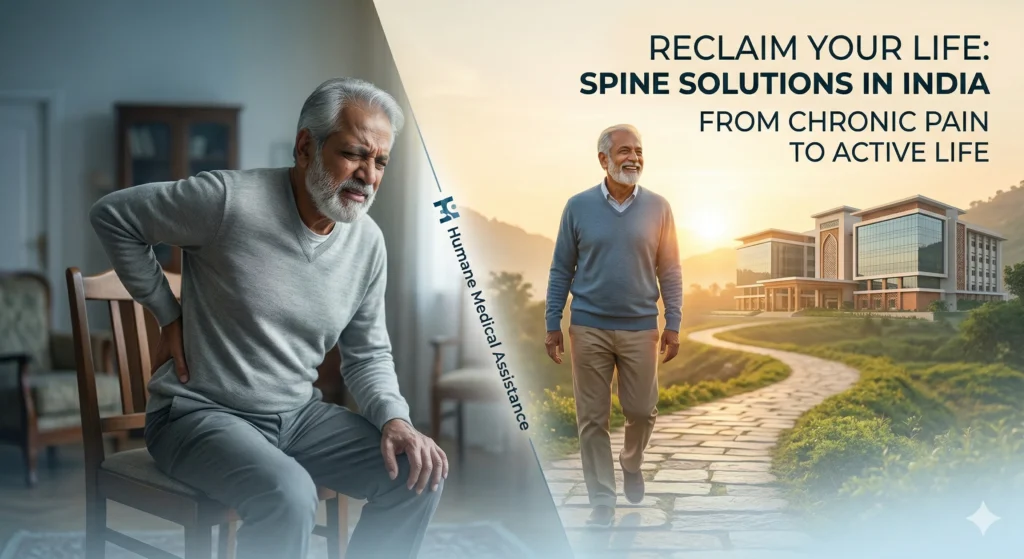
Faced with severe chronic pain and limited local options, thousands of international patients travel to India every year for advanced spine treatments. India has firmly established itself as a premier global destination for complex medical procedures.
World-Renowned Expertise: Indian hospitals house globally recognized spine surgeons who utilize the latest, minimally invasive surgical techniques. Advanced Technology: Top-tier Indian medical facilities are equipped with state-of-the-art robotic surgery systems and cutting-edge neuro-navigation technology, ensuring maximum precision and safety. High Affordability: Patients receive this world-class medical care at a fraction of the cost they would incur in Western nations, making life-changing surgery highly accessible.
Let Humane Medical Assistance Guide Your Spine Health Journey
Living with relentless lower back pain strips away your quality of life, mobility, and independence. If you require advanced spinal treatment and are considering traveling to India for care, Humane Medical Assistance is your dedicated partner.
Navigating international healthcare logistics can feel overwhelming, especially when you are in physical pain. We completely remove that burden. As a highly specialized patient case management service, we provide comprehensive, end-to-end support for your medical journey.
Our Complete Patient Support Includes:
- Expert Hospital Selection: We directly connect you with India’s absolute best, JCI-accredited spine and neurology centers.
- Seamless Travel & Visa Assistance: We expertly manage the complex medical visa process and arrange all airport transfers.
- Local Coordination: We coordinate comfortable, accessible local accommodations perfectly suited for patients recovering from spine procedures.
- Continuous Case Management: We act as your relentless advocate, providing continuous support from your initial consultation through your surgery and your safe journey home.
Do not let lower back pain dictate your life’s boundaries. Contact Humane Medical Assistance today. Let us facilitate your journey toward a pain-free, fully restored life through world-class medical excellence.