Travelling to India for medical treatment can provide international patients with access to experienced specialists, advanced medical technology and a wide range of treatment options. However, proper medical documentation is essential for a smooth treatment journey.
For patients travelling from Kenya, Tanzania, Uganda and other African countries, carrying the right medical reports helps Indian doctors understand the patient’s medical history, assess previous treatments and plan the next steps more effectively.
At Humane Medical Assistance, we encourage patients and their families to prepare their medical files before travelling to India to help avoid unnecessary delays in consultations, diagnostic evaluations and treatment planning.
- Previous Medical Reports and Consultation Notes
Carry all relevant reports related to your current illness, including:
- Previous doctor’s consultation notes and clinical assessments.
- Medical diagnoses and summaries of the patient’s condition.
- Records of earlier hospital visits and specialist consultations.
- Any referral letter from the treating doctor, if available.
These documents help the Indian medical team understand the patient’s condition and the treatment already received.
- MRI, CT Scan, PET-CT and Other Imaging Reports
For patients seeking treatment for cancer, neurological disorders, orthopaedic conditions or other complex diseases, imaging records can be particularly important.
Remember to carry:
- Printed radiology reports.
- Original imaging files on CD, DVD or USB, where available.
- MRI, CT scan, PET-CT, X-ray and ultrasound images relevant to the condition.
Important: A printed report alone may not always be sufficient. The treating hospital may need to review the original images or request updated investigations.
- Biopsy Reports, Histopathology Slides and Tissue Blocks
For patients travelling to India for cancer treatment, biopsy and pathology records can play a significant role in confirming the diagnosis and planning treatment.
Where applicable, carry:
- The original or complete biopsy and histopathology report.
- Immunohistochemistry (IHC) reports.
- Histopathology slides and paraffin-embedded tissue blocks, if available and requested by the receiving hospital.
- Molecular testing, genetic profiling or next-generation sequencing (NGS) reports, if performed.
- Previous cancer staging and treatment assessment reports.
For certain cancers, Indian specialists may recommend a pathology review or additional testing before finalising a treatment plan. Contact the receiving hospital in advance regarding specimen requirements, transport and handling.
- Blood Tests and Recent Laboratory Investigations
Carry recent laboratory reports relevant to your condition. These may include:
- Complete blood count (CBC).
- Kidney and liver function tests.
- Blood glucose and electrolyte reports.
- Coagulation profile, where indicated.
- Relevant infection screening results.
- Tumour markers or specialised tests, if requested by the treating specialist.
The required tests depend on the patient’s diagnosis, planned procedure and medical condition. Some investigations may need to be repeated after arrival in India.
- Current Medication List and Treatment History
Prepare a clear list of all medicines the patient is currently taking.
Include:
- Medicine names and dosages.
- Frequency and route of administration.
- Known drug allergies or previous adverse reactions.
- Details of chemotherapy, radiotherapy, immunotherapy, surgery or other major treatments already received.
- Any history of blood transfusion or significant treatment complications, where relevant.
Patients should also carry their prescriptions and keep essential medicines in their original packaging, subject to applicable travel regulations.
- Hospital Discharge Summaries and Operation Records
If the patient has previously been admitted to a hospital or undergone surgery, carry the relevant records, such as:
- Hospital discharge summaries.
- Operation notes and surgical reports.
- Anaesthesia records, if relevant.
- Previous intensive care records, where applicable.
- Implant details or device records, if relevant to the planned treatment.
These documents help the receiving medical team assess previous procedures, recovery and potential treatment-related risks.
- A Short Written Medical History
Prepare a one-page summary covering:
- The patient’s age and main medical problem.
- When the symptoms first appeared.
- Important diagnoses and investigations.
- Treatments received and the response to treatment.
- Existing medical conditions and known allergies.
- Current medications and the reason for seeking treatment in India.
If the documents are not in English, arrange reliable translations where required by the receiving hospital or relevant authorities.
- Keep Both Digital and Printed Copies
Organise your medical documents in chronological order, with the latest reports easily accessible.
We recommend keeping:
- One organised printed medical file.
- A secure digital copy of reports and prescriptions.
- Original imaging files and pathology materials, when required.
- A backup copy accessible to an authorised family member or caregiver.
Protect the patient’s personal and medical information when sharing files electronically.
- Consult the Indian Hospital Before Travelling
Before booking your journey, request a teleconsultation or preliminary medical review whenever appropriate. Share the available reports with the treating hospital so the specialist can assess the case and advise which additional documents may be necessary.
Ask for a written preliminary treatment plan and an estimated cost, where available. These are initial assessments; the final diagnosis, treatment plan and cost may change after an in-person examination and further investigations.
Patients should also plan follow-up care in their home country before travelling, particularly if ongoing medication, wound care, rehabilitation or cancer treatment will be required after returning home.
- Do Not Forget Your Travel and Medical Visa Documents
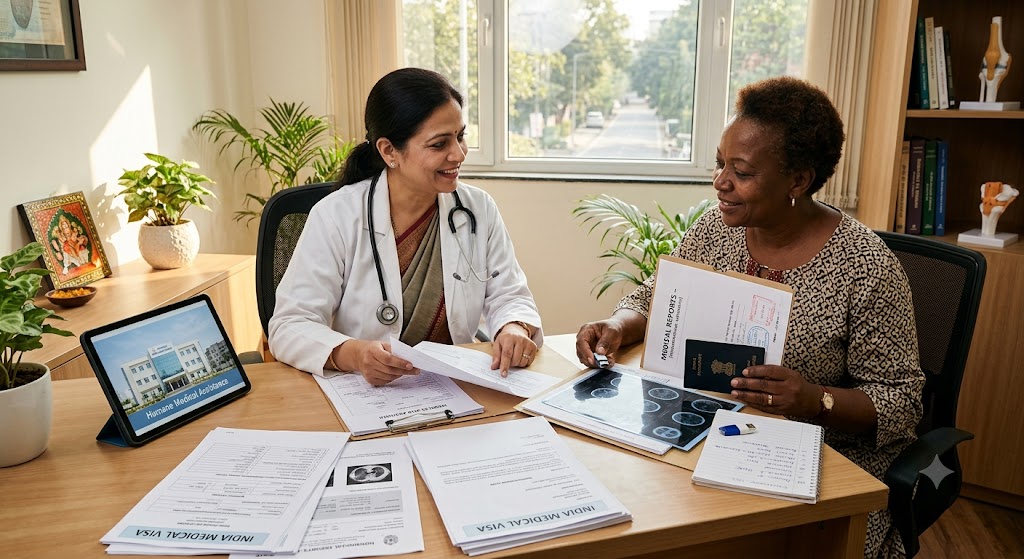
In addition to medical reports, check the applicable travel requirements and carry the necessary passport, visa and hospital documentation. Patients applying for an Indian medical visa should verify the current requirements through official Indian government channels and the relevant Indian mission.
How Humane Medical Assistance Can Help
Humane Medical Assistance supports international patients seeking medical treatment in India by helping coordinate medical consultations, hospital communication, preliminary treatment estimates, travel arrangements and other patient-support services.
Our aim is to help patients and their families prepare their medical information and understand the next steps before travelling.
Planning medical treatment in India? Organise your reports, share your medical history with the treating team and seek guidance before finalising your travel arrangements.
Visit: www.humane-healthcare.com