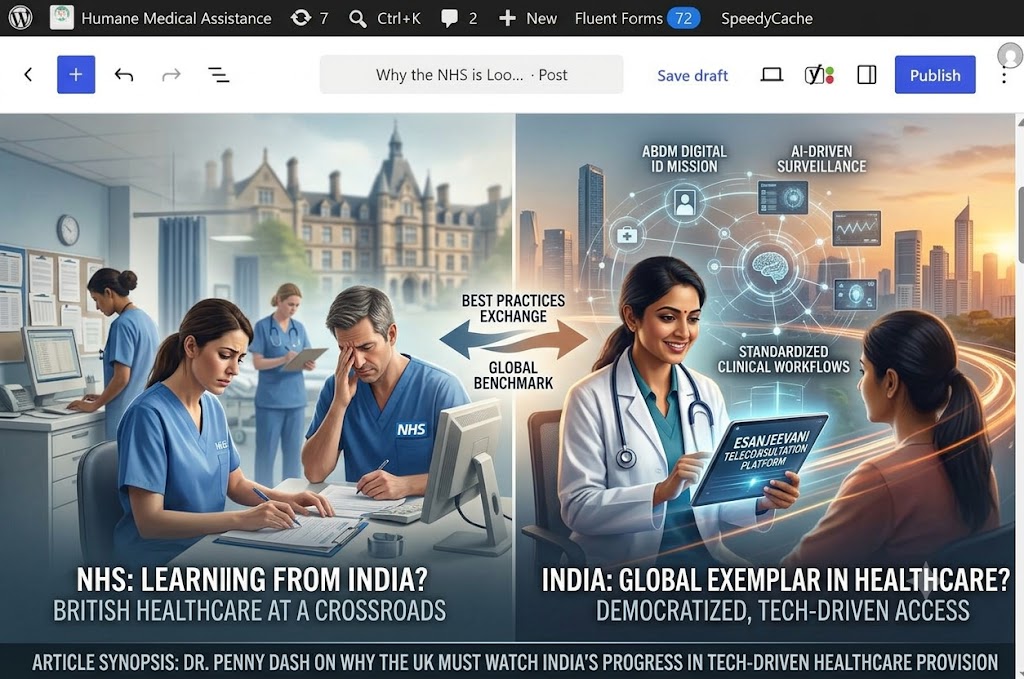
The National Health Service (NHS) in Britain has long been considered a crown jewel of public healthcare, but like many global systems, it faces growing pressures from an aging population, rising costs, and stretched resources. In a surprising yet forward-looking shift, NHS England Chair Dr. Penny Dash recently stated that Britain has a lot to learn from India’s healthcare system. Speaking on the HealthTech Hour podcast, Dr. Dash went as far as to suggest that India could soon become the “global exemplar in healthcare provision.”
UK NHS boss: Britain should learn from India s’ healthcare system
What makes India’s healthcare delivery so remarkable, and why is one of the world’s leading public health systems taking notes? The answer lies in digital innovation, rapid scalability, and an unyielding commitment to democratizing healthcare access.
The Power of Technology at Scale
One of the stand-out observations made by Dr. Dash is India’s unique ability to blend technology with healthcare delivery to serve vast populations efficiently. While Western nations like the United States have pioneered advanced healthcare tech, India’s implementation stands out for how seamlessly it integrates technology into everyday patient care across diverse demographics.
Key initiatives transforming Indian healthcare include:
- Ayushman Bharat Digital Mission (ABDM): Establishing one of the world’s largest public digital health infrastructures, giving citizens digital health IDs and unifying health records securely across providers.
- eSanjeevani Teleconsultation Platform: Facilitating hundreds of millions of remote medical consultations, bridging the divide between urban specialists and rural patients.
- AI-Driven Disease Surveillance: Utilizing artificial intelligence models to track, detect, and predict localized outbreaks of vector-borne illnesses like malaria and dengue before they spread.
Instead of keeping technology locked behind expensive private care walls, India has leveraged digital infrastructure as a public good, ensuring millions can access consultations and diagnostic care at a fraction of the traditional cost.
Standardized Processes and Lower Unit Costs
A major challenge for healthcare systems worldwide is the continuous rise in unit costs—the price of delivering an individual care service, checkup, or treatment. According to Dr. Dash, India recognized early on that standardized operating procedures (SOPs) are key to maintaining both quality and speed.
By pairing standardized clinical workflows with modern digital tools, Indian healthcare providers have managed to dramatically slash unit costs while maintaining impressive standards of care.
+------------------------------------+---------------------------------------------------+
| Feature                            | Impact on Healthcare Delivery                     |
+------------------------------------+---------------------------------------------------+
| Digital Health IDs & Records       | Eliminates redundancy and speeds up diagnosis     |
| Telehealth Integration             | Reduces emergency room crowding and travel costs  |
| AI Predictive Analytics            | Prevents widespread outbreaks through early care  |
| Standardized Digital Workflows     | Lowers administrative overhead and unit costs     |
+------------------------------------+---------------------------------------------------+
This focus on operational efficiency allows high volumes of patients to be treated swiftly without sacrificing clinical outcomes—a model the NHS, facing severe backlogs and administrative delays, is eager to analyze.
Democratizing Access: A Core Ethos
In developed economies, healthcare technology often focuses on premium services, niche tracking, or high-cost clinical equipment. In contrast, India’s health-tech founders, engineers, and medical professionals have prioritized access above all else.
The primary mission driving Indian health innovation is ensuring that a patient in a remote village receives the same foundational medical advice as someone in a major metro area. This ethos of democratized healthcare ensures that technological advancements directly benefit the most vulnerable segments of society rather than widening the care gap.
What the NHS Can Learn from India’s Model
As NHS England attempts to modernise its systems, lower waiting times, and improve overall productivity, several key takeaways from India’s approach stand out:
- Embrace Digital Infrastructure First: Building unified digital frameworks creates seamless patient journeys and reduces repetitive administrative work.
- Focus on Unit Cost Reduction: Implementing tech to streamline basic operational processes lowers the cost per patient visit, making public health spending stretch further.
- Prioritize Teleconsultation: Expanding remote care reduces physical pressure on hospitals and GP surgeries.
- Learn from Agility: Adapting software solution workflows rapidly allows health systems to respond dynamically to changing population needs.
Looking Ahead
Healthcare delivery globally is at a critical turning point. As Western systems struggle under the weight of escalating costs and legacy infrastructure, India’s low-cost, tech-enabled, highly scalable model offers a compelling vision for the future.
As Dr. Penny Dash summarized, India’s progress in healthcare provision is something the world must pay attention to: “Wow is the main thing. That’s going to be very interesting. Watch that space.”