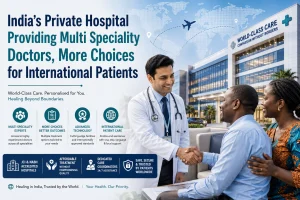
India has cemented its position as one of the world’s leading destinations for medical tourism in 2026. Offering internationally accredited hospitals, highly trained specialists, and cutting-edge technology at a fraction of the cost found in Western countries, India attracts thousands of patients annually from Africa, the Middle East, Europe, and Asia.
However, traveling internationally for surgery or complex medical care requires far more planning than a standard vacation. Proper travel preparation is the difference between a stressful ordeal and a smooth, successful path to recovery.
Whether you are traveling to New Delhi for orthopedic surgery, cardiac care, or advanced oncology treatments, this definitive guide will walk you through the essential steps every international patient must take before boarding their flight.
1. Obtain a Medical Opinion Before Traveling
Never book a flight without a confirmed, preliminary treatment plan. Arriving in a foreign country without a pre-vetted strategy can lead to unexpected delays, increased costs, and immense stress.
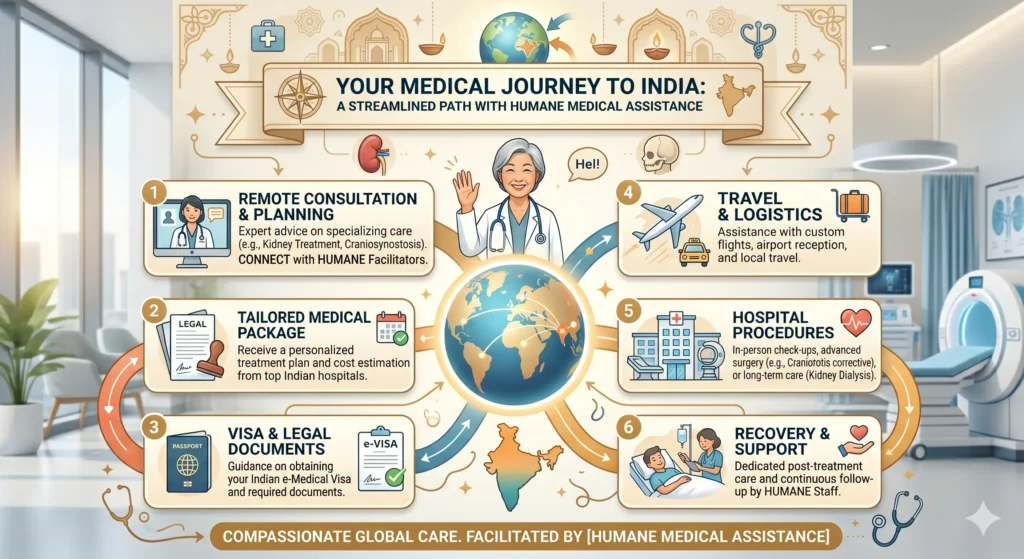
Before making any travel arrangements, securely share your medical history with your chosen hospital or a certified medical assistance facilitator like Humane Medical Assistance.
What you need to provide:
- Recent diagnostic imaging (MRI, CT scans, X-rays)
- Current laboratory and blood test results
- Previous hospital discharge summaries
- A detailed clinical history from your local physician
What you should expect in return:
Once a specialist in India reviews your file, they will provide a comprehensive preliminary medical opinion. This should clearly outline the recommended surgical or medical intervention, the estimated duration of your hospital stay, the expected recovery time before you are fit to fly, and a transparent estimate of the treatment costs. This preliminary consultation sets the foundation for your entire journey.
2. Secure Your Indian Medical Visa (M-Visa)
The Indian government has streamlined entry for international patients through the e-Medical Visa system, making the process highly efficient in 2026. However, strict adherence to documentation is required to avoid rejection.
The standard e-Medical Visa is typically valid for 60 days and allows for up to three entries, which is crucial if you need to return for follow-up care. Up to two blood relatives can also apply for an e-Medical Attendant Visa to accompany you.
1.Obtain the Visa Invitation Letter:Mandatory first step.
You cannot apply for a medical visa without an official Visa Invitation Letter (VIL) issued by a recognized Indian hospital. This letter confirms your diagnosis, proposed treatment, and dates.
2.Gather Digital Documents:
Scan the bio-page of your passport (which must have at least 6 months of validity and two blank pages). Prepare a recent, square-shaped digital photograph with a white background that strictly meets Indian government specifications.
3.Submit the e-Visa Application:
Visit the official Indian government e-Visa portal. Select “e-Medical Visa,” fill out your personal details exactly as they appear on your passport, and upload your digital photo, passport scan, and PDF Visa Invitation Letter.
4.Pay the Government Fee:
Pay the non-refundable visa processing fee online using a secure credit or debit card. Fees vary by nationality but generally range from $80 to $100 USD.
5.Print Your ETA:
Within 3 to 5 business days, you will receive an Electronic Travel Authorization (ETA) via email. You must print a physical copy of this document and carry it with you to present at immigration upon arrival in India.
3. Prepare and Digitize Essential Documents
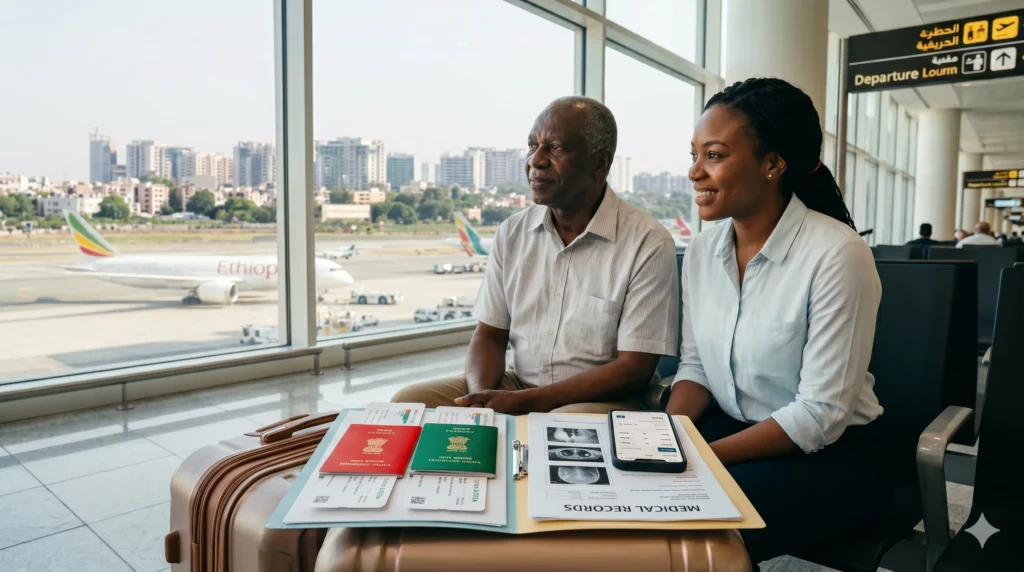
When dealing with international healthcare, redundancy is your best friend. Relying solely on physical documents is risky if luggage is lost, while relying only on digital files is dangerous if you lose internet access.
Create a dedicated travel folder containing:
- Identification: Passport, printed e-Visa ETA, and extra passport-sized photos.
- Medical Records: All physical scans, lab results, and your home doctor’s referral.
- Financials: Proof of funds, travel insurance policies, and credit cards.
- Logistics: Flight itineraries, accommodation booking confirmations, and your hospital invitation letter.
Pro Tip: Scan every single document and save them to a secure cloud storage service (like Google Drive or Dropbox). Share access to this digital folder with a trusted family member back home and your medical coordinator in India.
4. Plan Your Budget with Total Transparency
The primary advantage of medical tourism in India is cost-effectiveness, but failing to budget for the entire journey can cause financial strain. The hospital’s quote covers the medical procedure, but you must account for the peripheral costs of travel.
Factor the following into your total budget:
- Flights: Round-trip airfare for the patient and their attendant.
- Extended Accommodation: You will need a place to stay after being discharged from the hospital but before you are cleared to fly home.
- Daily Living: Food, local transportation (cabs or specialized medical transport), and mobile data.
- Post-Operative Care: Prescription medications to take home, medical equipment (like crutches or braces), and follow-up consultation fees.
- Emergency Buffer: Always keep a contingency fund for unexpected delays in recovery that might require you to extend your stay.
5. Assess Your Fitness to Fly
Commercial air travel exposes the body to changes in cabin pressure, lower oxygen levels, and prolonged immobility. If you are traveling with a severe cardiac, neurological, or orthopedic condition, you must explicitly discuss your “fitness to fly” with your local physician.
Crucial travel logistics to arrange:
- Wheelchair Assistance: Request wheelchair service through your airline well in advance to navigate large departure and arrival airports without physical exertion.
- In-Flight Medical Support: If you require supplemental oxygen during the flight, this must be cleared and arranged with the airline weeks in advance.
- DVT Prevention: Long flights increase the risk of Deep Vein Thrombosis (blood clots). Ask your doctor about wearing compression stockings, staying hydrated, and doing in-seat leg exercises.
- Medication Accessibility: Pack all daily prescription medications in your carry-on luggage. Never put essential medicine in checked baggage.
6. Secure Strategic Accommodation Near the Hospital
Where you stay during your recovery phase significantly impacts your healing process. New Delhi offers a vast array of accommodations, but medical travelers have specific needs.
Avoid booking standard tourist hotels far from your treating facility. Traffic in major Indian cities can be heavy, and long commutes for follow-up appointments are physically exhausting for a recovering patient.
Seek out serviced apartments, guesthouses, or specialized recovery hotels located within a short radius of your hospital (for example, in South Delhi areas like Okhla if you are treating at nearby facilities). Look for accommodations that offer ground-floor access, elevators, in-room kitchenettes for specific dietary needs, and quiet environments. Humane Medical Assistance routinely helps international patients secure safe, vetted, and comfortable housing tailored to their recovery requirements.
7. Understand Climate, Culture, and Local Support
India is a vast, diverse country with varying climates depending on the season and region. New Delhi experiences distinct seasons: highly humid summers, heavy monsoon rains, and surprisingly cold winters. Check the specific weather forecast for your travel dates and pack accordingly.
Building a Support System:
Navigating a new country while dealing with health anxiety is challenging. Securing local support transforms the experience. International patients benefit immensely from:
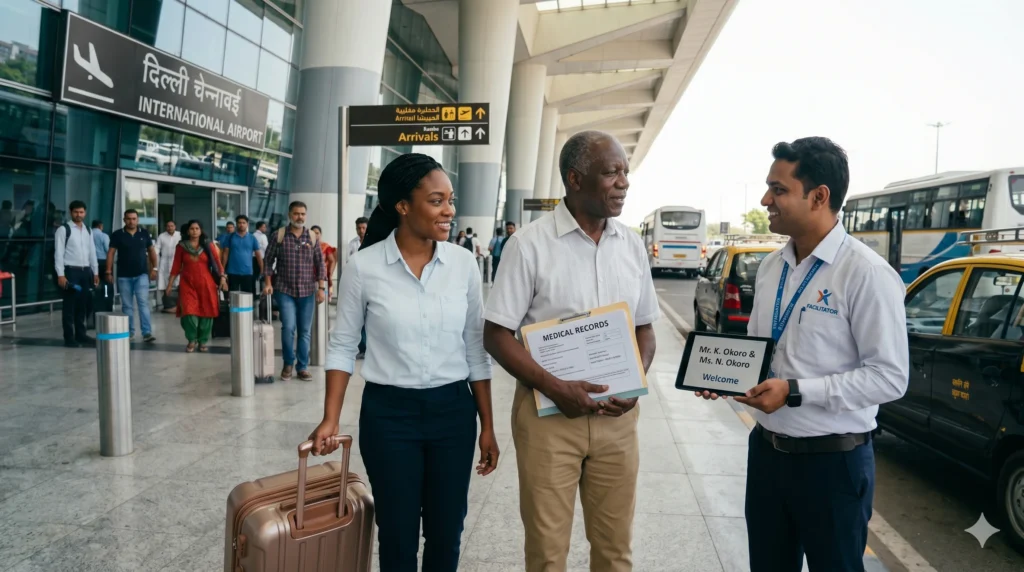
- Airport Reception: Having a trusted representative waiting at the arrival gate.
- Language Interpretation: Ensuring clear communication with nursing staff and doctors if English is not your primary language.
- Logistical Coordination: Having a dedicated coordinator handle hospital admissions, billing, and pharmacy runs so the patient and their family can focus entirely on healing.
8. Stay Connected with Home
Medical travel can feel isolating for both the patient and the family waiting anxiously back home. Prioritize communication from day one. Ensure your mobile phone is unlocked before leaving your home country so you can easily purchase an Indian prepaid SIM card or eSIM upon arrival. Share your complete itinerary, hospital contact details, and the contact information of your local medical facilitator with your family.
Frequently Asked Questions
Do I need a special visa for medical treatment in India?
Yes. International patients must apply for a specific Medical Visa (M-Visa) or an e-Medical Visa. Traveling to India for medical procedures on a standard Tourist Visa is strictly prohibited and can lead to deportation or denial of treatment by the hospital.
How long does it take to get an Indian e-Medical Visa in 2026?
For eligible nationalities, the Indian e-Medical Visa is typically processed and approved within 3 to 5 business days after submitting a complete online application with the required hospital invitation letter.
Can my family travel with me for my surgery in India?
Yes. Up to two blood relatives can apply for an e-Medical Attendant Visa. This visa is linked to the primary patient’s application and allows family members to accompany and support the patient during their treatment and recovery.
What happens if my recovery takes longer than my visa allows?
If a patient experiences medical complications or requires extended recovery time that exceeds their visa validity, they must apply for a visa extension through the Foreigners Regional Registration Office (FRRO) in India, supported by an updated medical certificate from their treating doctor.
Focus on Healing, Let Us Handle the Rest
Traveling to India for medical treatment is a major life decision. However, with careful planning, precise documentation, and the right local support, you can remove the stress of international logistics and focus entirely on your health. By preparing thoroughly in advance, you ensure a safer journey and a smoother transition into your medical care.
About Humane Medical Assistance
Based in New Delhi, Humane Medical Assistance is a dedicated medical tourism facilitation agency serving international patients. We are not a hospital, but your strategic partner on the ground. From securing your preliminary medical opinion and providing Visa Invitation Letters to arranging airport transfers and vetted accommodations, we manage the complexities of your journey so you can focus on returning home with renewed health.
Ready to start your journey? Contact Humane Medical Assistance today for a free, secure review of your medical reports.