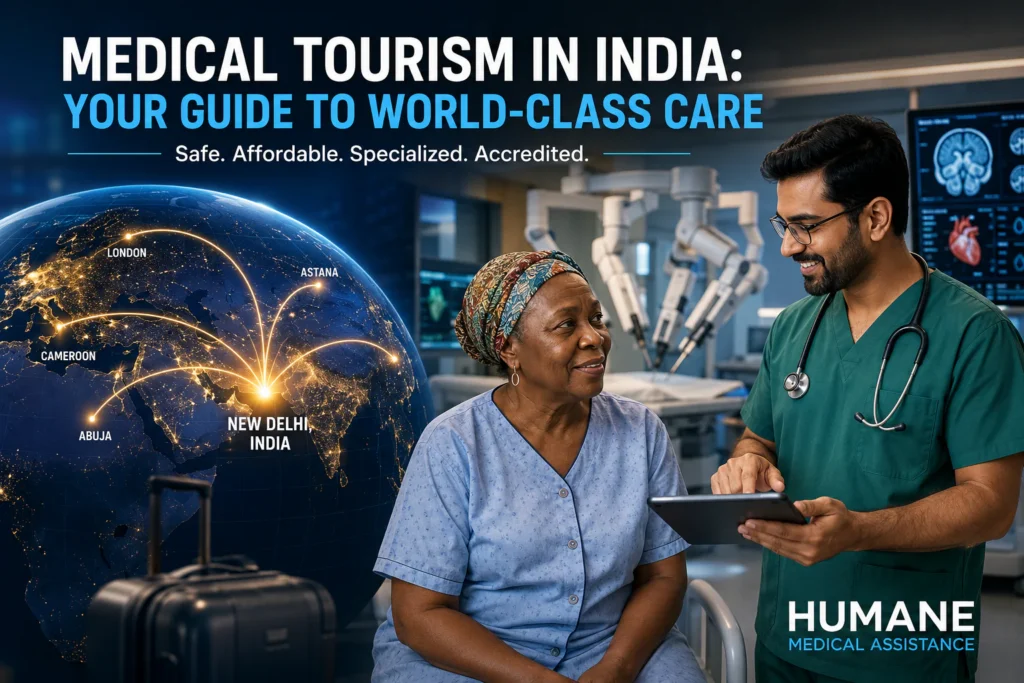
The global healthcare landscape is changing rapidly. For instance, in many Western nations, patients face months-long waiting lists for critical surgeries. Meanwhile, in emerging markets across Africa and the CIS, specialized tertiary care—such as advanced oncology, robotic surgery, or complex organ transplants—remains largely inaccessible.
Consequently, this growing disparity has fueled the massive rise of medical tourism. Patients are no longer settling for delayed, overly expensive, or inadequate care in their home countries. Instead, they are crossing international borders to access world-class medical treatments at a fraction of the cost.
At Humane Medical Assistance, based in the medical hub of New Delhi, India, our team facilitates these life-saving journeys. Essentially, we bridge the gap between international patients and India’s elite, internationally accredited hospitals. Therefore, this comprehensive guide explains how medical tourism works, why India leads the global market, and how a dedicated facilitation agency ensures a safe, successful medical journey.
Key Takeaways: Understanding Medical Tourism
- What it is: Medical tourism involves traveling across international borders to receive medical, surgical, or dental care.
- The Primary Drivers: Specifically, patients travel to bypass long wait times, save up to 80% on medical costs, and access advanced treatments unavailable at home.
- India’s Dominance: Furthermore, India has emerged as a premier global destination, known for JCI-accredited hospitals, robotic-assisted surgeries, and highly specialized, English-speaking doctors.
- High-Value Care: Ultimately, the industry has shifted from basic procedures to complex, life-saving treatments like oncology, cardiac surgery, and organ transplants.
- The Facilitator’s Role: Dedicated agencies like Humane Medical Assistance handle all logistics—including medical visas, hospital admission, and post-operative care—allowing the patient to focus entirely on healing.
What Exactly is Medical Tourism?
Historically, the term “medical tourism” conjured images of people combining cosmetic surgery with a beach vacation. Today, however, that definition has evolved dramatically. In fact, modern medical value travel is driven by necessity, precision, and life-saving interventions.
Patients travel globally to seek out highly specialized medical expertise. Specifically, this shift is classified as seeking tertiary and quaternary care. This means individuals are traveling for complex neurosurgery, intricate cardiovascular procedures, advanced cancer treatments, and robotic-assisted orthopedic surgeries.
For example, if a patient in Cameroon or a citizen in the UK waits six months for a vital surgery, their condition can worsen drastically. Fortunately, medical tourism eliminates this waiting period. As a result, it provides immediate access to top-tier healthcare infrastructure, ultimately saving lives and preserving quality of life.

Why India is the Global Capital of Medical Tourism
When patients research healthcare options abroad, India consistently ranks at the top of the list. Undoubtedly, the country has successfully built a robust, technologically advanced healthcare ecosystem that rivals the United States and Europe.
Here is exactly why millions of global citizens choose India for their medical needs:
1. Uncompromising Quality and JCI Accreditation
India boasts dozens of hospitals accredited by the Joint Commission International (JCI). Importantly, this represents the absolute gold standard in global healthcare quality and patient safety. Whenever a patient walks into a JCI-accredited hospital in New Delhi, they step into a facility held to the exact same rigorous safety protocols as a top hospital in New York or London.
2. Elite, Globally Trained Medical Professionals
Furthermore, Indian surgeons and physicians are globally renowned for their expertise. Indeed, a vast majority of the specialists working in top-tier Indian hospitals have completed advanced fellowships or rigorous training programs in the United States, the UK, or Germany. Consequently, they bring this advanced knowledge back to India, offering international patients unparalleled surgical skill.
3. State-of-the-Art Medical Technology
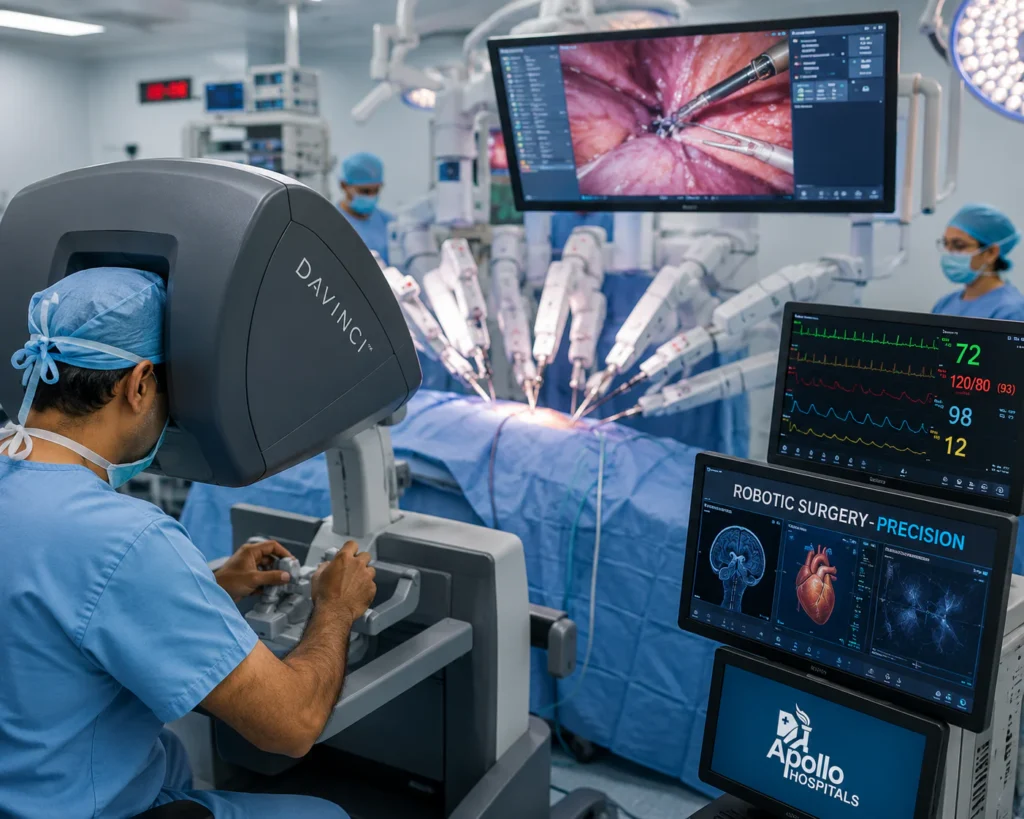
Additionally, India’s premier hospitals invest heavily in the latest medical technology. For instance, patients have immediate access to CyberKnife radiation therapy for tumors, Da Vinci robotic surgical systems for minimally invasive procedures, and the latest generation of MRI and PET-CT scanners. Ultimately, this technology ensures precise diagnoses, smaller surgical incisions, and much faster recovery times.
4. Exceptional Cost Efficiency
Moreover, the cost savings in India are staggering. Patients can expect to save between 60% to 80% on complex medical procedures compared to US or UK prices. Crucially, this cost reduction does not reflect a drop in quality. Instead, it reflects India’s lower cost of living, lower administrative overhead, and highly efficient healthcare scaling.
| Procedure Type | Average US Cost | Average India Cost |
| Heart Bypass (CABG) | $120,000+ | $5,000 – $7,000 |
| Knee Replacement | $40,000+ | $4,000 – $6,000 |
| Spinal Fusion | $110,000+ | $6,000 – $9,000 |
Note: Costs are estimates and vary based on the specific hospital and patient condition.
Top Medical Specialties for International Patients
As global healthcare demand shifts toward high-value, complex treatments, Indian hospitals have become centers of excellence for several critical specialties.
Advanced Oncology (Cancer Care)
First, cancer requires swift, aggressive, and highly targeted action. Fortunately, India offers comprehensive oncology care, including surgical oncology, chemotherapy, and advanced targeted biological therapies. Whether a patient requires a complex robotic-assisted sigmoid colectomy or precision radiation, India provides immediate, multidisciplinary cancer care.
Cardiology and Cardiothoracic Surgery
Second, heart disease remains a leading global health issue. In response, Indian hospitals excel in complex cardiac procedures, including pediatric cardiology, heart valve replacements, and minimally invasive coronary artery bypass grafting (CABG).
Orthopedics and Joint Replacement
Third, chronic pain from joint degradation severely limits a person’s life. Therefore, medical tourists frequently travel to India for bilateral knee replacements, hip resurfacing, and complex spinal surgeries. Furthermore, the use of robotic-assisted orthopedic surgery ensures perfect implant alignment and rapid post-operative mobility.
Organ Transplants
Finally, India has developed highly successful and legally transparent protocols for living-donor organ transplants, particularly for liver and kidney disease. Remarkably, the survival rates and post-operative success metrics at top Indian transplant centers rival the best institutions globally.
The Vital Role of a Medical Tourism Agency
While the benefits of traveling to India for healthcare are immense, navigating the logistics alone can feel incredibly daunting. Obviously, a patient dealing with a severe illness should not have to worry about booking flights, negotiating hospital fees, or navigating foreign visa portals.
This is exactly where a specialized medical tourism facilitator like Humane Medical Assistance becomes indispensable. Essentially, we act as your dedicated healthcare advocates, ensuring every single detail is meticulously planned.
Overcoming the Information Barrier
To begin with, the internet is flooded with information, making it difficult to distinguish which hospital or doctor is truly the best fit for your specific condition. Because we are based in New Delhi and maintain deep-rooted relationships with the medical community, our experts cut through the noise. Specifically, our team matches your unique medical file with the exact surgeon who specializes in your precise condition.
Transparent Financial Planning
Another key benefit involves navigating international hospital billing, which can be confusing. To solve this, our coordinators provide highly transparent, comprehensive cost estimates before you ever leave your home country. Specifically, this includes hospital fees, surgeon charges, implant costs, and estimated medication expenses. Therefore, you face no hidden fees or surprise bills.
Cultural and Linguistic Support
Moreover, language barriers cause unnecessary stress in medical environments. To prevent this, our agency ensures that international patients face zero communication issues. For example, we provide dedicated language translators who accompany patients to consultations, ensuring every medical instruction is clearly understood.
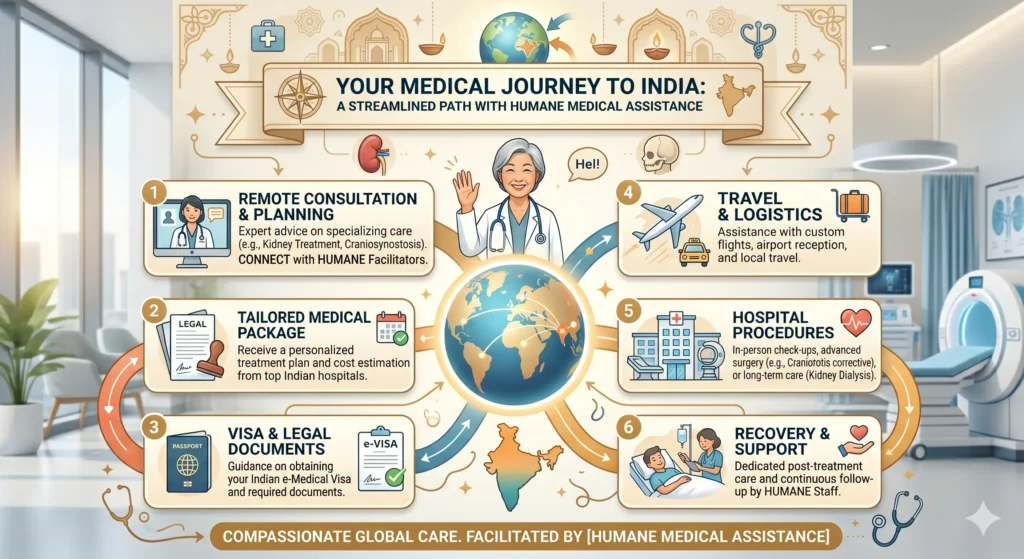
The Humane Medical Assistance Journey: Step-by-Step
Over the years, we have refined the medical travel process to ensure it is seamless, safe, and entirely stress-free. Here is exactly how we guide our patients from initial contact to full recovery.
Step 1: The Initial Medical Evaluation
Initially, the journey begins when you contact us. You share your current medical reports, scans (like MRIs or CTs), and doctor’s notes. Rest assured, our staff treats your data with the highest level of confidentiality.
Step 2: Expert Consultations and Treatment Planning
Next, our medical board reviews your case. Following this, we consult with leading specialists at multiple top-tier hospitals in New Delhi. Afterward, our team presents you with a customized treatment plan, detailing the recommended procedure, the exact doctor, the hospital facility, and a transparent cost estimate. Additionally, we can arrange a video consultation between you and the Indian surgeon before you make any decisions.
Step 3: Medical Visa and Travel Logistics
Once you approve the treatment plan, our operations team steps in. First, we provide the official medical invitation letter required by the Indian government to secure your Medical Visa. Furthermore, our travel desk assists with flight bookings and arranges comfortable, safe accommodation near the hospital for you and your travel companion.
Step 4: Arrival and Hospital Admission
Upon arrival, when you land at Indira Gandhi International Airport in New Delhi, our team is waiting for you. Immediately, we provide a private, comfortable transfer to your accommodation or directly to the hospital. Meanwhile, a dedicated care coordinator manages your hospital admission, cutting out wait times and administrative red tape.
Step 5: Treatment and Guided Recovery
During your procedure, our representatives keep your family updated. Moreover, throughout your hospital stay and subsequent recovery at your guest house, our team remains available 24/7. Specifically, we arrange follow-up appointments, physical therapy sessions, and handle any pharmacy needs.
Step 6: Safe Return Home
Finally, once your surgeon clears you for travel, our logistical team arranges your airport transfer and assists with your departure. However, our care does not end when you board the plane. Instead, we facilitate post-operative video consultations between you and your Indian doctor to ensure your recovery continues smoothly in your home country.
Frequently Asked Questions.
Q: Is medical tourism to India safe?
A: Yes, absolutely. It is highly safe when managed correctly. For instance, by choosing JCI-accredited hospitals and utilizing an experienced facilitation agency like Humane Medical Assistance, you ensure that you receive care that meets strict international safety and hygiene standards.
Q: Do doctors and nurses in India speak English?
A: Yes, they do. In fact, English is the primary language of medical education and professional communication in India. Consequently, all top-tier doctors, surgeons, and hospital administrative staff speak fluent English. Alternatively, if you require a different language, such as French or Arabic, we provide dedicated medical translators.
Q: What is a Medical Visa, and how do I get one?
A: Basically, the Indian government issues a specific “Medical Visa” (Med Visa) for patients traveling for healthcare. Importantly, you cannot travel for surgery on a standard tourist visa. Therefore, Humane Medical Assistance provides the official hospital invitation letter required to easily secure this visa at your local embassy or online.
Q: Can I bring a family member with me?
A: Absolutely. Undoubtedly, having emotional support is crucial for recovery. Because of this, your family member can apply for a “Medical Attendant Visa.” Furthermore, we arrange accommodation setups (like suite rooms or nearby serviced apartments) designed specifically for patients and their companions.
Q: What happens if I need follow-up care after I return home?
A: Fundamentally, we strongly believe in continuity of care. Therefore, before you leave India, our coordinators provide you with all translated medical records, surgical notes, and imaging files. In addition, we arrange telehealth video calls between your Indian surgeon and your local doctor to ensure seamless post-operative management.
Take the First Step Toward Your Healing Journey
Ultimately, geography should never stand between you and life-saving medical care. Indeed, the rise of medical tourism has democratized access to elite healthcare. As a result, India stands at the absolute forefront of this medical revolution.
At Humane Medical Assistance, our experts measure success by your health and peace of mind. So, let our dedicated staff handle the complex logistics, border crossings, and hospital appointments. Consequently, you can dedicate all your energy to what truly matters: your recovery.
Ready to explore your healthcare options with India’s top medical experts?
👉 Contact Humane Medical Assistance today for a free, confidential medical case review.