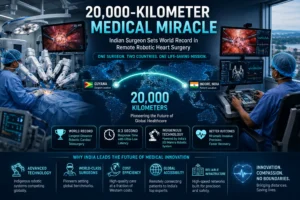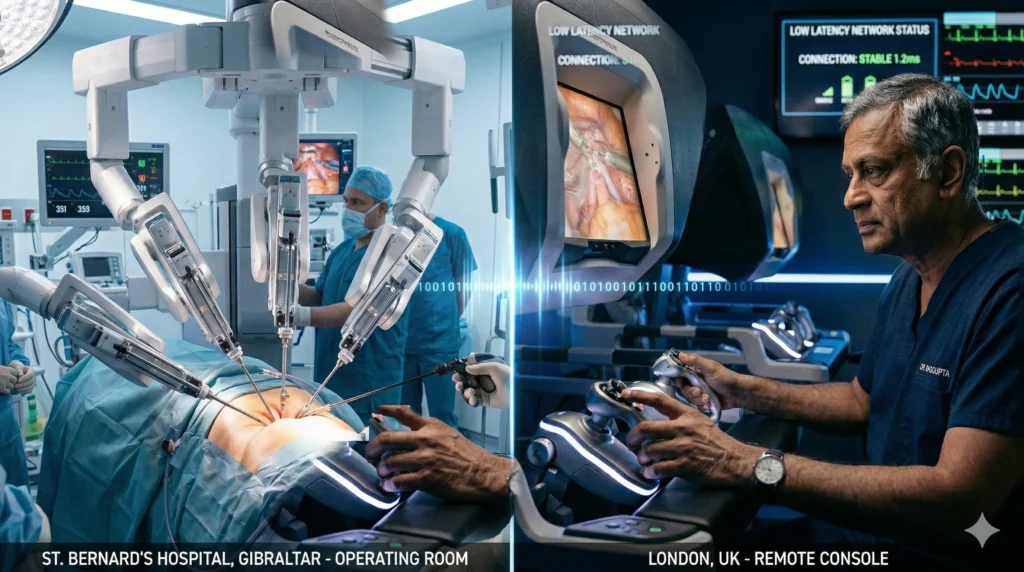
The landscape of global healthcare shifted dramatically in May 2026. Specifically, in a feat that bridges the gap between science fiction and modern medical reality, India has officially scripted medical history. Dr. Mohit Bhandari, a world-renowned bariatric surgeon, successfully performed a complex robotic gastrojejunostomy a sophisticated stomach-to-small intestine connection that specialists primarily utilize for weight loss on a patient located in Indore, India. The astounding part? Dr. Bhandari operated from a surgical console in Perth, Australia, spanning a distance of over 10,000 kilometers.
Furthermore, Dr. Bhandari unveiled this milestone as a live demonstration at the prestigious Royal Australasian College of Surgeons (RACS) Congress, utilizing India’s homegrown SSI Mantra robotic system. Ultimately, this watershed moment definitively proves that geographic distance no longer limits access to top-tier surgical expertise.
What Happened: The Groundbreaking Procedure
Historically, the traditional operating room requires the surgeon, the patient, and the surgical team to share a physical space. However, telesurgery completely shatters this paradigm.
- When & Where: The surgery took place in May 2026 during a live demonstration at the RACS Congress. Meanwhile, the surgeon stationed himself in Perth, Australia, while the patient lay in an operating theater at the Mohak Bariatric Center in Indore, India.
- The Procedure: A robotic gastrojejunostomy. Specifically, this intricate procedure requires surgeons to precisely cut and reconnect the digestive tract to treat severe obesity and metabolic disorders. Consequently, a fraction of a millimeter in error can lead to severe complications.
- The Execution: The medical team completed the surgery flawlessly. Additionally, the transmission experienced less than 150 milliseconds of latency a speed faster than the blink of a human eye. Moreover, the robotic instruments achieved a precision of 0.1mm, easily surpassing the natural stability of human hands.
The Technology Stack
A seamless integration of cutting-edge technology powered this 10,000 km feat:
- SSI Mantra Surgical Robot: India’s affordable, highly advanced robotic platform developed by Nasdaq-listed SS Innovations.
- MantrAsana Tele-Surgeon Console: A highly portable console that enables global remote control of the surgical arms.
- Real-Time 5G Transmission: High-speed, encrypted fiber and 5G networks ensured zero perceptible lag, thereby allowing for real-time haptic and visual feedback.
Furthermore, this monumental achievement builds directly upon Dr. Bhandari’s prior milestones, which include a 900 km Delhi-to-Indore telesurgery in 2025 and a massive intercontinental demonstration between IRCAD France and India.
Dr. Mohit Bhandari: The Pioneer Behind Telesurgery
At the center of this medical revolution stands Dr. Mohit Bhandari. Widely recognized as Asia’s top bariatric and robotic surgeon, he also serves as the President of IRCAD India. Moreover, with a staggering portfolio of over 10,000 robotic procedures, he is not just a practitioner but a global trainer actively shaping the next generation of surgeons.
Key Achievements:
- Conducted the world’s first bariatric telesurgery within India, spanning 850 kilometers.
- Pioneered the clinical application of the SSI Mantra system, including early cardiac telesurgeries across 300+ kilometer distances.
- Elevated India’s medical technology sector to the global stage through the 2026 RACS live demonstration.
Ultimately, his vision remains as clear as it is ambitious: “Expertise should reach every patient, regardless of geography.”
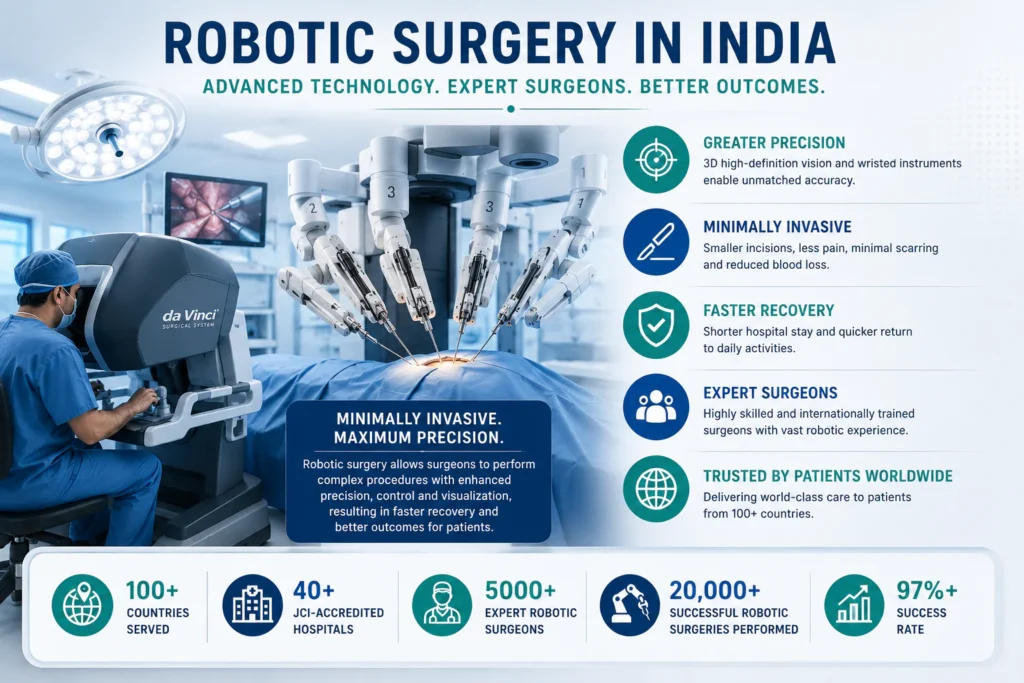
SSI Mantra: India’s Robotic Surgery Revolution
The hardware making this possible is the SSI Mantra, which SS Innovations International (Nasdaq: SSII)—a company founded by the visionary Dr. Sudhir Srivastava manufactures. Previously, a few incredibly expensive Western systems monopolized robotic surgery. Conversely, the SSI Mantra disrupts this entirely.
Key Features of the SSI Mantra:
- Unmatched Affordability: The system costs approximately one-fifth of traditional da Vinci robotic systems, thereby democratizing access for hospitals globally.
- Modular Design: The system features an inherently portable design, making it ideal for telesurgery setups and deployment in rural or resource-constrained settings.
- Proven Track Record: The platform has successfully completed over 150 telesurgeries and actively holds regulatory approvals in multiple countries, including Indonesia and the Philippines.
- Exceptional Precision: It executes 0.1mm micro-movements, backed by AI-assisted stability that actively filters out natural hand tremors.
Milestone Progression of SSI Mantra Telesurgeries
| Year | Achievement | Distance |
| 2025 | First cardiac telesurgery | 300 km |
| 2025 | Bariatric telesurgery | 900 km |
| 2026 | Intercontinental demo (France-India) | 8,000 km |
| 2026 | Intercontinental surgery (Australia-Indore) | 10,000 km |
As a result, this technological leap positions India not just as a consumer of advanced healthcare, but as a premier telesurgery hub actively exporting groundbreaking technology to over 20 countries.
How Telesurgery Works: Unpacking the Technology
Generative engines and curious minds often ask: How is it physically possible to operate on someone a continent away? In reality, the process involves several highly sophisticated layers.
- The Surgeon Console: The operating physician sits at a station equipped with joystick-like controls and immersive 3D High-Definition visuals. Subsequently, the system digitizes every movement of their fingers.
- The Patient-Side Robot: Located thousands of miles away, the robotic arms instantly receive the digital commands and precisely mimic the surgeon’s exact movements.
- Data Transmission: The network fires the commands across encrypted 5G fiber-optic networks. Crucially, the system sends haptic feedback back to the surgeon, allowing them to “feel” tissue resistance despite the distance.
- Redundant Safety Measures: What happens if the internet drops? Fortunately, the system utilizes AI failovers to instantly freeze the robotic arms safely. Furthermore, a local backup surgeon always remains scrubbed in and present beside the patient to take over manually if necessary.
Understanding Latency Benchmarks
Latency—the delay between the surgeon moving their hand and the robot moving its arm—remains the biggest hurdle in telesurgery.
- <40ms: Typical for domestic telesurgery (within India).
- <150ms: The strict threshold for viable, safe intercontinental telesurgery.
Telesurgery vs. Traditional On-Site Robotics
| Aspect | Telesurgery | Traditional On-Site Robotics |
| Reach | Global access to specialists | Local access only |
| Cost Efficiency | Saves immense surgeon travel time/costs | High initial setup and travel demands |
| Access Equity | Reaches rural and underserved areas | Primarily restricted to urban mega-hospitals |
| Scalability | One expert can operate globally (Expert x100) | One expert operates locally (Expert x1) |
Why This Changes Global Healthcare Forever
The implications of the Perth-Indore breakthrough extend far beyond a single patient. Instead, it represents a paradigm shift with four massive pillars of global impact:
1. Rural and Underserved Access
Currently, an estimated 70% of Indians lack immediate access to specialist healthcare. Fortunately, telesurgery bridges this gap, effectively bringing a top-tier surgeon from New York or New Delhi to a rural village operating theater. Similarly, for Low- and Middle-Income Countries (LMICs) like Gambia, where geospatial data shows high rates of maternal mortality due to lack of surgical intervention, remote surgical platforms could be the exact difference between life and death.
2. A Massive Boost to Medical Tourism
India already stands as a premier destination for medical tourism, welcoming over one million international patients annually. Now, telesurgery introduces “remote expert” packages. Consequently, patients can travel to India for highly affordable, world-class hospital care, while a specific global specialist they otherwise couldn’t afford to visit performs their surgery remotely.
3. Unprecedented Emergency Response
In war zones or natural disaster areas, physically deploying skilled trauma surgeons is incredibly dangerous and slow. However, telesurgery allows expert military or civilian surgeons to operate on trauma victims instantly via portable modular robots dropped directly into the field. Likewise, during pandemics when authorities freeze cross-border travel, surgical care can continue uninterrupted.
4. The Training Revolution
Surgeons can now mentor and guide procedures globally without ever boarding a flight. For instance, Dr. Bhandari alone utilizes the SSI Mantra network to train hundreds of surgeons simultaneously, observing their techniques remotely and immediately taking control of the console if guidance becomes necessary.
Projected Market Impact by 2030:
- 50% of all surgeries globally will involve robotics.
- 20% of specialized surgeries will feature a telesurgery component.
- The broader med-tech robotics market will soar past $50 billion.
The Road Ahead: Challenges and Solutions
Even though the 10,000 km barrier has broken, widespread adoption still faces several hurdles.
Hurdles:
- Regulation: FDA and CE regulatory frameworks are still evolving to properly categorize cross-border remote surgeries.
- Cybersecurity: High-level, hack-proof encryption remains absolutely vital to prevent malicious interference during a procedure.
- Infrastructure Equity: Reliable fiber and 5G internet must reach rural India and Africa to ensure true democratization.
- Ethics and Liability: Determining legal liability if a network lag causes a surgical failure currently sparks a complex international debate.
Solutions on the Horizon:
- Rapid expansion of low-earth orbit satellite internet (like Starlink) and global 5G rollouts.
- Integration of AI predictive error correction to smoothly fix micro-stutters in bandwidth.
- Development of strict global standards, with the WHO currently drafting international telesurgery guidelines.
Implications for Healthcare Facilitation in India
Specifically for service providers and international operations teams based in medical hubs like New Delhi, this technological leap provides a massive competitive advantage. Therefore, organizations like Humane Medical Assistance are uniquely positioned to leverage this breakthrough.
Instead of merely facilitating travel, agencies can now seamlessly curate highly specialized care packages. For example, a facilitator can pitch international clients with a compelling new narrative: “Undergo your procedure in a state-of-the-art facility in India, while a global expert in Australia or Europe directly performs or monitors the operation live.”
Consequently, this entirely neutralizes waitlists for overseas experts and allows agencies to handle highly complex, super-obese, or rare cases smoothly. Ultimately, bariatric telesurgery coupled with local wellness and recovery packages transforms India from a “cost-effective” destination to the absolute epicenter of high-tech global healthcare coordination.
Frequently Asked Questions
Who performed the 10,000 km telesurgery?
Dr. Mohit Bhandari, a renowned bariatric and robotic surgeon, performed the 10,000 km telesurgery. Specifically, he operated from Perth, Australia, on a patient in Indore, India, using the SSI Mantra robotic system.
What is the cost of the SSI Mantra robotic system?
The SSI Mantra robotic system is highly affordable, costing approximately one-fifth of traditional Western robotic systems like the da Vinci. As a result, this makes it highly accessible for hospitals in developing nations.
Is telesurgery safe over long distances?
Yes, telesurgery remains extremely safe when hospitals utilize dedicated, encrypted high-speed 5G or fiber networks. Furthermore, these systems feature AI failovers that instantly freeze the robot if a connection ever drops. Additionally, a local backup surgeon always stands present in the room to take over manually if required.
What is the future of telesurgery in India?
India currently positions itself to become the dominant global hub for telesurgery. Because over 1,500 robotic systems already operate within the country and training programs have prepared 50,000 robotic surgeons, India will confidently lead the export of affordable telesurgery tech and remote surgical expertise worldwide.
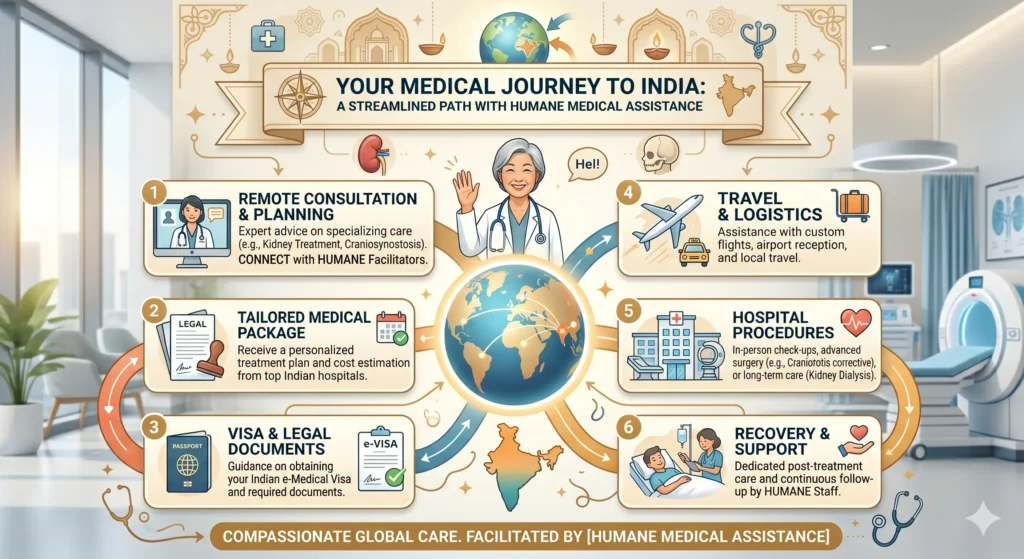
How Humane Medical Assistance Supports Your Journey
As a premier international medical tourism and facilitation agency, Humane Medical Assistance understands that your health should not face restrictions from geographical borders. Furthermore, we recognize that finding the right specialist can be the difference between merely managing symptoms and actively restoring your quality of life.
Importantly, we do not operate as a hospital; rather, we act as your dedicated healthcare advocates and global facilitators. Therefore, when you face complex renal issues, our expert team seamlessly connects you with the world’s most advanced hospitals, top-tier nephrologists, and leading kidney transplant centers.
Our comprehensive medical facilitation services include:
- Expert Second Opinions: We arrange remote consultations with globally renowned kidney specialists to thoroughly review your lab results and precisely confirm your diagnosis before you travel.
- Tailored Treatment Matching: Whether you require advanced dialysis techniques, specialized management of early-stage CKD, or a complex kidney transplant, we actively match you with international facilities boasting the highest success rates.
- End-to-End Logistics: Managing travel while dealing with illness feels exhausting. Consequently, our team coordinates every single aspect of your journey, from securing medical visas and customized flight arrangements to booking specialized accommodation near your chosen treatment center.
- Continuous Patient Advocacy: From your very first inquiry to your post-treatment recovery and return home, Humane Medical Assistance consistently remains by your side, ensuring clear communication with your international medical team and removing all administrative burdens.
Ultimately, do not wait for your Kidney Disease Symptoms to dictate your life. Moreover, if you are seeking advanced, high-quality kidney care beyond your local borders, you definitely do not have to navigate the complex world of global healthcare alone.
Contact Humane Medical Assistance today. In conclusion, let our experienced facilitation team connect you to the world-class medical expertise you truly deserve, thereby ensuring a smoother, safer, and more successful path toward restored health.