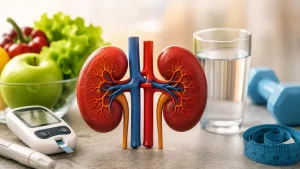
Your kidneys are among the most hardest-working organs in your entire body. Every single day, these two bean-shaped organs filter approximately 150 to 180 liters of blood, tirelessly removing toxins, excess water, and waste products. They act as your body’s primary purification system, ensuring that your bloodstream remains clean and your internal fluids are perfectly balanced. Beyond waste removal, they also release vital hormones that regulate your blood pressure, stimulate the production of red blood cells, and maintain optimal bone health by managing calcium and phosphorus levels.
Given their monumental physiological responsibilities, any decline in kidney function can have cascading, severe effects on your overall health. Unfortunately, millions of people worldwide suffer from deteriorating kidney function without even realizing it. The early warning signs are often incredibly subtle and easily mistaken for minor, everyday ailments. By the time the most obvious signs appear, significant, sometimes irreversible damage has already occurred.
Understanding and identifying early Kidney Disease Symptoms is your first and most crucial line of defense. When you know what to look for, you can seek prompt medical evaluation, slow the progression of the disease, and explore advanced global treatment options before reaching the stage of total kidney failure.
In this comprehensive guide, Humane Medical Assistance breaks down the critical signs of kidney distress, the risk factors you should monitor, and how our global medical network can connect you with world-class nephrology specialists when you need them most.
The “Silent” Nature of Kidney Damage

Medical professionals frequently refer to chronic kidney disease (CKD) as a “silent killer.” This alarming nickname stems from the fact that the kidneys possess a remarkable ability to compensate for lost function. Because of this high adaptability, you might not experience any noticeable Kidney Disease Symptoms until your kidney function drops to a critical 15 or 20 percent of its normal capacity.
In the initial stages of kidney disease, the healthy filters within your kidneys (called nephrons) simply take on the extra workload of the damaged ones. They adapt and overwork themselves to keep your body functioning normally. However, as more and more nephrons become damaged due to underlying conditions like high blood pressure or diabetes, the remaining healthy filters eventually collapse under the immense strain.
When this compensatory mechanism finally fails, toxins rapidly build up in the bloodstream—a dangerous condition known as uremia. This toxic buildup is what eventually triggers the physical symptoms that drive patients to seek medical help. Waiting for these severe symptoms to arise severely limits your treatment options, which is why proactive awareness is absolutely vital.
10 Critical Kidney Disease Symptoms You Should Never Ignore
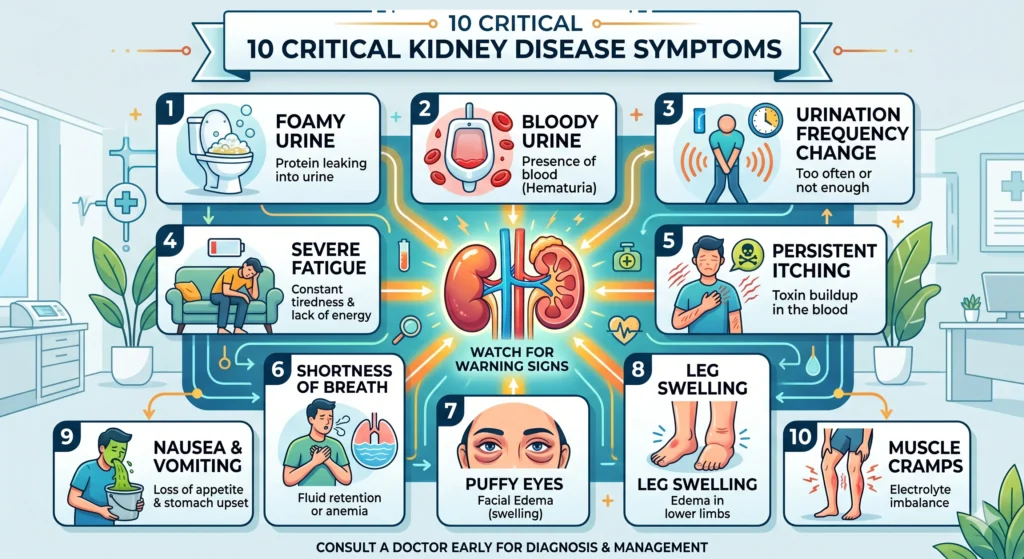
While the early stages may be completely asymptomatic, your body will eventually start sending distress signals. If you consistently experience a combination of the following Kidney Disease Symptoms, it is imperative to schedule a medical consultation and request comprehensive kidney function tests.
1. Changes in Your Urination Patterns
Because your kidneys are responsible for producing urine, the very first signs of trouble often appear in the bathroom. Pay close attention to:
- Frequency: Waking up multiple times during the night to urinate (nocturia) is a strong indicator that the kidney filters are damaged and losing their ability to concentrate urine properly.
- Foamy Urine: If your urine consistently looks excessively bubbly or foamy—resembling the froth on a beer or soapy water—it indicates the presence of protein (albumin). Healthy kidneys keep protein in the blood; damaged filters allow it to leak into the urine.
- Color Changes: Dark, tea-colored, or cola-colored urine can suggest that red blood cells are leaking through damaged kidney filters.
2. Persistent Fatigue, Weakness, and Lethargy
Healthy kidneys produce a critical hormone called erythropoietin (EPO). This hormone tells your bone marrow to create oxygen-carrying red blood cells. When your kidneys begin to fail, they produce significantly less EPO. With fewer red blood cells available to carry oxygen to your muscles and brain, you develop a condition known as anemia. This results in profound, debilitating fatigue that does not improve with rest, alongside general physical weakness.
3. Swelling in the Feet, Ankles, and Face (Edema)
One of the primary functions of your kidneys is to remove excess fluid and sodium from your body. When kidney function declines, this fluid has nowhere to go. It begins to accumulate in your tissues, leading to noticeable swelling, medically known as edema. This swelling is most commonly observed in the lower extremities, such as your feet, ankles, and legs, due to gravity. You might also notice persistent puffiness around your eyes, especially immediately after waking up in the morning.
4. Shortness of Breath
Shortness of breath related to kidney disease can happen in two distinct ways. First, the excess fluid that your failing kidneys fail to remove can gradually build up in your lungs. Second, the severe anemia caused by a lack of EPO means your body is essentially starved of oxygen. You might find yourself gasping for air after minimal physical exertion or feeling unusually winded when climbing a single flight of stairs.
5. An Ammonia Breath Odor or Metallic Taste
When your kidneys lose their filtering capabilities, waste products (like urea) build up rapidly in your bloodstream. This uremia can drastically alter how food tastes to you. Many patients report that food suddenly tastes like metal or that they have a persistent, unpleasant metallic taste in their mouths. Additionally, the high levels of urea in the blood can be broken down into ammonia in the saliva, causing noticeably foul, ammonia-scented breath.
6. Nausea, Vomiting, and Loss of Appetite
The severe buildup of toxins and waste in your blood does not just alter your taste buds; it also heavily affects your gastrointestinal tract. Uremia commonly causes profound nausea and frequent vomiting, particularly in the morning. Because food no longer tastes good and eating often leads to nausea, patients typically experience a severe loss of appetite. This combination quickly leads to unintended and dangerous weight loss.
7. Feeling Unusually Cold
Because failing kidneys trigger anemia, your body struggles to regulate its internal temperature. Patients with advanced Kidney Disease Symptoms often complain of feeling freezing cold, even when they are in a warm room or bundled up in layers of clothing.
8. Dizziness and Trouble Concentrating
Your brain requires a constant, heavy supply of oxygen to function efficiently. When kidney failure leads to anemia, your brain experiences a significant oxygen deficit. This deprivation can result in frequent dizzy spells, brain fog, memory issues, and a general inability to concentrate on daily tasks.
9. Severe, Unrelenting Skin Rash and Itching
Healthy kidneys are essential for maintaining the delicate balance of minerals and nutrients in your blood. When kidneys fail, they can no longer balance phosphorus and calcium effectively. This imbalance causes a condition called uremic pruritus, characterized by intense, deep-seated itching. Unlike normal skin dryness, this itch feels like it is coming from deep within the body and rarely responds to topical creams or standard moisturizers.
10. Flank Pain or Back Pain
While many kidney issues are completely painless, some specific conditions do cause localized pain. If you experience a deep, dull ache in your mid-to-lower back, specifically on the sides (the flank area), it could indicate an issue. This type of pain is more commonly associated with kidney stones, severe kidney infections (pyelonephritis), or polycystic kidney disease (PKD), which involves fluid-filled cysts expanding the kidneys.
Who is at the Highest Risk?
While anyone can develop kidney issues, certain demographics and pre-existing conditions significantly increase your vulnerability. You should be especially vigilant about monitoring for Kidney Disease Symptoms if you fall into any of the following high-risk categories:
- Diabetics: High blood sugar levels severely damage the blood vessels inside the kidneys over time. Diabetes is the leading cause of kidney failure globally.
- Individuals with Hypertension: High blood pressure strains the delicate filtration network within the kidneys, acting as the second leading cause of chronic kidney disease.
- Family History: If your parents or siblings have suffered from kidney failure, your genetic predisposition is considerably higher.
- Older Adults: Kidney function naturally declines as we age, making those over 60 more susceptible to acute kidney injuries.
- Heart Disease Patients: The cardiovascular system and renal system are intimately connected; a weakness in one often leads to damage in the other.
Navigating Diagnosis and Taking Control of Your Health
If you recognize several of these Kidney Disease Symptoms, immediate medical intervention is not just recommended; it is mandatory. Your local healthcare provider will typically order two simple tests to gauge your kidney health. The first is a blood test to measure your Glomerular Filtration Rate (GFR), which tells the doctor exactly how well your kidneys are filtering waste. The second is a simple urine test to check for the presence of the protein albumin.
Receiving a kidney disease diagnosis can feel incredibly isolating and terrifying. You may feel that your local healthcare system does not offer the advanced diagnostic tools, specialized nephrology care, or transplant opportunities necessary for your specific stage of the disease.
This is precisely where Humane Medical Assistance steps in to guide you.

How Humane Medical Assistance Supports Your Journey
As a premier international medical tourism and facilitation agency, Humane Medical Assistance understands that your health should not be restricted by geographical borders. We recognize that finding the right specialist can be the difference between merely managing symptoms and actively restoring your quality of life.
We do not operate as a hospital; rather, we are your dedicated healthcare advocates and global facilitators. When you face complex renal issues, our expert team seamlessly connects you with the world’s most advanced hospitals, top-tier nephrologists, and leading kidney transplant centers.
Our comprehensive medical facilitation services include:
- Expert Second Opinions: We arrange remote consultations with globally renowned kidney specialists to review your lab results and confirm your diagnosis before you travel.
- Tailored Treatment Matching: Whether you require advanced dialysis techniques, specialized management of early-stage CKD, or a complex kidney transplant, we match you with international facilities boasting the highest success rates.
- End-to-End Logistics: Managing travel while dealing with illness is exhausting. Our team coordinates every aspect of your journey, from medical visas and customized flight arrangements to specialized accommodation near your chosen treatment center.
- Continuous Patient Advocacy: From your very first inquiry to your post-treatment recovery and return home, Humane Medical Assistance remains by your side, ensuring clear communication with your international medical team and removing all administrative burdens.
Do not wait for your Kidney Disease Symptoms to dictate your life. If you are seeking advanced, high-quality kidney care beyond your local borders, you do not have to navigate the complex world of global healthcare alone.
Contact Humane Medical Assistance today. Let our experienced facilitation team connect you to the world-class medical expertise you deserve, ensuring a smoother, safer, and more successful path toward restored health.