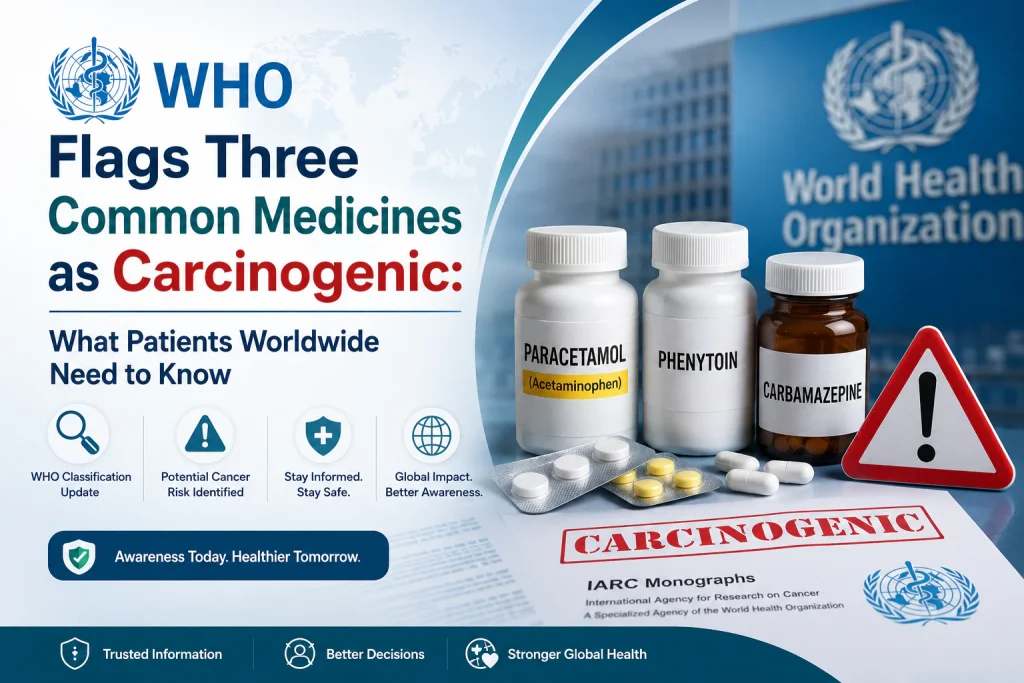
Recently, startling headlines captured global attention. The World Health Organization (WHO) cancer research agency classified three widely prescribed medicines as carcinogenic. Consequently, millions of patients worldwide feel panicked and confused. If you take medication for high blood pressure, fungal infections, or organ transplants, this news directly affects you.
The International Agency for Research on Cancer (IARC) recently evaluated these common drugs. Specifically, they placed them in the “Group 1” category. This classification means there is sufficient evidence they can cause cancer in humans. However, experts strongly warn patients against stopping their treatments abruptly.
At Humane Medical Assistance, we guide international patients through complex medical challenges in India every day. We assist patients from Africa, the CIS region, and the Middle East with comprehensive oncology care and medication management. Therefore, understanding drug safety remains our top priority. Today, we will explain exactly what this new classification means. Furthermore, we will show you how to manage your health safely without abandoning life-saving treatments.
The Three Medicines: What Are They and What Is the Risk?
The IARC added three essential medicines to its carcinogenic list. Doctors prescribe these drugs to millions of people globally. Let us break down exactly what these drugs do and why the WHO flagged them.
1. Hydrochlorothiazide (High Blood Pressure)
Doctors prescribe hydrochlorothiazide frequently to treat essential hypertension. It acts as a diuretic, helping your body eliminate excess salt and water.
- The Cancer Link: Research shows this drug increases your skin’s sensitivity to ultraviolet (UV) radiation. Consequently, prolonged sun exposure causes severe DNA damage. Therefore, long-term use links directly to squamous cell skin carcinoma and lip cancer.
2. Voriconazole (Fungal Infections)
Voriconazole is a powerful antifungal medication. Doctors use it to treat severe, invasive fungal infections. Often, immunocompromised patients or transplant recipients require this drug.
- The Cancer Link: Similar to the blood pressure medication, voriconazole exhibits strong phototoxic effects. It makes the skin highly vulnerable to sunlight. Thus, extended use significantly raises the risk of squamous cell carcinoma of the skin.
3. Tacrolimus (Organ Transplant Rejection)
Tacrolimus serves as a vital immunosuppressant. After a kidney, liver, or heart transplant, your body naturally tries to reject the new organ. Tacrolimus suppresses your immune system to prevent this rejection.
- The Cancer Link: Because the drug weakens your immune system, your body loses its ability to hunt down abnormal cells. Consequently, rogue cells can multiply freely. Therefore, tacrolimus links to non-Hodgkin lymphoma and post-transplant lymphoproliferative disorders.
Understanding “Group 1 Carcinogen”: Do Not Panic
When people hear “carcinogenic to humans,” they naturally panic. However, you must understand how the IARC classifies scientific data.
The Group 1 classification identifies a hazard, not a definitive risk. What does this mean? It means the agency confirms the drug has the potential to cause cancer under specific circumstances. However, it does not mean you will definitely get cancer by taking your prescribed daily dose.
For instance, processed meats and solar radiation also belong to Group 1. The actual risk depends entirely on your dosage, the duration of your treatment, and your individual genetics.
Never Stop Your Medication Abruptly
All three of these drugs remain on the WHO Model List of Essential Medicines. Why? Because their proven medical benefits far outweigh their potential cancer risks.
If you stop taking hydrochlorothiazide, your blood pressure will spike dangerously. This spike can trigger a fatal heart attack or stroke immediately. If you stop tacrolimus, your body will reject your transplanted organ rapidly. Therefore, you must never stop taking these medicines without consulting your doctor.
Actionable Steps for Patients: How to Protect Yourself
You can manage these risks effectively with proactive health strategies. If you take any of these three medicines, you must implement the following safety measures immediately.
Prioritize Strict Sun Protection
If you take hydrochlorothiazide or voriconazole, you must protect your skin aggressively.
- Apply a high-SPF, broad-spectrum sunscreen every single day.
- Wear long sleeves, wide-brimmed hats, and UV-blocking sunglasses.
- Avoid direct sunlight during peak hours (10:00 AM to 4:00 PM).
Schedule Regular Skin Checks
Patients on phototoxic drugs need routine dermatological evaluations. You should examine your skin monthly for new moles, discolored patches, or unhealed sores. Furthermore, visit a dermatologist annually for a professional full-body check.
Monitor Transplant Health Closely
If you take tacrolimus, routine cancer screening becomes absolutely mandatory. Your medical team must monitor your lymph nodes and blood counts continuously. Early detection remains your most powerful weapon against lymphoma.
Why Global Patients Choose India for Oncology and Medical Management
Managing complex medications and monitoring cancer risks requires exceptional medical infrastructure. Unfortunately, many developing nations lack advanced diagnostic facilities. Therefore, international patients increasingly travel to India for comprehensive medical care.
Here is exactly why India leads the world in medical management and oncology screening.
1. Advanced Diagnostic and Screening Technology
Indian corporate hospitals invest heavily in cutting-edge diagnostic equipment. For example, they utilize advanced PET-CT scanners and high-resolution MRI machines. Consequently, Indian oncologists detect microscopic cellular changes years before tumors fully form. This early detection capability saves countless lives daily.
2. Access to Safer Medication Alternatives
If your current medication poses too high a risk, Indian specialists can help. Indian medical experts possess vast experience with the latest pharmaceutical advancements. Therefore, they can safely transition you to newer, safer drug classes. For example, they can switch you from hydrochlorothiazide to modern antihypertensives that do not cause extreme sun sensitivity.
3. World-Class Multi-Disciplinary Teams
Indian hospitals employ a collaborative tumor board approach. Specifically, dermatologists, oncologists, and transplant surgeons review your case together. Consequently, they balance your immediate treatment needs against long-term cancer risks perfectly.
4. Highly Affordable Premium Care
Comprehensive cancer screening in the US or UK often costs thousands of dollars. In stark contrast, Indian JCI-accredited hospitals provide identical premium diagnostics for 60% to 80% less. Therefore, world-class preventative healthcare remains highly accessible for global citizens.
Tailored Medical Journeys for Specific Regions
At Humane Medical Assistance, we know that patients from different regions face unique logistical challenges. Therefore, we customize our medical concierge services to meet your exact cultural and linguistic needs carefully.
Support for Patients from Africa (Nigeria, Kenya, Tanzania)
Access to advanced oncology screening remains scarce in many African countries. Furthermore, regulating complex immunosuppressive drugs requires expert guidance. We connect African patients directly with India’s top medical centers. We handle complex medical visa processing swiftly. Additionally, we arrange safe airport ambulance transfers and secure comfortable accommodations. Thus, you feel completely supported during your health evaluation.
Seamless Care for the CIS Region (Uzbekistan, Russia)
Patients in Uzbekistan and Russia frequently seek advanced second opinions abroad. However, severe language barriers create massive anxiety for traveling patients. We solve this complex problem entirely. Humane Medical Assistance provides dedicated, medically trained Russian-speaking interpreters for all our CIS patients. Your personal interpreter stays beside you during every consultation. Consequently, you will completely understand your new medication protocols. Thus, we eliminate all dangerous medical miscommunications.
Premium Experience for the Middle East (UAE, Saudi Arabia, Oman)
Middle Eastern patients demand the highest levels of privacy and veteran medical expertise. Therefore, we facilitate luxurious VIP hospital suites to guarantee your absolute comfort. Additionally, we ensure strict adherence to all Halal dietary requirements throughout your stay. With fluent Arabic-speaking coordinators on our team, Middle Eastern patients enjoy a deeply respectful and seamless healthcare experience in New Delhi.
How Humane Medical Assistance Guides Your Journey
Navigating international healthcare feels overwhelming when you face potential cancer risks. We exist to carry that heavy burden for you entirely. Here is exactly how we ensure a flawless medical journey:
- Pre-Evaluation: First, you send us your current prescriptions and medical reports. We consult with top Indian specialists directly. Then, we provide a clear, transparent treatment roadmap before you travel.
- Visas and Logistics: We provide official Visa Invitation Letters to expedite your medical visas. We manage all ground transportation and book verified accommodations safely.
- 24/7 Ground Support: From your initial hospital admission to your final discharge, our dedicated Case Managers remain by your side continuously.
- Post-Treatment Follow-up: Once you fly home, we facilitate regular video consultations with your Indian medical team. Consequently, we safely monitor your drug protocols across borders.
FAQs
Q: Which three common medicines did the WHO classify as carcinogenic?
A: The WHO’s cancer research agency (IARC) recently classified hydrochlorothiazide (for high blood pressure), voriconazole (an antifungal), and tacrolimus (an immunosuppressant for transplants) as Group 1 carcinogens.
Q: Should I stop taking my blood pressure medicine immediately?
A: No. You must never stop taking hydrochlorothiazide or any prescribed medication abruptly. Stopping can trigger a fatal stroke or heart attack. You should consult your doctor immediately to discuss safer alternative medications.
Q: Why does hydrochlorothiazide cause skin cancer?
A: Hydrochlorothiazide possesses strong phototoxic properties. Specifically, it makes your skin highly sensitive to ultraviolet (UV) radiation. Consequently, prolonged sun exposure causes cellular DNA damage, leading to squamous cell skin carcinoma.
Q: What does a “Group 1 Carcinogen” classification actually mean?
A: Group 1 means there is sufficient scientific evidence that the substance can cause cancer in humans. However, it identifies a potential hazard, not an absolute risk. Your actual risk depends on your dose, duration of use, and individual health factors.
Q: How does Humane Medical Assistance help international patients safely?
A: We act as your dedicated medical concierge in New Delhi. We connect you with top Indian specialists for comprehensive cancer screening and safer medication management. Furthermore, we handle your visas, travel logistics, and language translation effortlessly.
Take Control of Your Medical Safety Today
Medical news can sound terrifying, but knowledge remains your most powerful tool. You do not have to live in fear of your daily prescriptions. By prioritizing routine screening and exploring safer medication alternatives, you can protect your long-term health effectively.
World-class diagnostic care and advanced medical management are readily available in India right now. Let Humane Medical Assistance handle the complex legal and medical logistics while you focus entirely on your well-being.
Contact our New Delhi office today to discuss your medical reports and secure a comprehensive health evaluation with India’s leading medical experts.