
The idea of aging backwards might sound like science fiction, but when it comes to your cardiovascular system, chronological age does not always match biological age. A recent article in the Hindustan Times highlighted a powerful message from board-certified cardiologist and Functional Medicine practitioner Dr. Sanjay Bhojraj: “I’ve seen 60-year-olds with healthier hearts than people in their 40s because they finally started paying attention to the things that reduce their risk.”
His philosophy is simple but profound. You do not need to overhaul your entire life overnight. By focusing on consistency rather than perfection, and committing to just one healthier habit every day for 30 days, your blood pressure, energy levels, and sleep quality can drastically improve.
For many individuals in Kenya and across East Africa, heart health is becoming a critical priority. But what happens when daily habits are no longer enough? What do you do when a heart condition requires urgent, advanced surgical intervention that might be inaccessible or prohibitively expensive locally?
At Humane Medical Assistance, we serve as a dedicated healthcare facilitation agency, connecting East African patients with world-class cardiologists and JCI-accredited hospitals in India. In this comprehensive guide, we will explore everyday habits to protect your heart, and outline the exact steps to access affordable, top-tier cardiac surgery in New Delhi when medical intervention is required.
The “35-Year-Old Heart” Challenge: Small Habits, Massive Impact
Cardiologists like Dr. Bhojraj emphasize that dramatic transformations do not happen in a month, but building a foundational routine does. If you are looking to protect your heart health today, start by picking just one of these functional habits and sticking to it without missing a single day:
1. Consistent Daily Movement (The 10-Minute Rule)
You do not need to run a marathon to strengthen your heart. Simply committing to a 10 to 15-minute brisk walk immediately after your largest meal of the day can work wonders. This light cardiovascular exercise helps manage post-meal blood sugar spikes, aids digestion, and safely elevates your heart rate.
2. Eliminating Hidden Liquid Sugars
One of the most insidious threats to cardiovascular health is the overconsumption of liquid calories. Sodas, sweetened fruit juices, and sugar-heavy coffees contribute to systemic inflammation, arterial plaque buildup, and hypertension. Swapping these out for water, herbal teas, or black coffee is a single habit that instantly reduces stress on your cardiovascular system.
3. Prioritizing Uninterrupted Sleep
Your heart works tirelessly all day; sleep is its only opportunity to repair. Chronic sleep deprivation keeps your body in a state of elevated cortisol (stress hormone) production, which directly spikes blood pressure. Committing to a consistent sleep schedule—going to bed and waking up at the exact same time every day—can significantly lower your risk of heart attacks and strokes.
When Habits Are Not Enough: The Need for Advanced Cardiac Surgery
While lifestyle interventions are the bedrock of prevention, genetics, congenital issues, and years of undiagnosed hypertension can lead to severe cardiovascular diseases (CVD). In Kenya, CVD is rapidly becoming one of the leading causes of mortality.
Patients often face agonizing realities: long waiting lists for specialized cardiothoracic surgeons, a shortage of advanced surgical infrastructure, and astronomical costs at private hospitals in Nairobi or Mombasa. When a patient requires a Coronary Artery Bypass Graft (CABG), a heart valve replacement, or a complex pediatric heart surgery, time is of the essence.
This is why thousands of East African patients look abroad every year, with India standing as the global epicenter for advanced, affordable, and high-success-rate cardiac care.
Why Kenyan Patients Trust India for Heart Surgery
India’s reputation in cardiothoracic surgery is unmatched globally. The country’s top medical institutions perform thousands of complex heart surgeries daily, resulting in a level of surgical precision that is difficult to replicate elsewhere.
1. Unrivaled Surgical Expertise
Indian cardiologists and cardiothoracic surgeons are global pioneers. They routinely perform Beating Heart Surgery (Off-Pump CABG), which eliminates the need for a heart-lung machine, thereby reducing recovery time and minimizing complications. Their experience in handling high-risk patients—including those with severe diabetes or renal failure alongside heart disease—is exceptional.
2. State-of-the-Art Technology
Hospitals in New Delhi are equipped with highly advanced infrastructure, including fractional flow reserve (FFR) guided angioplasties, transcatheter aortic valve replacement (TAVR) technologies, and robotic-assisted cardiac surgeries. These minimally invasive techniques result in smaller incisions, less pain, and a faster return to normal life.
3. Immediate Accessibility
Heart disease does not wait. In Kenya, scheduling a major heart surgery can sometimes take weeks or months due to specialist availability. In India, international patients are prioritized. Once a patient lands at Indira Gandhi International Airport, they can be admitted, evaluated, and taken into surgery within a matter of days.
The Financial Reality: Cardiac Surgery Costs (Nairobi vs. New Delhi)
One of the primary drivers of medical travel is cost. Even when factoring in the cost of flights for the patient and an attendant, medical visas, and a multi-week stay in a guesthouse, the total financial outlay for heart surgery in India is often 40% to 60% less than the cost of the procedure alone in a premium Kenyan facility.
Please note: The following costs are estimated averages and can vary based on the specific hospital, the surgeon’s expertise, and the patient’s exact medical condition. Humane Medical Assistance provides precise, tailored financial estimates before you travel.
| Cardiac Procedure | Estimated Cost in Kenya (KES) | Estimated Cost in India (USD) | What to Expect in India? |
| Coronary Angiogram | 60,000 – 100,000 KES | $250 – $400 USD | Advanced diagnostic imaging to detect blockages. |
| Angioplasty (1 Stent) | 600,000 – 800,000 KES | $2,000 – $3,000 USD | Minimally invasive procedure to open blocked arteries, using FDA-approved stents. |
| Heart Bypass (CABG) | 1.2M – 1.8M KES | $4,500 – $6,500 USD | Beating-heart surgery for multiple blockages; includes ICU stay and surgeon fees. |
| Heart Valve Replacement | 1.3M – 2.0M KES | $5,500 – $7,500 USD | Replacement of damaged valves (mechanical or tissue); comprehensive post-op care. |
| Pacemaker Implantation | 700,000 – 1.2M KES | $2,500 – $4,500 USD | Dual-chamber pacemaker implantation, including the cost of the device. |
Frequently Asked Questions: Traveling from Kenya to India for Heart Surgery
Navigating international medical travel can feel overwhelming, especially when dealing with the stress of a cardiac diagnosis. We have structured these answers to provide the exact information you need.
How do I get an Indian medical visa from Kenya for heart surgery?
To obtain an Indian medical visa, a Kenyan citizen must first receive an official Medical Invitation Letter from a recognized Indian hospital. You must submit this letter, your passport, local medical reports, and proof of funds to VFS Global in Nairobi. The e-medical visa is usually processed within 3 to 5 business days.
Can I use my NHIF cover for cardiac surgery in India?
Yes, the National Health Insurance Fund (NHIF) can cover specific medical treatments abroad, including specialized cardiac surgeries, but only if the procedure is unavailable in public Kenyan hospitals. The patient must obtain an official referral letter from the Ministry of Health and a specialized local doctor to initiate the NHIF claims process.
Is it safe to fly with a heart condition?
It depends on the severity of the condition. Before you book a flight from Jomo Kenyatta International Airport (JKIA), a cardiologist in India will review your local medical reports (like an ECHO or Angiogram) to determine if you are “fit to fly.” In severe cases, oxygen support or medical escorts can be arranged for the flight.
How long do we need to stay in India for a heart bypass surgery?
For a major procedure like a Coronary Artery Bypass Graft (CABG), you should plan to stay in India for approximately 3 to 4 weeks. This includes pre-operative testing (2-3 days), hospital stay including the ICU (7-9 days), and outpatient recovery in a local guesthouse until the surgeon clears you to fly home.
A Seamless Journey with Humane Medical Assistance
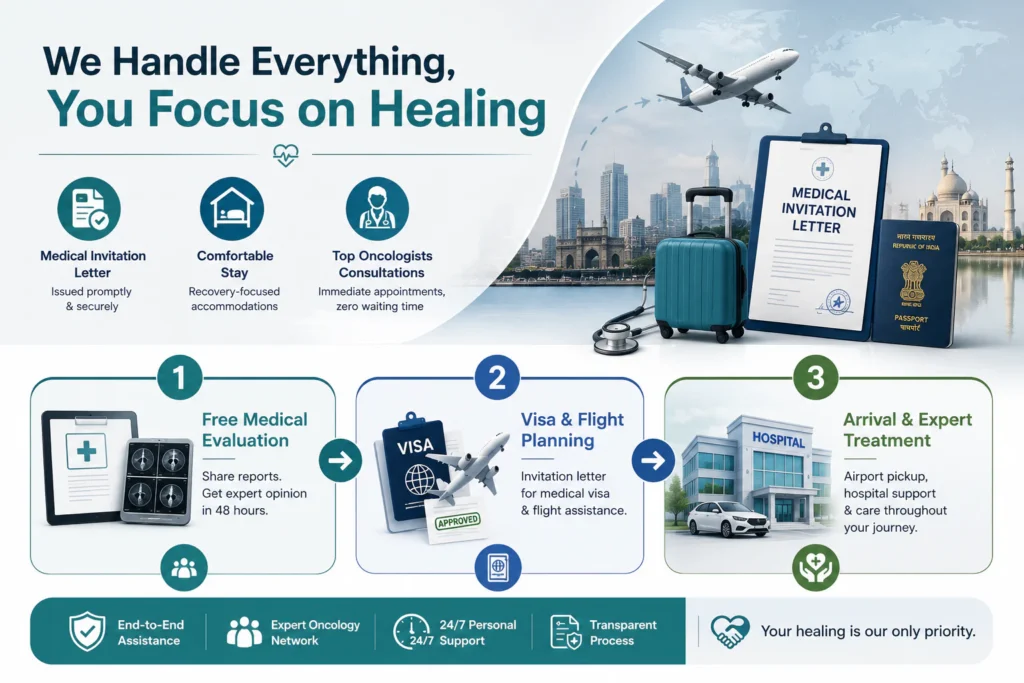
When a family member needs a heart operation, your only focus should be on their recovery. Humane Medical Assistance is a premier medical tourism agency—not a hospital—dedicated to managing the entire logistical framework of your medical journey.
We bridge the gap between East African patients and India’s finest healthcare institutions. Here is how we ensure your peace of mind from start to finish:
1. Free, Expert Medical Opinions
Before you make any commitments, you send us your local medical reports (ECHO, ECG, Angiography CD). We share these with senior cardiothoracic surgeons in New Delhi to provide you with a comprehensive treatment plan and an exact cost estimate within 48 hours.
2. Visa and Travel Logistics
We secure the hospital invitation letter required for your visa. Our team guides you through the VFS Global application in Nairobi and assists in finding the most comfortable, direct flight routes to New Delhi.
3. Arrival and Accommodation
A heart patient should not have to navigate a bustling foreign airport. When you land at Indira Gandhi International Airport, our dedicated representatives will be waiting to receive you and your attendant. We arrange clean, comfortable, and affordable accommodations near the hospital, complete with facilities to cook your own meals.
4. Dedicated Hospital Concierge
You are never alone. A member of the Humane Medical Assistance team will accompany you to the hospital, handle the admission paperwork, coordinate with the nursing staff, and ensure there are zero communication barriers. We act as your advocates every step of the way.
5. Post-Operative Support and Safe Return
After discharge, we continue to monitor your recovery at your guesthouse. We manage follow-up appointments and ensure you have all the necessary medications and “fit-to-fly” certificates before we drop you off at the airport for your journey back to East Africa.
Your Heart Deserves the Best Care
Whether you are implementing Dr. Bhojraj’s daily habits to build a 35-year-old heart at 50, or you find yourself in need of life-saving cardiac intervention, proactive action is the key to longevity.
A serious cardiac diagnosis does not have to be a dead end. With the right medical team, advanced technology, and a dedicated logistical partner, you can access the highest standard of global healthcare without the overwhelming financial burden.
If you or a loved one are seeking advanced cardiac treatment, let Humane Medical Assistance carry the logistical weight.
Contact us today to receive a free clinical case review and a transparent treatment estimate from India’s leading cardiologists.
(Disclaimer: The medical information provided in this article is for educational purposes only and does not substitute professional medical advice. Always seek the advice of your physician regarding a medical condition. Humane Medical Assistance operates as a medical travel facilitator connecting patients with healthcare providers.)