When international border policies align with compassionate healthcare, the impact is felt immediately inside hospital corridors. Recent reporting highlights a dramatic shift in Eastern India’s healthcare landscape: following the easing of visa processing at Indian Visa Application Centres in cities like Dhaka, Chattogram, Sylhet, and Khulna, private hospitals across Kolkata have witnessed a rapid surge in incoming international patients.
Within weeks of visa services resuming smoothly, major medical centers recorded a 20% to 35% jump in patient footfall from neighboring Bangladesh. For multi-specialty hospitals that historically relied on foreign patients for up to 15% of their total revenue, this uptick represents more than just financial recovery—it underscores India’s foundational role as the primary “healing hub” for South Asia and beyond.
This phenomenon is not isolated to Kolkata or Eastern India. From Chennai and Bengaluru to Delhi NCR and Mumbai, India has steadily cemented its position as one of the world’s premier destinations for specialized medical care. But what makes medical treatment in India so compelling to international seekers?
The Kolkata Gateway: A Case Study in Demand
To understand the broader appeal of treatment in India, one need look no further than Kolkata’s healthcare ecosystem. Situated strategically near the eastern border, Kolkata serves as a primary point of entry for patients seeking advanced tertiary and quaternary care.
When travel restrictions were enforced during political unrest in 2024, patient footfall dropped drastically—at some facilities from over 2,200 outpatient visits a month down to single digits. However, the sheer necessity of specialized treatment quickly drove demand back up the moment visa pathways reopened.
Real-World Footfall Dynamics
| Hospital / Network | Post-Visa Relaxation Impact | Primary Specialties Sought |
| Desun Hospital | 30% – 35% increase in patient footfall across Kolkata & Siliguri | Cardiac Care, Critical Care, Advanced Surgery |
| RN Tagore (Narayana Health) | 20% sharp rise in Bangladeshi patient registrations | Cardiac Surgery, Nephrology, Liver Care |
| Peerless Hospital | OPD daily arrivals bounced from <10 to 60+ patients per day | Gastroenterology, Orthopedics, Diagnostics |
| Manipal Hospitals | 25% – 30% projected growth in cross-border admissions | Oncology, Joint Replacement, Transplant Surgery |
This rapid rebound illustrates a key reality: for complex medical conditions requiring tertiary expertise, patients do not merely choose India as an option—for millions, India is the definitive choice.
Why Patients Choose India for Medical Treatment
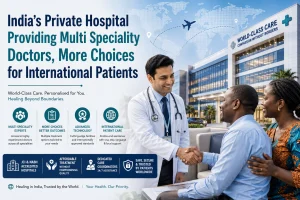
The factors driving international patients to Indian medical centers extend beyond geographic proximity. India’s medical tourism ecosystem offers a combination of clinical excellence, affordability, and state-of-the-art technology that few nations can match.
       ┌─────────────────────────────────────────────────────────┐
       │             Why Patients Choose Treatment in India      │
       └────────────────────────────┬────────────────────────────┘
                                    │
    ┌───────────────────┬───────────┴───────────┬───────────────────┐
    ▼                   ▼                       ▼                   ▼
┌───────────────┐ ┌───────────────┐     ┌───────────────┐   ┌───────────────┐
│ World-Class   │ │ Unmatched Cost│     │  Cutting-Edge │   │   Cultural    │
│ Expertise     │ │ Efficiency    │     │  Technology   │   │  Proximity    │
│ JCI/NABH Care │ │ 60-80% Savings│     │  Robotics/AI  │   │  Ease of Comms│
└───────────────┘ └───────────────┘     └───────────────┘   └───────────────┘

1. Clinical Expertise and Global Accreditation
Indian private hospitals host thousands of foreign-trained, board-certified surgeons, oncologists, cardiologists, and specialists. Major healthcare chain such as Apollo, Fortis, Manipal, Narayana Health, and Max Healthcare hold international accreditations from JCI (Joint Commission International) and national accreditation from NABH (National Accreditation Board for Hospitals & Healthcare Providers).
2. Unbeatable Cost Advantage
Healthcare expenses in Western nations, and even in parts of the Middle East and Southeast Asia, can be prohibitive. India offers procedures at 1/5th to 1/10th of the cost found in the United States or Europe, without compromising on medical standards or outcomes.
- Coronary Artery Bypass Graft (CABG): $5,000 – $7,000 in India vs. $70,000+ in the US.
- Total Knee Replacement: $4,000 – $6,000 in India vs. $30,000+ in the US.
- Liver Transplant: $25,000 – $35,000 in India vs. $250,000+ in Europe/US.
3. Minimal Wait Times
In countries with public healthcare systems (such as the UK or Canada), non-emergency surgeries like joint replacements or organ transplants can involve months or years on waiting lists. In India, foreign patients receive near-immediate access to consultation, diagnostic imaging, and surgical scheduling.
4. Cutting-Edge Technology
From Da Vinci Robotic Surgical Systems and CyberKnife radiosurgery to PET-CT scans, advanced bone marrow transplant units, and proton beam therapy, Indian tertiary centers house the latest medical equipment available globally.
5. Cultural & Language Familiarity
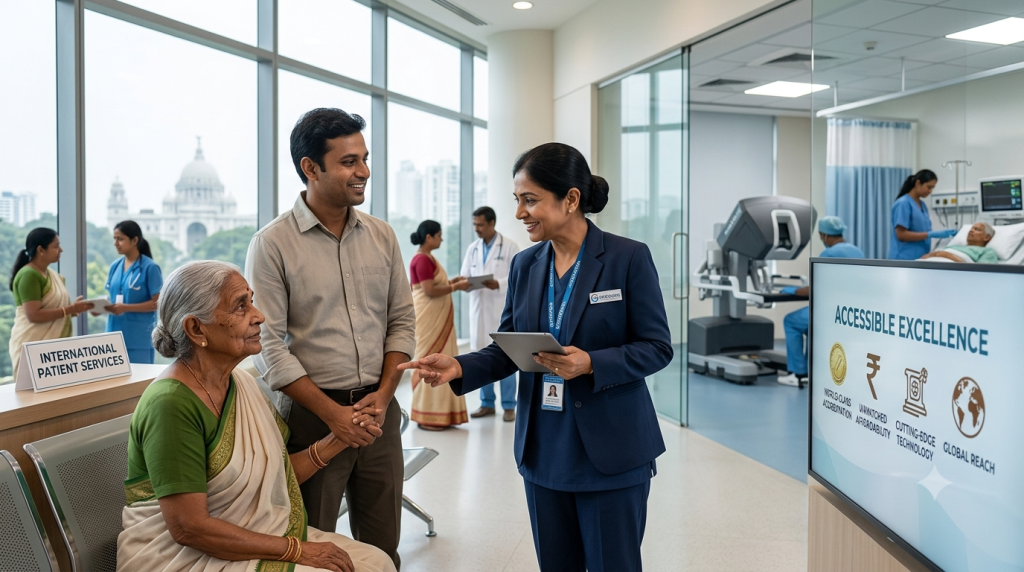
For patients from neighboring South Asian nations (Bangladesh, Nepal, Bhutan, Sri Lanka) as well as the Middle East and East Africa, India offers an environment with familiar cultural nuances, language interpreters on staff, and dietary choices catered to international visitors.
Major Specialties Driving Inbound Medical Travel
While routine check-ups and second opinions make up a portion of foreign visits, the majority of cross-border patients seek high-end, complex interventions:
Cardiac Sciences & Surgery
India is globally recognized for pediatric and adult cardiology. Surgeries ranging from complex congenital heart repair in infants to minimally invasive valve replacements (TAVI/TAVR) are performed daily with success rates matching top global standards.
Oncology & Precision Cancer Care
With comprehensive cancer institutes equipped with linear accelerators, immunotherapy, and targeted therapies, India serves as a regional refuge for complex oncology cases requiring multi-modal treatment plans (chemotherapy, radiation, and surgical resection).
Organ Transplantation
Indian surgeons lead the world in live-donor liver transplants and kidney transplants. Strict legal frameworks ensured under the Transplantation of Human Organs Act (THOA) guarantee ethical practices while offering high success rates for end-stage organ failure patients.
Orthopedics & Joint Replacement
Navigated robotic knee and hip replacements have significantly reduced hospital stays and recovery times, making India a popular destination for orthopedic rehabilitation.
The Broader Economic Ripple Effect
The return of cross-border patients does not benefit healthcare providers alone. Medical tourism acts as an economic multiplier across several interconnected sectors:
- Hospitality & Accommodation: Budget hotels, guest houses, and service apartments around medical hubs (like Kolkata’s Mukundapur/EM Bypass belt or Chennai’s Greams Road) experience high occupancy rates from patients’ accompanying family members.
- Transportation & Logistics: Dedicated medical taxi services, ambulance fleets, and airline connections thrive on steady patient traffic.
- Local Businesses & Services: Currency exchanges, local restaurants, medical supply stores, and translation services see immediate economic uplift.
Challenges and the Future of Medical Tourism in India
Despite its strengths, maintaining India’s status as a top global healthcare destination requires ongoing focus on several operational areas:
- Streamlined Visa Issuance: Fluctuations in diplomatic procedures or administrative delays can interrupt urgent medical care. Continued expansion of digital e-Medical Visas and dedicated fast-track clearance channels at embassies are critical.
- Post-Operative Follow-Up: Once patients return to their home countries, seamless continuity of care relies on robust telemedicine platforms and local partnership clinics for follow-up testing.
- Transparent Pricing Frameworks: Standardized international patient pricing prevents cost ambiguity and fosters trust among visiting families.
Conclusion: A Beacon of Hope and Healing
The recent surge in Bangladeshi patients entering Kolkata hospitals following visa relaxations is a powerful reminder of healthcare’s fundamental mission: care knows no boundaries. When barriers are lowered, patients naturally gravitate toward care that is compassionate, affordable, and clinical in excellence.
As India continues to invest in medical infrastructure, digital health networks, and patient-first international logistics, it remains uniquely positioned not just as a destination for medical tourism, but as a vital sanctuary of healing for the global community.