A cancer diagnosis overwhelms most patients and their families. If a doctor diagnoses you with a sigmoid colon tumor, you might feel lost. Medical terminology confuses many people. You must understand your prognosis. You also need to find the right surgical team. This process can feel like climbing an impossible mountain.
At Humane Medical Assistance, we understand this struggle. Seeking advanced medical care across international borders requires clarity and trust. Our agency operates in New Delhi. We specialize in connecting international patients with top-tier oncologists. We also provide access to state-of-the-art hospitals in India.
This guide breaks down the science of sigmoid colon tumors. We explain the latest advanced treatment options. We also show how our services ensure you receive the best care.
Key Takeaways: Fast Facts for Patients
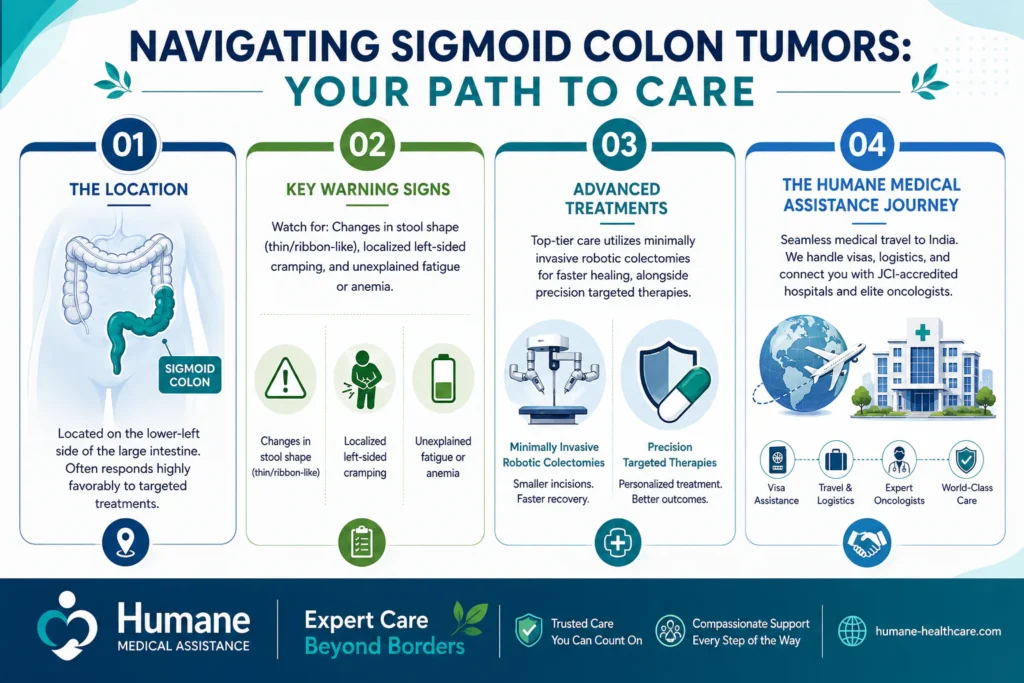
- Location Matters: The sigmoid colon sits in the lower left section of your large intestine. Doctors often call this left-sided colorectal cancer.
- Early Warning Signs: Stool becomes solid in this area. Tumors here create physical blockages early on. Watch for thin, ribbon-like stools and cramping.
- Favorable Genetics: Left-sided tumors respond well to targeted therapies. This response often leads to a better long-term prognosis.
- Advanced Treatments: Surgeons use minimally invasive procedures, like robotic-assisted colectomies. These methods speed up recovery and ensure precise tumor removal.
- Global Access: International patients can find highly affordable oncology treatments in India. Dedicated medical facilitation services make this possible.
What is a Sigmoid Colon Tumor?
You must first understand your digestive tract’s anatomy. The large intestine, or colon, acts as a long, muscular tube. It absorbs water and salt from solid waste. It does this before waste leaves your body.
The colon has several distinct sections. The sigmoid colon acts as the final segment before the rectum. It gets its name from its “S” shape.
A tumor forms here when inner lining cells mutate. These cells grow out of control. Most abnormal growths start as benign polyps. If doctors miss them, these polyps can turn into malignant adenocarcinomas. This is the most common colorectal cancer type.
The Left-Sided Advantage
Oncologists separate right-sided from left-sided colon cancers. This distinction directly guides treatment.
The sigmoid colon sits on the left side. These tumors usually carry a distinct genetic profile. They rarely have aggressive mutations like BRAF. They also respond extremely well to targeted biologic therapies. EGFR inhibitors work great here.
The sigmoid colon also features a narrower passageway. Tumors here cause noticeable symptoms much earlier. This leads to faster diagnosis and intervention. Right-sided tumors often stay hidden longer.
Recognizing the Symptoms
A sigmoid tumor might not cause symptoms early on. Precancerous polyps also remain silent. For this reason, doctors urge adults over 45 to get routine screenings.
When symptoms occur, they usually involve mechanical issues. The tumor physically blocks the narrow sigmoid passage. Solid waste struggles to pass through.
Watch for these critical warning signs:
- Changes in Stool Caliber: The tumor squeezes the colon. Stools become unusually thin, pencil-like, or ribbon-like.
- Visible Bleeding: You might see bright red or dark maroon blood. This appears in the stool or toilet bowl.
- Tenesmus: You feel a constant need to pass stool. This feeling remains even after a bowel movement.
- Persistent Abdominal Pain: You might experience cramping or bloating. Pain typically targets the lower-left abdominal quadrant.
- Systemic Changes: You might experience unexplained weight loss or profound fatigue. Microscopic internal bleeding often causes iron-deficiency anemia.
Diagnosing and Staging the Tumor
If you show symptoms, doctors will act quickly. Gastroenterologists and oncologists run specific tests. They locate the mass, confirm malignancy, and stage the disease.
1. The Diagnostic Phase
- Colonoscopy: This serves as the gold standard. A doctor guides a flexible camera into the rectum. They examine the entire colon. If they spot a tumor, they perform a biopsy. They clip a tiny tissue sample to test for cancer cells.
- Blood Tests: Doctors use Complete Blood Counts (CBC) to check for anemia. They also measure specific tumor markers. CEA (Carcinoembryonic Antigen) proteins often rise in colon cancer patients.
2. The Staging Phase
Once tests confirm cancer, your medical team determines its stage. Staging checks if the disease has spread to other organs.
- CT Scans: These scans inspect your lungs, liver, and abdominal cavity. They look for signs of metastasis.
- Pelvic MRI: This scan captures high-resolution images of your lower pelvis. Doctors see how deeply the tumor penetrates the colon wall. They also check local lymph nodes.
Comprehensive Treatment Options
Treating this cancer requires a strong multidisciplinary approach. A colorectal surgeon and a medical oncologist usually lead your team.
Surgical Interventions
Surgery remains the primary treatment for these tumors. The Sigmoid Colectomy is the most common procedure. The surgeon removes the tumor and a margin of healthy tissue. They also remove surrounding lymph nodes.
Modern medicine allows top-tier hospitals to use minimally invasive techniques:
- Laparoscopic Surgery: Surgeons make small incisions and use specialized cameras. Patients experience less pain and recover faster.
- Robotic-Assisted Surgery: The surgeon guides high-precision robotic arms. This method offers incredible accuracy in the tight pelvic space.
Will You Need a Colostomy Bag?
Many patients fear needing an ostomy bag. Surgeons usually reconnect the healthy colon ends successfully. This procedure is called an anastomosis. Most patients never need a bag.
Sometimes, the colon requires extra time to heal. Your surgeon might create a temporary ostomy. They reverse it a few months later. Permanent ostomies rarely happen with sigmoid tumors.
Systemic and Targeted Therapies
- Chemotherapy: Oncologists use this after surgery to destroy leftover microscopic cancer cells. This lowers your recurrence risk. For advanced stages, chemotherapy shrinks the tumor before surgery.
- Targeted Therapy: These advanced drugs identify and attack specific genetic mutations. They kill cancer cells while sparing healthy tissue.
- Immunotherapy: This cutting-edge treatment boosts your own immune system. Your body learns to recognize and destroy cancer cells. This works exceptionally well for MSI-High tumors.
Understanding Your Medical Team
Treating colon cancer requires many different experts. You will work with several specialists during your journey.
- Gastroenterologist: This doctor specializes in digestive system diseases. They perform your colonoscopy and initial biopsy.
- Colorectal Surgeon: This surgical expert removes the tumor. They handle all complex pelvic operations.
- Medical Oncologist: This doctor manages your chemotherapy and targeted therapies. They monitor your systemic health.
- Radiation Oncologist: Sometimes doctors use radiation to shrink tumors. This specialist oversees those specific treatments.
- Pathologist: This doctor examines your biopsy tissue. They determine the cancer stage and identify genetic mutations.
Diet and Lifestyle During Recovery
Surgery and chemotherapy place massive stress on your body. Proper nutrition speeds up healing. It also helps you regain your strength quickly.
Nutrition After Surgery
Your digestive tract needs time to rest after a colectomy. Doctors will restrict your diet at first. You will start with clear liquids. Soon, you will transition to soft, easily digestible foods.
- Low-Fiber Diet: High fiber foods make your colon work harder. You must avoid raw vegetables, nuts, and whole grains initially.
- Protein-Rich Foods: Your body needs protein to rebuild tissue. Lean meats, eggs, and smooth peanut butter work well.
- Hydration: You must drink plenty of fluids. This prevents dehydration and helps your bowels move smoothly.
Long-Term Lifestyle Adjustments
Once you fully recover, you must adopt healthier habits. A good lifestyle reduces your risk of recurrence.
- Eat More Plants: Transition back to a high-fiber diet slowly. Fresh fruits, vegetables, and whole grains protect your colon.
- Limit Red Meat: Studies link red and processed meats to colon cancer. Choose chicken, fish, or plant-based proteins instead.
- Exercise Regularly: Physical activity boosts your immune system. Aim for at least thirty minutes of moderate exercise daily.
- Quit Smoking: Tobacco use drastically increases your cancer risk. It also slows down your surgical healing process.
Choose India for Oncology Care
Many international patients lack access to advanced oncological care at home. Costs in Western countries also block access. Traveling abroad saves lives.
Humane Medical Assistance makes this journey simple and stress-free. We do not act as a medical facility. We serve as your advocates and logistical coordinators.
International patients trust us for many reasons:
- Access to Accredited Excellence: We partner with India’s most prestigious hospitals. You gain access to advanced robotic surgical suites and targeted therapies.
- Top-Tier Oncologists: We connect you with globally trained colorectal surgeons. They specialize in complex tumor removals.
- Cost-Effective Care: Medical treatments in India cost a fraction of Western prices. You never compromise on quality or safety.
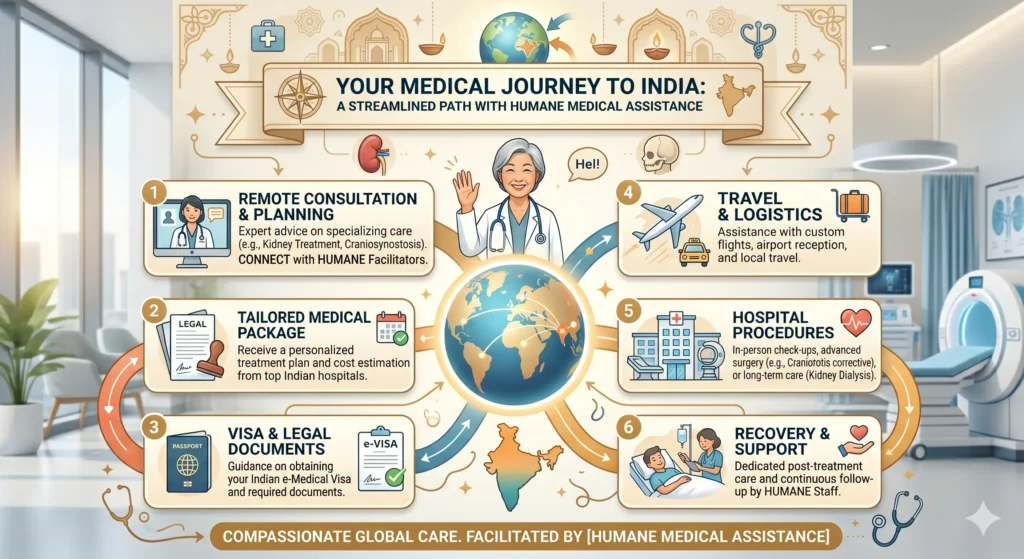
- End-to-End Support: We handle all your logistics. We manage medical visas, airport transfers, and hospital admissions. You just focus on healing.
Preparing For Your Trip to India
Traveling for medical care requires careful planning. We handle the heavy lifting for you.
- Medical Visas: The Indian government offers special medical visas. We provide the necessary invitation letters from our partner hospitals.
- Flight Arrangements: We help you book comfortable flights. We ensure you land at the Indira Gandhi International Airport in New Delhi.
- Accommodation: You need a comfortable place to recover. We arrange safe, clean guest houses near your treating hospital.
- Language Translators: Language barriers cause unnecessary stress. We provide interpreters to ensure clear communication with your doctors.
Frequently Asked Questions
Q: Do sigmoid colon tumors always mean cancer?
A: No. Many start as benign adenomatous polyps. However, doctors must remove them promptly. Leaving them increases your risk of developing colorectal cancer later.
Q: What is the survival rate for this condition?
A: Early detection brings an excellent prognosis. Localized Stage I or II colon cancer offers a 5-year survival rate over 90%. Left-sided tumors respond well to targeted therapies. This ensures strong long-term outcomes.
Q: How does robotic surgery improve outcomes?
A: Robotic systems give surgeons 3D, high-definition vision. Robotic wrists move more precisely than human hands. You get smaller incisions, less bleeding, and a faster recovery.
Q: How do I arrange treatment through Humane Medical Assistance?
A: The process is very simple. Share your medical reports with our team. We consult our partner oncologists to create a customized treatment plan. We provide a transparent cost estimate. When you approve, we assist with visas, travel, and admission in New Delhi.
Take Control of Your Health Today
A sigmoid colon tumor requires prompt, expert medical attention. You do not have to fight this battle alone. Geographical boundaries should never prevent you from receiving life-saving care.
The team at Humane Medical Assistance stands ready to help. We connect you with India’s leading oncology specialists. We provide the logistics, emotional support, and expert connections you need.
Ready to explore your options with leading specialists?
👉 Contact Humane Medical Assistance Today to Get a Second Opinion and a Customized Treatment Plan