
The human body is remarkably resilient, often adapting to changes and masking underlying issues until they become impossible to ignore. While this resilience is generally an asset, it can also be a profound vulnerability when it comes to certain illnesses. One of the most glaring examples of this physiological camouflage is stomach (gastric) cancer.
Globally, stomach cancer ranks highly in terms of cancer prevalence, yet it remains one of the most difficult to detect early. Oncologists frequently describe it as a “silent” disease in its initial phases because it develops and progresses without sounding the dramatic alarms we typically associate with a serious health crisis. Instead, it whispers, presenting symptoms that are easily mistaken for everyday gut issues.
Understanding why stomach cancer hides, recognizing its subtle early warning signs, and knowing when to seek professional medical help are critical steps in catching the disease when it is most treatable. Furthermore, navigating the complex road of oncology care requires robust logistical support to ensure patients receive the best possible outcomes.
Why is Stomach Cancer “Silent” in the Early Stages?
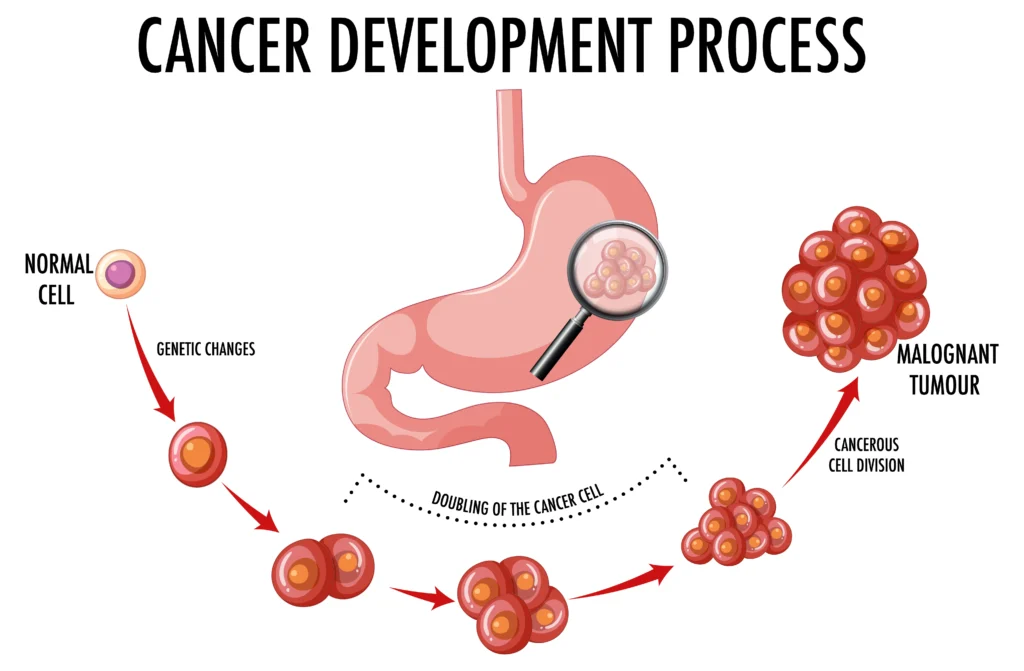
To understand why stomach cancer goes unnoticed, you have to look at the remarkable anatomy of the stomach itself. The stomach is essentially a muscular, highly flexible pouch designed to expand and contract based on the volume of food and liquid we consume.
Because of this physical characteristic of extreme stretchability, a tumor can grow on the stomach lining for a significant period without causing a blockage or triggering sharp, localized pain. As the tumor slowly develops, the stomach simply stretches to accommodate it.
Because early tumor growth does not immediately disrupt the stomach’s mechanical function, many people completely ignore the first mild signs. They might feel a bit bloated, experience some excess gas, or feel a lack of interest in eating. Since these symptoms perfectly mimic common, benign digestive issues—like a mild stomach bug, food intolerance, or everyday stress—they are rarely taken seriously. People often resort to quick over-the-counter remedies or antacids to manage the discomfort, unknowingly allowing the cancer to progress unchecked.
The 5 Red Flags: Warning Signs You Should Never Ignore

While the early signs are subtle, they do exist. Recognizing the overlap between common gut issues and early-stage gastric cancer is the key to early detection. If you or a loved one experience the following symptoms persistently, it is time to take action.
1. Feeling Full Too Fast (Early Satiety)
One of the earliest and most common warning signs is a drastic change in your appetite and capacity to eat. You might sit down for a meal feeling hungry, but after eating only a few bites or a very small portion, you suddenly feel completely stuffed. This sensation, known clinically as early satiety, occurs because the tumor is taking up space in the stomach or causing the stomach walls to become stiff and less capable of expanding to accommodate a normal-sized meal.
2. Constant Heartburn and Indigestion
We all experience occasional heartburn after a heavy, spicy, or greasy meal. However, heartburn or indigestion that becomes a constant daily companion is a major red flag. If you find yourself experiencing a burning sensation in your chest or upper abdomen that does not go away—even after altering your diet and taking standard over-the-counter antacids—it warrants a deeper medical investigation. A growing tumor can disrupt the stomach’s normal acid production and digestion processes, leading to chronic reflux.
3. Unexplained Pain in the Belly
Stomach cancer rarely presents as a sharp, agonizing stabbing pain in the early stages. Instead, patients often report a dull, nagging, or vague ache in the upper abdomen, right above the navel. The defining characteristic of this pain is that it is often entirely unprompted; it is not tied to a specific food you ate, it doesn’t necessarily happen right after meals, and it lingers persistently throughout the day and night.
4. Rapid, Unintentional Weight Loss
Shedding a few pounds when you are actively dieting or exercising is a great achievement. However, dropping weight quickly and noticeably without making any conscious changes to your lifestyle, diet, or physical activity level is one of the universal warning signs of cancer. This happens because cancer cells consume a massive amount of the body’s energy supply. Combined with a loss of appetite and early satiety, the body begins to waste away rapidly.
5. Dark, Tar-Like Stools (Melena)
This is perhaps the most alarming symptom on the list and requires immediate medical attention. As a stomach tumor grows, it can begin to ulcerate and bleed into the digestive tract. Because this blood originates high up in the digestive system (the stomach), it is digested as it moves through the intestines. By the time it exits the body, it no longer looks red. Instead, it turns the stool a very dark, black, and tar-like color.
The “Two-Week Rule” and Getting a Diagnosis
Oncologists generally advise adhering to the “two-week rule.” If you experience any of the symptoms listed above, and they persist for more than two weeks despite conservative home management, you must visit a doctor.
The gold standard for investigating these symptoms is an upper endoscopy. During this relatively simple outpatient procedure, a doctor lowers a thin, flexible tube equipped with a tiny camera down the throat and into the stomach. This allows them to visually inspect the stomach lining and take a small tissue sample (biopsy) of any suspicious areas. If cancer is detected, further imaging, such as CT scans or endoscopic ultrasounds, will be used to stage the disease and determine the best course of action.
Navigating Cancer Care with Professional Medical Assistance
Receiving a cancer diagnosis is a life-altering event. The period immediately following a diagnosis is often a whirlwind of overwhelming medical jargon, complex treatment decisions, and immense emotional stress. For many patients, the best oncology care, advanced surgical options, or highly targeted immunotherapies may not be available at their local healthcare facility. This frequently necessitates traveling to specialized centers of excellence, either domestically or internationally.
This is precisely where a dedicated medical assistance company becomes an invaluable partner.
At Humane Medical Assistance, we understand that we are not a hospital; rather, we are the logistical backbone that connects patients to world-class medical care. While your oncologists focus on eradicating the disease, our company focuses on eradicating the barriers to your treatment.
Our comprehensive support services during a cancer journey include:
- Global Treatment Coordination: Navigating the complexities of medical tourism can be daunting. We help patients connect with top-tier international oncology centers, ensuring they have access to the latest therapies and surgical advancements, regardless of geographic borders.
- Seamless Medical Logistics: Traveling with a serious illness requires meticulous planning. We handle the intricacies of medical travel, including arranging specialized medical escorts, coordinating flights that accommodate the patient’s physical needs, and managing ground transportation directly to the treatment facility.
- Administrative Advocacy: From securing emergency medical visas to translating complex medical records and facilitating international hospital admissions, we remove the administrative burden so the patient and their family can focus entirely on healing.
- Continuum of Care: Oncology care does not end after surgery or a round of chemotherapy. We ensure that a patient’s post-treatment logistics are flawlessly managed, coordinating a safe return home and ensuring a seamless handover of medical records to local physicians for ongoing recovery and monitoring.
Conclusion: Do Not Let Silence Cost You Your Health
Because stomach cancer is so adept at hiding in plain sight, vigilance is your greatest weapon. Do not dismiss chronic digestive issues as just another part of getting older or a side effect of a busy lifestyle. Listen to your body, watch for the subtle warning signs, and advocate for your health by seeking timely medical evaluations.
Facing a Complex Medical Diagnosis? You do not have to navigate the daunting world of oncology care and medical logistics alone. At Humane Medical Assistance, we provide the expert coordination and logistical support required to seamlessly connect you with life-saving treatments worldwide.
Contact Us Today to learn more about our global medical coordination services and how we can support your journey toward health and recovery.