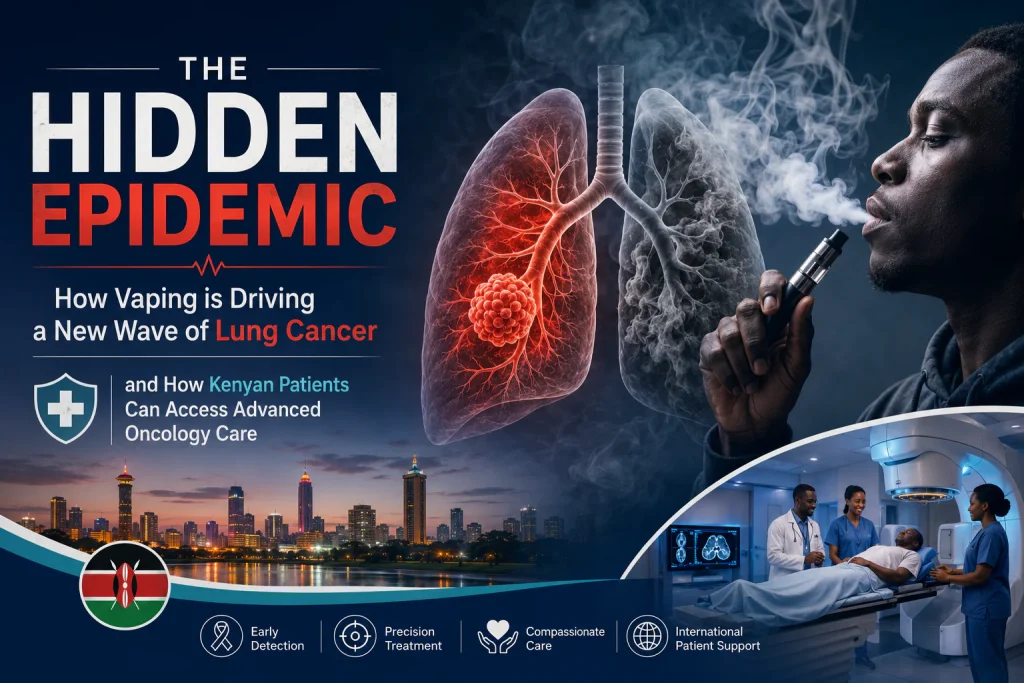
For decades, anti-smoking campaigns across East Africa focused on one clear message: traditional cigarettes cause lung cancer. However, as cigarette use slowly declines, a new, sleeker, and sweeter threat has taken its place.
Walk into any café in Nairobi or Mombasa, and vaping devices are hard to miss. Marketed to young adults and professionals as a “cleaner” or “safer” alternative to smoking, e-cigarettes have triggered a massive public health crisis. A recent report in the Times of India highlighted a growing alarm among global oncologists: vaping is not just harmless water vapor, and it may be creating the next massive wave of lung cancer.
Dr. Lalit Sharma, a leading Medical Oncologist at Manipal Hospitals in India, recently warned that the chemicals in e-liquids and the heavy metals in heating coils are causing profound DNA damage to lung cells.
For patients in Kenya facing a sudden, unexpected lung disease or cancer diagnosis, the shock is overwhelming—especially for those who never smoked a traditional cigarette in their lives. The local shortage of specialized thoracic oncologists and advanced diagnostic tools (like widespread PET-CT access and genetic biomarker testing) often leaves families scrambling for solutions.
At Humane Medical Assistance, we bridge this critical gap. We connect East African patients with India’s top-tier oncology centers, providing end-to-end logistical support for complex cancer diagnostics and treatments. Here is everything you need to know about the dangers of vaping, the early warning signs of lung cancer, and how you can access affordable, world-class treatment in India.
The Biggest Misconception: “It’s Just Water Vapor”
One of the most dangerous myths surrounding vaping is the belief that users are simply inhaling flavored water. The lungs are highly delicate organs designed solely to exchange oxygen and carbon dioxide. They were never meant to process heated chemical aerosols hundreds of times a day.
When you vape, you are exposing your lung tissue to severe carcinogens:
1. Carcinogenic Chemicals
Heating e-liquids creates highly toxic substances such as formaldehyde, acetaldehyde, and acrolein. These chemicals are known carcinogens that directly attack and mutate the DNA inside your lung cells, setting the stage for cancerous tumors to grow.
2. Toxic Heavy Metals
E-cigarettes rely on metal heating coils. Research shows that as these coils heat up, they release microscopic particles of heavy metals—including nickel, lead, chromium, and tin—directly into the vapor. Inhaling these metals causes severe inflammation and long-term toxicity in the respiratory tract.
3. Chronic Inflammation and Cellular Mutation
Cancer rarely happens overnight; it is the result of repeated injury and faulty cellular repair. Vaping causes a never-ending cycle of chemical burns and inflammation inside the lungs. As your lung cells constantly struggle to repair this chronic damage, the likelihood of a genetic mutation (and subsequent tumor growth) increases dramatically.
Warning Signs Many People Brush Aside
Because vaping causes chronic irritation throughout the respiratory tract, many users dismiss early warning signs of lung damage as a temporary “vaper’s cough.” This normalization is dangerous.
Dr. Sharma and other leading oncologists urge individuals to seek immediate medical evaluation (like a low-dose CT scan) if they experience any of the following:
- A persistent cough that does not improve or gradually worsens over weeks.
- Breathlessness during routine, low-effort activities.
- Chest pain, especially sharp pains while coughing, laughing, or taking deep breaths.
- Repeated chest infections such as chronic bronchitis or pneumonia.
- Unexplained weight loss and a sudden loss of appetite.
- Persistent fatigue that does not improve with sleep.
These symptoms do not automatically mean lung cancer, but if you vape or smoke regularly, they demand immediate, professional investigation.
Why Kenyan Patients Choose India for Lung Cancer Treatment
If a lung mass is detected, time is of the essence. Unfortunately, cancer patients in East Africa often face extended waiting lists for biopsies, a lack of advanced targeted therapies, and prohibitive treatment costs at private facilities.
This is why India has become the premier destination for Kenyan oncology patients.
1. Advanced Diagnostics and Biomarker Testing
Lung cancer is no longer treated with a “one-size-fits-all” chemotherapy approach. Indian oncology centers utilize advanced Biomarker and Genomic Testing (like EGFR, ALK, and ROS1 mutations). By analyzing the exact genetic makeup of the tumor, Indian oncologists can prescribe Targeted Therapies and Immunotherapy—treatments that specifically attack the cancer cells without destroying healthy tissue.
2. Specialized Thoracic Surgery
If the lung cancer is caught in the early stages, surgical removal (Lobectomy or Pneumonectomy) is often the best curative option. India boasts some of the world’s most skilled cardiothoracic and robotic surgeons. Utilizing VATS (Video-Assisted Thoracoscopic Surgery) and Robotic-assisted platforms, surgeons can remove tumors through tiny incisions, drastically reducing pain and recovery time.
3. Comprehensive Tumor Boards
In top Indian hospitals, your case is not just reviewed by one doctor. A multidisciplinary “Tumor Board”—consisting of a medical oncologist, radiation oncologist, thoracic surgeon, and pathologist—collaborates to design a highly personalized, aggressive treatment protocol.
The Financial Reality: Oncology Costs (Nairobi vs. New Delhi)
Cancer treatment is inherently expensive, but traveling to India can dramatically reduce the financial burden on East African families while simultaneously upgrading the quality of care.
Please note: The following costs are estimated averages. Humane Medical Assistance provides exact, tailored financial estimates from specific hospitals before you travel.
| Diagnostic / Treatment | Estimated Cost in Kenya (KES) | Estimated Cost in India (USD) | What to Expect in India? |
| PET-CT Scan (Full Body) | 60,000 – 80,000 KES | $250 – $350 USD | Highly advanced imaging to detect if cancer has spread. |
| Biopsy & Genomic Testing | 100,000 – 150,000 KES | $500 – $800 USD | Advanced bronchoscopy and complete genetic biomarker panels. |
| Chemotherapy (Per Cycle) | 150,000 – 300,000 KES | $300 – $600 USD | Administered in premium day-care oncology suites. |
| Targeted Therapy / Immunotherapy | Often Unavailable / Very High | Varies (Highly Subsidized) | Access to the latest FDA-approved immuno-oncology drugs at lower global prices. |
| Robotic Lung Surgery (Lobectomy) | 1.5M – 2.5M KES | $5,500 – $7,500 USD | Minimally invasive tumor removal including hospital and ICU stay. |
Frequently Asked Questions (FAQs) for Cancer Treatment Abroad
Navigating a cancer diagnosis is terrifying. Organizing international medical travel shouldn’t be. Here are direct answers to the most critical logistical questions we receive at Humane Medical Assistance.
What is the exact process for a Kenyan citizen to secure an Indian medical visa for cancer treatment?
To obtain an Indian medical visa, you need an official Medical Invitation Letter from a recognized Indian hospital. Humane Medical Assistance secures this letter on your behalf based on your local medical reports. You then submit this letter, along with your passport and bank statements, to VFS Global in Nairobi. Medical visas are prioritized and generally processed in 3 to 5 working days.
Can the Social Health Insurance Fund (SHIF) cover my cancer treatment in India?
The new Social Health Insurance Fund (SHIF) in Kenya may provide coverage for overseas treatment only if the specific oncology treatment (like certain robotic surgeries or advanced radiotherapies) is entirely unavailable in local public hospitals. You will require an official referral from a recognized Kenyan doctor and approval from the Ministry of Health before traveling to claim any benefits.
How long does a lung cancer patient need to stay in India?
The duration of stay depends entirely on the treatment plan. For diagnostics and surgery alone, a stay of 3 to 4 weeks is typical. If your Tumor Board recommends localized radiation therapy, you may need to stay for 6 to 8 weeks. Many patients receive their initial cycles of chemotherapy or immunotherapy in India and return to Kenya to complete their cycles under the guidance of a local oncologist.
Is there a language barrier when discussing complex cancer treatments in India?
No. English is the primary language used in the Indian medical system. All medical reports, prescriptions, and consultations with your oncologists will be in fluent English, ensuring complete transparency and understanding of your treatment protocol.
A Seamless, Stress-Free Journey with Humane Medical Assistance
When a family member is diagnosed with lung cancer, your entire focus must be on their emotional support and recovery. Humane Medical Assistance is a specialized medical travel facilitator that takes the logistical weight off your shoulders.
From Nairobi to New Delhi, we manage every detail:

1. Free, Rapid Medical Opinions
Cancer doesn’t wait, and neither do we. Send us your local CT scans, X-rays, or biopsy reports. Within 48 hours, we will consult with senior oncologists in India (at institutions like Manipal, Apollo, or Fortis) and provide you with a comprehensive treatment plan and transparent cost estimate—completely free of charge.
2. Priority Visa and Flight Assistance
We expedite the hospital invitation letter required for your VFS Global visa application. We also help you map out the most direct, comfortable flight routes from Jomo Kenyatta International Airport (JKIA) to Indira Gandhi International Airport (DEL).
3. VIP Airport Pickup and Accommodation
When you arrive in New Delhi, our dedicated representatives will be at the arrival gate. We arrange clean, affordable, and sanitized guesthouses near the hospital, ensuring you have a kitchen to prepare familiar Kenyan meals during long treatment stays.
4. Dedicated Hospital Concierge
You will never have to navigate a massive Indian hospital alone. Our team handles your registration, guides you to your PET scans and doctor consultations, coordinates with the nursing staff, and acts as your personal advocate throughout the entire treatment process.
5. Seamless Post-Treatment Transition
Once you are cleared to fly back to East Africa, we ensure you have all your “fit-to-fly” certificates, a comprehensive discharge summary, and necessary medications. We also establish a communication channel between your Indian oncologist and your local Kenyan doctor to ensure seamless follow-up care.
Do Not Wait for Symptoms to Worsen
The rise of vaping has brought a new set of dangers to lung health, threatening a demographic that previously thought they were safe from tobacco-related diseases. Whether you are dealing with a persistent “vaper’s cough” that needs advanced diagnostic screening, or you have already received a lung cancer diagnosis in Kenya and need immediate surgical intervention, proactive action saves lives.
With the right medical team, advanced genomic testing, and a dedicated logistical partner, you can access the highest standard of global oncology care.
Contact Humane Medical Assistance today for a free, confidential review of your medical case with India’s leading thoracic oncologists.