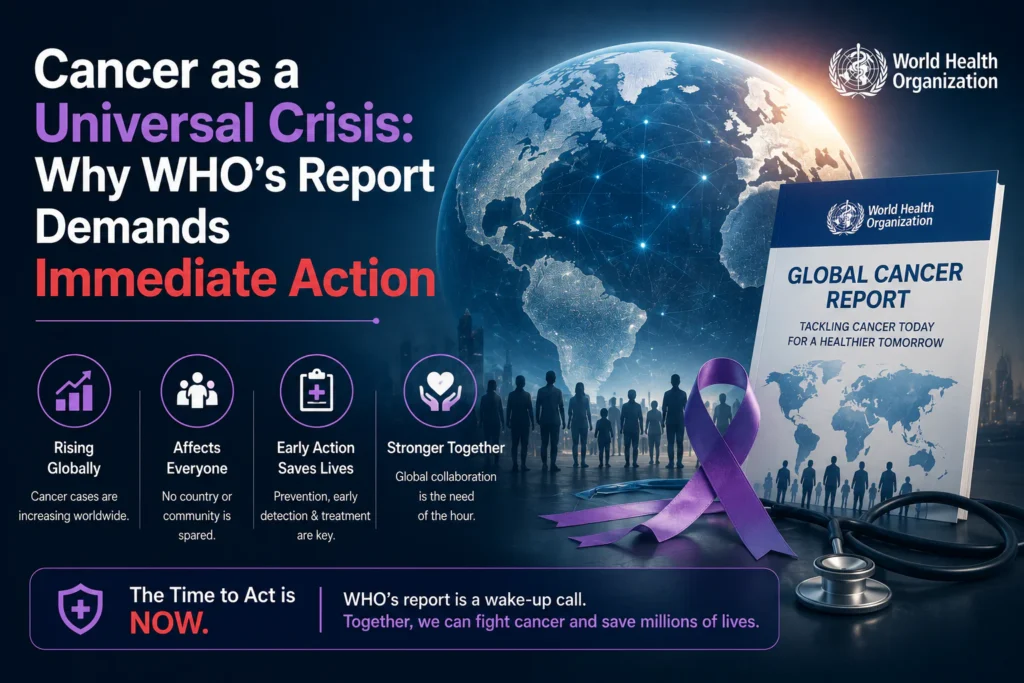
The World Health Organization recently released a groundbreaking global oncology report. Specifically, this monumental document reveals a truly staggering medical reality. According to researchers, cancer will affect ninety-two percent of people worldwide during their lifetime. Consequently, almost every single household will face this devastating disease directly or indirectly. Indeed, one in five individuals will personally develop a malignant tumor. Meanwhile, the remaining population will support a close family member through their diagnosis. Therefore, cancer no longer represents an isolated medical emergency. Instead, it stands as a universal human crisis requiring immediate global action.
At Humane Medical Assistance, our dedicated team confronts this escalating crisis daily. Based in New Delhi, we operate as a premier medical tourism company. In this capacity, we connect international patients with elite Indian oncology centers seamlessly. Importantly, we do not operate as a clinical hospital ourselves. Rather, we function as your independent, highly specialized medical travel partner. Ultimately, we strive to bridge the massive geographic gap in global healthcare access. For this reason, we want to break down the WHO report comprehensively today. Through understanding, you can make highly informed decisions regarding your personal health journey.
The Staggering Global Oncology Numbers
Currently, the global oncology statistics paint an incredibly alarming picture. For example, healthcare systems diagnosed over twenty million new cancer cases last year alone. Tragically, the disease claims approximately twenty-six thousand lives every single day. Furthermore, this mortality rate translates to nearly ten million global deaths annually. As a result, cancer remains the second leading cause of death worldwide universally.
Looking ahead, the future trajectory appears even more challenging for healthcare providers. Specifically, the WHO projects a massive sixty-seven percent surge in new diagnoses. By 2050, annual cancer cases will likely reach thirty-five million globally. Undoubtedly, this explosive growth threatens to collapse unprepared medical infrastructures completely. Consequently, international health organizations demand immediate preventative action from all global governments. Otherwise, the sheer volume of patients will overwhelm modern medical capabilities entirely.
Moreover, the human toll extends far beyond these raw statistical figures entirely. Indeed, a cancer diagnosis disrupts emotional well-being, interpersonal relationships, and social functioning deeply. According to the survey, sixty percent of respondents experienced profound psychological distress. Additionally, nearly half reported losing close friendships due to prolonged social isolation. Therefore, modern oncology care must include robust mental health support systems inherently. Ultimately, treating the emotional trauma proves just as important as removing the tumor.
Why Are Cancer Cases Surging So Rapidly?
Naturally, people wonder why cancer rates continue climbing at such terrifying speeds. First, rapid population growth and increasing global life expectancy drive this trend primarily. Biologically, advancing age exponentially increases your fundamental risk of cellular mutation. Therefore, a larger elderly population automatically generates a higher overall cancer burden.
However, age alone does not explain the entire global oncology crisis. Significantly, the WHO attributes nearly forty percent of cases to preventable lifestyle factors. For instance, widespread tobacco usage remains the absolute leading driver of malignant tumors. Additionally, excessive alcohol consumption damages cellular DNA aggressively over long periods. Furthermore, modern diets contribute heavily to the rising global obesity epidemic. Crucially, excess body fat secretes inflammatory hormones that actively promote rapid tumor growth.
Moreover, the WHO report highlights the dangers of environmental pollution explicitly. Globally, billions of people breathe heavily polluted air every single day. Consequently, microscopic particulate matter deeply damages delicate lung tissues over time. As a result, lung cancer rates soar even among individuals who never smoke. Additionally, exposure to dangerous workplace chemicals elevates your cancer risk exponentially. Therefore, governments must implement stricter environmental regulations to protect vulnerable urban populations.
Finally, chronic infections pose a massive threat in developing nations specifically. In fact, viruses cause nearly thirty percent of cancers in lower-income countries. Particularly, Human Papillomavirus (HPV) and Hepatitis B drive cervical and liver cancers aggressively. Fortunately, proactive vaccination programs prevent these specific viral infections almost entirely. Hence, improving global vaccination access remains a top priority for health officials everywhere.
The Deep Divide in Global Cancer Survival
Beyond the rising numbers, the WHO report exposes a heartbreaking geographic reality. Simply put, your survival chances depend heavily on your specific birth country. Unfortunately, immense financial inequities dictate global access to life-saving medical care. Consequently, patients in low-income nations face incredibly grim survival odds daily.
To illustrate this point, consider the stark contrast in breast cancer survival rates. In wealthy nations, eighty-seven percent of women survive five years past their initial diagnosis. Conversely, only forty-two percent survive that long in lower-income regions. Primarily, delayed diagnosis and severe lack of medical resources cause this tragic discrepancy. Furthermore, essential cancer medicines remain completely unavailable in many developing healthcare systems. Therefore, millions of people suffer needlessly due to purely economic limitations.
Furthermore, the financial devastation of a cancer diagnosis impacts families profoundly. According to researchers, nearly half of all affected households face severe economic hardship. Specifically, the immense costs of prolonged treatments drain generational savings completely. In addition, patients frequently lose their primary income due to severe physical illness. Meanwhile, dedicated family caregivers sacrifice their own careers to provide essential support. Consequently, the indirect financial costs of cancer ripple through entire local economies. Thus, achieving universal health coverage remains an absolute global necessity today.
Geographic Excellence: Medical Travel to India
Fortunately, international medical travel offers a powerful solution to these survival inequities. Today, India stands proudly as a premier global destination for advanced oncology care. Specifically, international patients travel here frequently to access elite, highly affordable medical treatments. Indeed, top Indian corporate hospitals hold strict Joint Commission International (JCI) accreditation permanently.
In cities like New Delhi, medical facilities utilize cutting-edge technology daily. For example, expert Indian surgeons perform minimally invasive tumor removals using advanced robotic systems. Additionally, oncologists deploy TrueBeam radiation therapy to target aggressive cancer cells precisely. Effectively, this incredible technology destroys malignant tumors while sparing surrounding healthy tissue completely. Most importantly, these advanced procedures cost up to eighty percent less in India. Thus, international patients receive world-class care without facing complete financial devastation.
Moreover, Indian medical facilities host comprehensive, highly specialized multidisciplinary tumor boards. Here, top surgical, medical, and radiation oncologists collaborate on your specific case continuously. Together, they design highly personalized treatment protocols to ensure optimal clinical success. Additionally, Indian hospitals offer immediate access to the latest targeted immunotherapy treatments. These advanced drugs train your immune system to destroy hidden cancer cells efficiently. Ultimately, this collaborative approach guarantees the highest standard of international medical care.
Your Pathway to Care with Humane Medical Assistance
Navigating a foreign medical system feels incredibly overwhelming for any international patient initially. Therefore, Humane Medical Assistance removes every single logistical barrier for you completely. By doing so, we streamline your medical journey so you focus entirely on healing. First, our team secures your critical Medical Invitation Letter rapidly. Undoubtedly, you need this exact document to process your Indian Medical Visa smoothly.
Furthermore, we arrange incredibly comfortable local accommodations for your entire traveling family. Next, our coordinators schedule your immediate clinical consultations with top Indian oncologists. Ultimately, this highly organized approach ensures you face absolutely zero waiting times.
1.Free Medical Evaluation:Clinical Assessment.
Initially, send your current medical reports directly to our expert oncology team. Our medical panel reviews your specific case thoroughly within forty-eight hours. Subsequently, they provide a detailed treatment plan and a transparent financial estimate.
2.Visa and Flight Planning:Travel Logistics.
Secondly, we issue your official Medical Invitation Letter immediately upon hospital selection. This critical document allows you to apply for an Indian Medical Visa quickly. Furthermore, we assist you in booking the safest international flight routes.
3.Arrival and Expert Treatment:On-ground Support.
Finally, our dedicated care manager welcomes you personally at the destination airport. We handle your hospital registration and daily transportation completely from day one. Moreover, we stand by your side throughout your entire clinical recovery process.
Frequently Asked Questions
How many people will experience cancer in their lifetime?
According to the WHO, ninety-two percent of people will experience cancer impacts globally. Specifically, one in five individuals will personally develop the disease themselves. Meanwhile, the remaining population will support close family members through their diagnosis. Therefore, cancer represents a truly universal health crisis touching almost every household.
What are the biggest preventable risk factors for cancer today?
Crucially, experts link nearly forty percent of all cancers to preventable lifestyle choices. Primarily, heavy tobacco use and excessive alcohol consumption drive cellular mutations aggressively. Furthermore, unhealthy diets, severe physical inactivity, and obesity increase your risk significantly. Consequently, adopting a healthy lifestyle protects your immune system and lowers your risk.
Why do international patients choose India for cancer treatment?
Economically, India offers world-class oncology care at a fraction of Western costs. Additionally, top Indian corporate hospitals utilize cutting-edge medical technology and robotic surgical systems. Furthermore, highly experienced, globally trained Indian oncologists follow the strictest international safety protocols. Consequently, patients receive exceptional medical care without facing immense financial ruin.
How does Humane Medical Assistance support international cancer patients?
Functionally, we operate as your dedicated, independent medical travel bridge across India. Specifically, we connect you seamlessly with the country’s top oncology centers. Additionally, our team procures your required Medical Invitation Letter for rapid visa processing. Most importantly, we handle all logistics without charging you any hidden service fees.