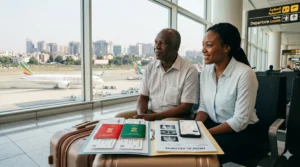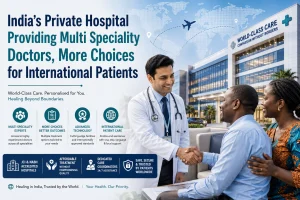
For decades, physical geography defined the pursuit of world-class medical care. Patients faced a tough reality after receiving a complex diagnosis. Specifically, they had to pack their bags and cross international borders for the best care. Moreover, they boarded long-haul flights just to seek top surgical interventions. While global medical travel remains a vital lifeline, healthcare is currently experiencing a major shift.
Indeed, we are entering a new era. Surgical expertise can now travel across oceans in the blink of an eye. Consequently, this technology eliminates the physical distance between a specialist and a patient. This futuristic vision recently became a reality. Dr. Prokar Dasgupta, a pioneering British-Indian surgeon, achieved a groundbreaking milestone. He successfully performed the United Kingdom’s first long-distance robotic operation. This historic achievement shatters traditional limitations. Furthermore, it redefines global healthcare access.
The Historic Milestone: London to Gibraltar
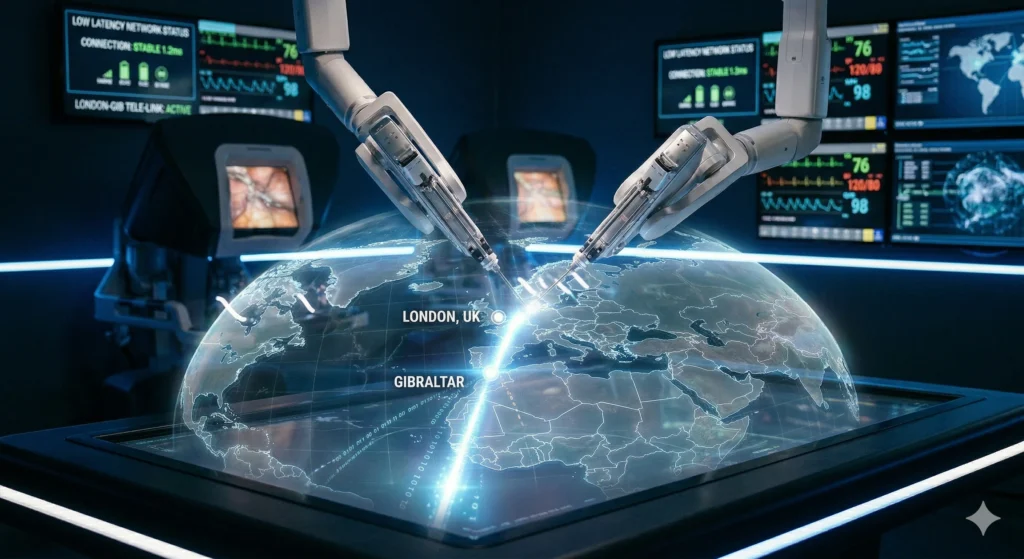
Understanding this technological marvel provides a fascinating glimpse into the future. The setting for this breakthrough spanned two distinct locations. These sites sat nearly 1,500 miles apart.
Inside the Operating Theatre
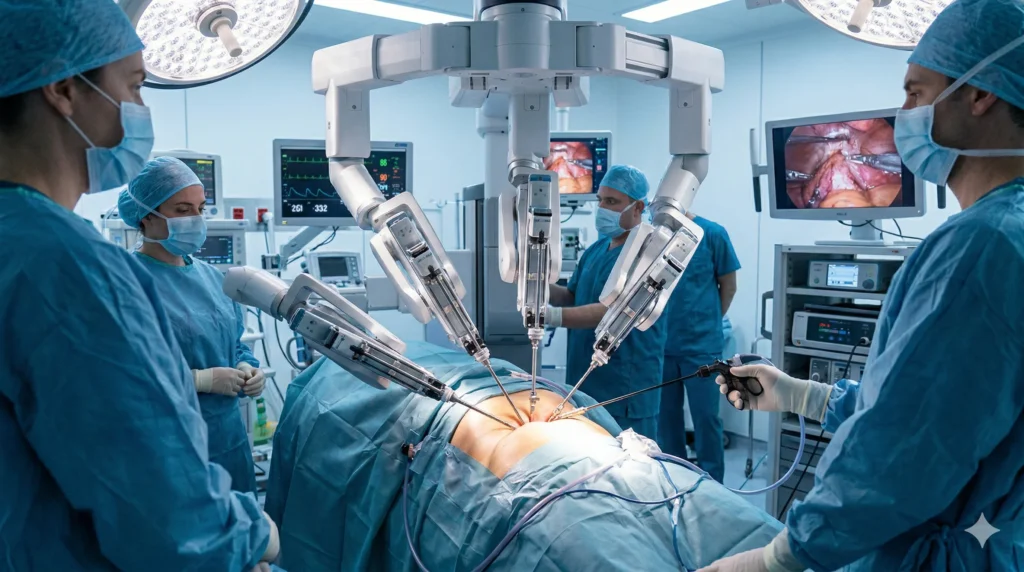
At St. Bernard’s Hospital in Gibraltar, a patient lay in the operating theatre. Doctors had recently diagnosed him with prostate cancer. A dedicated local medical team surrounded him. They prepared to monitor his vital signs and assist on the ground. Additionally, a highly advanced surgical robot stood directly above the patient. The robot featured mechanical arms with delicate instruments and a 3D camera. However, the lead surgeon did not stand in the room. In fact, he was not even in the same country.
The Power of Telesurgery
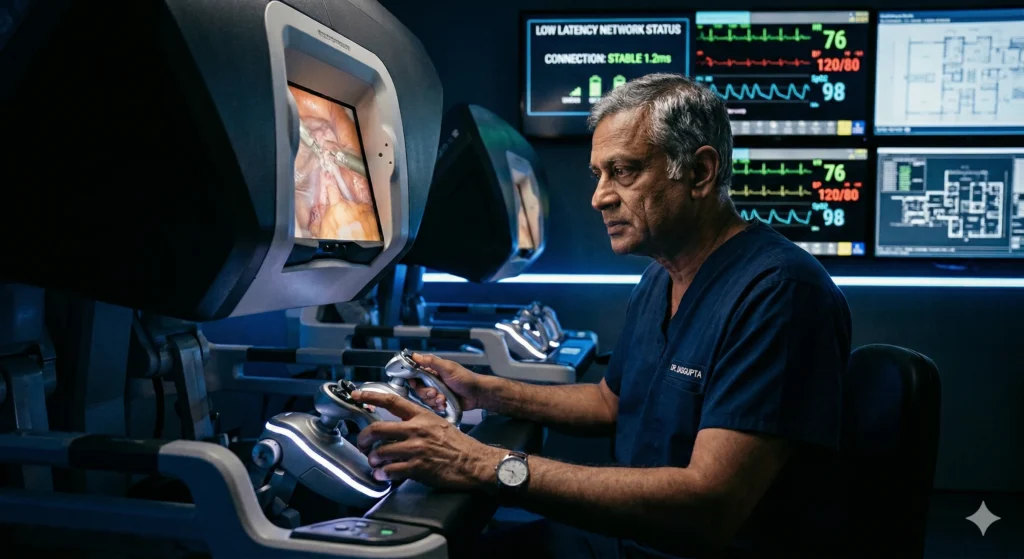
Dr. Prokar Dasgupta sat nearly 2,400 kilometers away. He operated from a highly sophisticated console inside The London Clinic. First, he peered into a magnified, three-dimensional digital display. Next, he manipulated hand controls. A high-speed internet connection instantly transmitted his exact movements. Consequently, the robot’s mechanical arms replicated every subtle twist of his wrist. They mirrored his movements perfectly inside the patient in Gibraltar.
The time delay between the two sites was a staggering 0.06 seconds. Therefore, the operation felt virtually real-time. “It was almost as though I was there,” Dr. Dasgupta noted later. This operation marked the very first telesurgery procedure connecting these two hospitals. Ultimately, it proved that doctors can now export world-class surgical precision digitally.
The Visionary Behind the Console
This historic cross-border surgery was not a sudden stroke of luck. Instead, it culminated from a brilliant career defined by continuous innovation. Dr. Prokar Dasgupta stands as a towering figure in urological science.
A Journey of Excellence
Born in Rourkela, Odisha, he attended the historic Medical College Kolkata. Later, he moved to the United Kingdom for advanced surgical training. He drew inspiration from his grandfather, who also practiced medicine. As a result, he combined a craftsman’s precision with a scientist’s relentless curiosity. Over the past three decades, Dr. Dasgupta achieved an astonishing list of “firsts.”
A Career of Surgical Firsts
In 2009, King’s College London appointed him as Britain’s first Professor of Robotic Surgery. He played a pivotal role in pioneering robotic urology in the UK. Consequently, he completely transformed treatments for prostate cancer. Beyond robotics, his scientific contributions have impacted millions of lives. For example, he developed the internationally recognized “Dasgupta technique.” This minimally invasive procedure uses botulinum toxin injections to treat severe overactive bladder conditions. Finally, the Government of India awarded him the prestigious Padma Shri in 2022. The UK also awarded him an OBE in 2023 for his monumental services to surgery.
How Robotics Are Changing Modern Medicine
You must understand the evolution of robotic surgery to appreciate this telesurgery milestone. When Dr. Dasgupta began his career, doctors performed operations much differently.
Moving Away from Open Surgery
For instance, kidney or prostate removals required massive, open incisions. These highly invasive procedures caused significant blood loss and intense pain. Additionally, patients endured weeks or even months of arduous recovery. The introduction of robotics completely changed this medical paradigm. Today, surgeons perform complex urological procedures through tiny “keyhole” incisions. The robotic system provides a remarkably magnified, 3D view of the surgical field. During the telesurgery, Dr. Dasgupta noted the patient’s prostate appeared the size of a football.
The Shift to Keyhole Precision
It is vital to address a common public misconception here. Specifically, the robot does not perform the surgery autonomously. Instead, it acts as an incredibly advanced interface. It translates a human surgeon’s hand movements into micro-precise actions. Furthermore, it eliminates natural human tremors. As a result, patients experience less pain and a much faster return to normal life. Telesurgery simply adds a high-speed telecommunications layer to this process. Thus, the interface can stretch across continents.
The Impact on Global Healthcare Access
Long-distance robotic surgery holds profound implications for medical logistics. Historically, countries heavily centralized specialized care in major urban medical hubs. Patients living in remote communities often face insurmountable barriers to accessing this care.
Overcoming Traditional Medical Barriers
For instance, a patient in Gibraltar traditionally had to organize international travel for a complex diagnosis. This process involves immense logistical hurdles. Patients must secure medical visas and book international flights. Moreover, they need to find long-term accommodation for accompanying family members. They also endure a grueling recovery process far from home. Consequently, the physical, emotional, and financial toll of medical travel is massive.
Bringing the Surgeon to the Patient
Telesurgery flips this traditional model entirely. As Dr. Dasgupta highlighted, we can now treat patients in remote areas. We can literally take the best surgeon anywhere. Therefore, instead of moving the patient, hospitals beam the expertise directly to them. Local hospitals can retain their patients safely. Meanwhile, a master surgeon operates from a console thousands of miles away.
The Unchanging Surgeon-Patient Relationship
Automation, artificial intelligence, and robotics are advancing rapidly. Therefore, many wonder if the human element of medicine is fading. Are we approaching an era of completely automated surgeries?
Trust Beyond Borders
Dr. Dasgupta remains cautious about complete automation. He firmly believes that technology refines the surgeon’s role rather than replacing it. Despite digital screens and mechanical arms, medicine remains profoundly human at its core. “I think the one thing that will remain constant is the surgeon-patient relationship,” Dr. Dasgupta reflects. Patients look into a surgeon’s eyes and trust them to provide care. He does not believe that fundamental trust will change. Indeed, the telesurgery milestone does not replace human connection. Rather, it serves as an incredible extension of it. It proves that a surgeon’s commitment to saving a life overcomes physical distance.
Navigating Care with Professional Logistics
The Gibraltar-London telesurgery represents a monumental leap forward. However, widespread global adoption of remote surgery will take time. Hospitals must make immense infrastructural investments in ultra-low-latency 5G networks. Furthermore, they need universally compatible robotic systems and complex regulatory frameworks.
How Humane Medical Assistance Helps
Until telesurgery becomes standard everywhere, international medical travel remains the most viable path. Patients still need to travel for specialized treatments. Navigating cross-border healthcare demands meticulous logistical coordination. Therefore, dedicated logistical experts step in to bridge the gap. At Humane Medical Assistance, we serve as your vital link. We connect international patients to the world’s finest medical care. While we are not a hospital, our company acts as your dedicated advocate.
Your Partner in Global Healthcare
We manage the entire administrative ecosystem for complex oncology or cardiac care. Specifically, we coordinate medical visas and arrange specialized medical evacuations. We also organize ground transport and ensure a seamless continuum of care. As a result, Humane Medical Assistance removes the immense burden of travel logistics. You can focus entirely on your treatment and recovery. Ultimately, the future of global healthcare is brighter than ever before. Every patient deserves access to life-saving treatment, no matter where they live.
Are You Seeking Specialized Medical Care Abroad? Do not let geographical borders limit your access to world-class healthcare. At Humane Medical Assistance, we provide the expert coordination and logistical support required to seamlessly connect you with cutting-edge treatments around the globe.
Contact Us Today to learn more about our comprehensive medical travel services and how our company can support your journey toward health and healing.