
Key Takeaways: What You Need to Know About HS
- What it is: Hidradenitis suppurativa (HS) is a chronic autoinflammatory skin condition causing painful, recurring nodules and abscesses.
- Where it happens: It typically affects areas where skin rubs together, such as the armpits, groin, inner thighs, and under the breasts.
- The Root Cause: It is a disease of the hair follicle, not the sweat glands, and is completely unrelated to poor hygiene.
- It is not contagious: You cannot catch HS from or give HS to anyone else.
- Hope for Healing: While there is currently no cure, modern treatments—ranging from biologics to lifestyle adjustments—can dramatically reduce flare-ups and improve your quality of life.
Living with a chronic skin condition can feel incredibly isolating, especially when it involves painful, hidden areas of the body. If you have been suffering from recurring, painful lumps under your skin that never seem to fully heal, you might be dealing with Hidradenitis Suppurativa (HS), also known as acne inversa.
At Humane Healthcare, we understand the physical pain and emotional toll that HS takes on our patients. Because it is widely misunderstood and frequently misdiagnosed as regular boils or severe acne, patients often suffer in silence for years before finding relief.
In this comprehensive guide, we will break down exactly what HS is, why it happens, the stages of its progression, and the most effective treatment strategies available today.
What is Hidradenitis Suppurativa (HS)?
Hidradenitis suppurativa is a painful, chronic, and deeply inflammatory skin disease. To the untrained eye, an HS flare-up might look like a cluster of severe pimples, boils, or deep-rooted cysts. However, HS behaves very differently from standard acne.
Historically, medical professionals believed HS was a disease of the apocrine (sweat) glands. Today, modern dermatology recognizes it as a disease originating in the hair follicle.
The Cycle of an HS Flare-Up
- Follicular Occlusion: The process begins when a hair follicle becomes clogged with dead skin cells (keratin) and natural oils (sebum).
- Rupture: Unlike a normal pimple that pops on the surface, the blocked HS follicle bursts deep beneath the skin.
- Immune Response: The spillage of keratin and bacteria into the deep dermal tissue triggers a massive, hyperactive immune response.
- Abscess Formation: This severe inflammation results in a painful, swollen, boil-like nodule that may eventually drain pus and blood.
Because the body’s immune system is overreacting, HS is classified as an autoinflammatory condition.
The 3 Stages of HS (The Hurley Staging System)
Dermatologists use the Hurley Staging System to classify the severity of Hidradenitis Suppurativa. Accurate staging is critical for determining the right treatment plan.
Hurley Stage I: Mild
In the earliest stage, patients develop single or isolated painful lumps (nodules) or abscesses. There is no scarring, and there are no sinus tracts (tunnels under the skin). Stage I is easily mistaken for ingrown hairs or common boils, which often leads to a delay in a formal HS diagnosis.
Hurley Stage II: Moderate
In Stage II, the condition becomes recurrent. Abscesses repeatedly form in multiple areas. As the skin tries to heal and breaks open again, it leaves behind visible, ropelike scarring. Small, narrow tunnels called sinus tracts begin to form under the skin, connecting different lesions.
Hurley Stage III: Severe
This is the most advanced and debilitating stage. Stage III involves widespread, interconnected lesions across entire regions of the body (like the whole armpit or groin). The sinus tracts form complex, painful networks under the skin that constantly drain foul-smelling fluid. Extensive scarring occurs, which can severely limit mobility and cause chronic, intense pain.
What Causes Hidradenitis Suppurativa?
The exact trigger that causes the initial hair follicle blockage remains a medical mystery. However, clinical research has identified several powerful contributing factors:
- Genetics: HS runs in families. Approximately one-third of individuals diagnosed with HS have a family member who also has the condition.
- Hormonal Fluctuations: HS almost exclusively begins after puberty, usually in the late teens or twenties. It affects women three times more often than men, and flare-ups frequently align with menstrual cycles, suggesting a strong hormonal link.
- Immune System Dysfunction: At its core, HS is driven by an overactive immune system that attacks the spilled contents of the ruptured follicle with disproportionate aggression.
Risk Factors and Triggers
While you cannot control your genetics, certain lifestyle factors are known to trigger or worsen HS:
- Smoking: Tobacco use is the single highest risk factor for HS. Nicotine is believed to promote the plugging of hair follicles and severely impairs the body’s ability to heal wounds.
- Weight: Excess weight increases friction in the skin folds (where HS thrives) and contributes to systemic, body-wide inflammation.
- Friction: Tight clothing and repetitive motion that causes skin-on-skin rubbing can trigger localized flare-ups.
Comprehensive Treatment Options for HS

Because HS is chronic, the goal of treatment is not necessarily a “cure,” but rather remission—healing current lesions, preventing new ones from forming, and minimizing pain. At Humane Healthcare, we advocate for a multi-disciplinary approach to HS management.
1. Medical and Pharmacological Therapies
- Topical Washes and Antibiotics: Benzoyl peroxide washes and chlorhexidine can reduce surface bacteria. Topical clindamycin is often prescribed to reduce mild localized inflammation.
- Oral Antibiotics: Medications like doxycycline are prescribed not just to fight infection, but for their powerful anti-inflammatory properties.
- Hormonal Therapy: Spironolactone or oral contraceptives can help regulate the hormonal fluctuations that trigger flares in women.
- Biologic Medications: For moderate to severe HS (Stages II and III), biologic injections (such as Adalimumab/Humira or Secukinumab/Cosentyx) have been revolutionary. These medications target and suppress the specific inflammatory proteins (like TNF-alpha or IL-17A) causing the disease.
2. Surgical and Procedural Interventions
- Corticosteroid Injections: For a sudden, incredibly painful nodule, a dermatologist can inject the lesion directly with a steroid to rapidly reduce swelling and pain within 24-48 hours.
- Deroofing: A specialized, in-office surgical procedure where the “roof” of a sinus tract is removed, allowing the tunnel to heal open and flat, preventing it from refilling with pus.
- Wide Excision: In severe Stage III cases, surgeons may remove the entire affected area of skin and use skin grafts to repair the tissue.
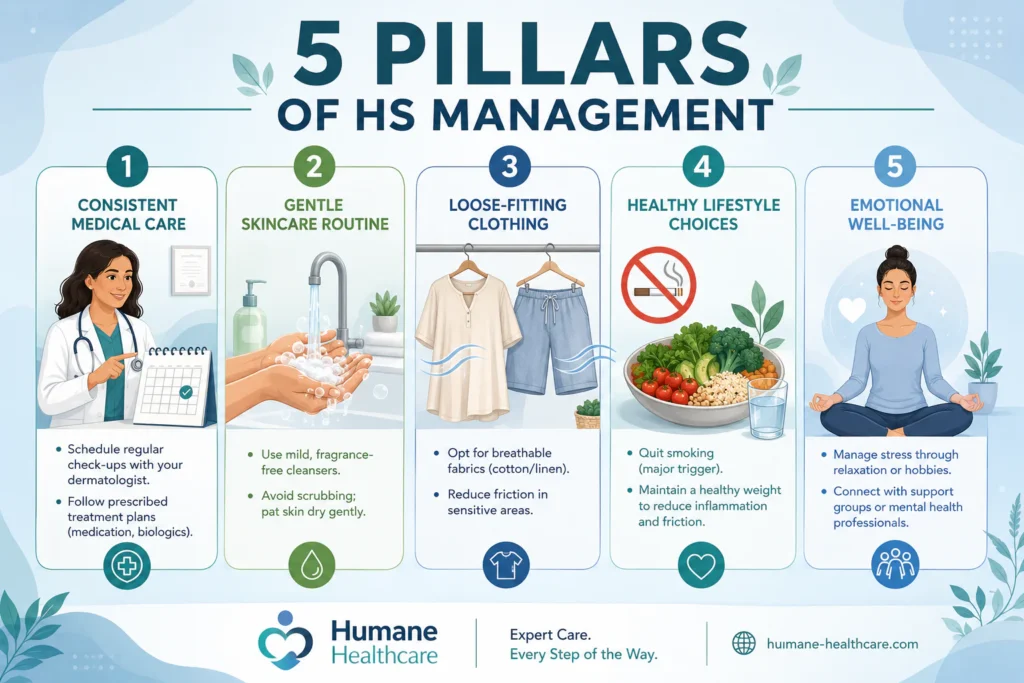
3. Lifestyle and Holistic Management
- Anti-Inflammatory Diets: Many patients find relief by adopting diets low in refined sugars and simple carbohydrates. Some clinical evidence suggests that eliminating dairy or taking Zinc supplements can improve HS symptoms.
- Gentle Skincare: Wearing loose, breathable cotton clothing and avoiding aggressive scrubbing or shaving during a flare-up can prevent further irritation.
- Smoking Cessation: Quitting smoking is one of the most effective ways to slow the progression of the disease.
The Mental Health Impact of HS
At Humane Healthcare, we know that healing isn’t just about the skin. Hidradenitis suppurativa carries a profound psychological burden. The constant pain, the daily wound care, and the self-consciousness surrounding the appearance and odor of draining lesions frequently lead to depression, anxiety, and social isolation.
Treating HS requires treating the whole person. We strongly encourage our patients to seek mental health support, join HS patient advocacy groups, and communicate openly with their care team about their emotional well-being. You do not have to carry this burden alone.
Frequently Asked Questions.
Q: Is Hidradenitis Suppurativa a sexually transmitted disease (STD)?
A: No. HS is absolutely not an STD, nor is it contagious in any way. It is a genetic, autoinflammatory skin condition. You cannot pass it to a partner.
Q: Does poor hygiene cause HS?
A: No. HS is not caused by being dirty or failing to wash properly. It occurs deep within the hair follicle and dermis, far below where soap can reach. Over-washing with harsh chemicals can actually irritate the skin and make HS worse.
Q: Is there a cure for hidradenitis suppurativa?
A: Currently, there is no definitive cure for HS. However, with the right combination of dermatological treatments, biologics, and lifestyle changes, patients can achieve long-term remission and live pain-free lives.
Q: Can I pop an HS boil at home? A: Never attempt to pop, squeeze, or lance an HS nodule at home. Because the blockage is deep in the skin, squeezing it will likely force the infected keratin deeper into your tissues, spreading the sinus tracts and making the pain significantly worse. Always see a medical professional for drainage.

Take the First Step Toward Relief with Humane Healthcare
You deserve to live a life free from chronic pain and the anxiety of unpredictable skin flare-ups. Hidradenitis suppurativa is a complex condition, but it is highly manageable with the right compassionate, expert medical team by your side.
At Humane Healthcare, our specialists are dedicated to providing personalized, judgment-free care tailored to your unique needs. We utilize the latest advancements in dermatology to help you reclaim your comfort and your confidence.
Don’t wait for the next painful flare-up to seek help. Reach out to our dedicated team today to schedule a consultation and begin your journey toward healing.
👉 Contact Us at Humane Healthcare to Schedule Your Appointment