Parkinson’s disease is one of the fastest-growing neurological conditions globally, currently affecting nearly 10 million people worldwide. For many, the word “Parkinson’s” immediately conjures images of visible symptoms—a trembling hand, a shuffling walk, or stiffened muscles. However, the true story of this neurodegenerative disorder is much more complex, often beginning silently deep within the brain years, or even decades, before the first tremor ever appears.
At Humane Medical Assistance, we are dedicated to helping international patients from regions like Africa, the Middle East, and beyond access world-class neurological care and rehabilitation in India. Recognizing the early, silent signs of conditions like Parkinson’s is crucial for timely intervention and improved quality of life. This guide will explore the hidden realities of Parkinson’s disease, its early warning signs, and how advanced medical facilitation can provide essential support.
What is Parkinson’s Disease?
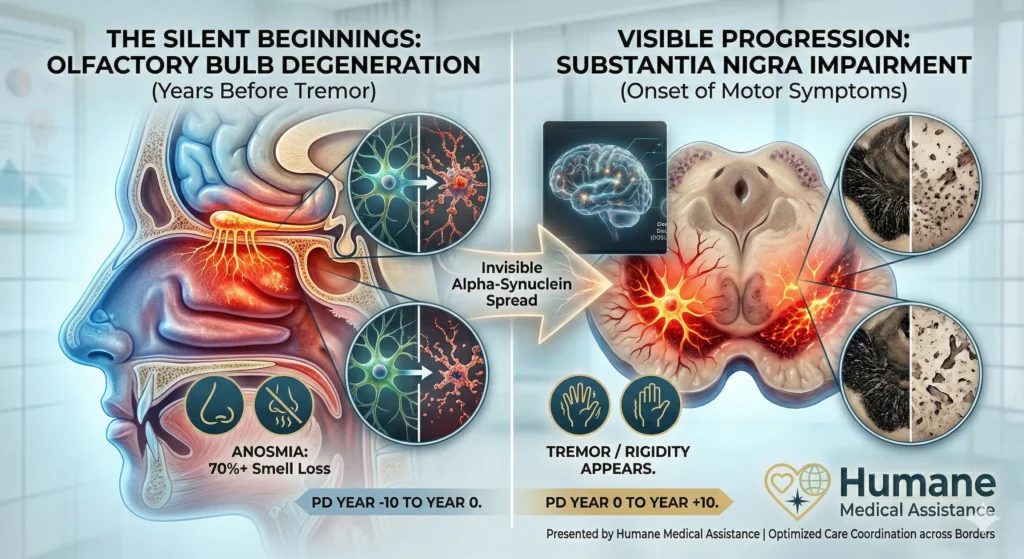
Parkinson’s disease (PD) is a progressive neurodegenerative brain disorder. It primarily develops when specific nerve cells located in a region of the brain known as the substantia nigra gradually become damaged or die.
These vital nerve cells are responsible for producing dopamine. Dopamine acts as a chemical messenger that helps the brain coordinate smooth, controlled, and deliberate muscle movements. As these dopamine-producing cells deteriorate and dopamine levels drop, the brain’s ability to regulate movement becomes significantly impaired.
Simultaneously, the disease involves the abnormal accumulation of a protein called alpha-synuclein. This protein forms toxic clumps known as Lewy bodies inside the nerve cells, which researchers believe strongly contributes to the degeneration and dysfunction of the brain’s circuitry.
While age remains the strongest risk factor (most cases develop after age 60), early-onset Parkinson’s can affect individuals in their 40s or 50s. The exact cause is still a mix of genetic predisposition and potential environmental exposures, such as prolonged contact with certain toxins or pesticides.
Beyond the Tremor: The Hidden Non-Motor Symptoms
The most recognizable signs of Parkinson’s are motor-related:
- Tremors: Involuntary shaking, often starting in a hand or fingers while at rest.
- Bradykinesia: Extreme slowness of movement, making simple tasks like buttoning a shirt exhausting.
- Rigidity: Muscle stiffness that can cause pain and limit the range of motion.
- Postural Instability: Problems with balance and coordination.
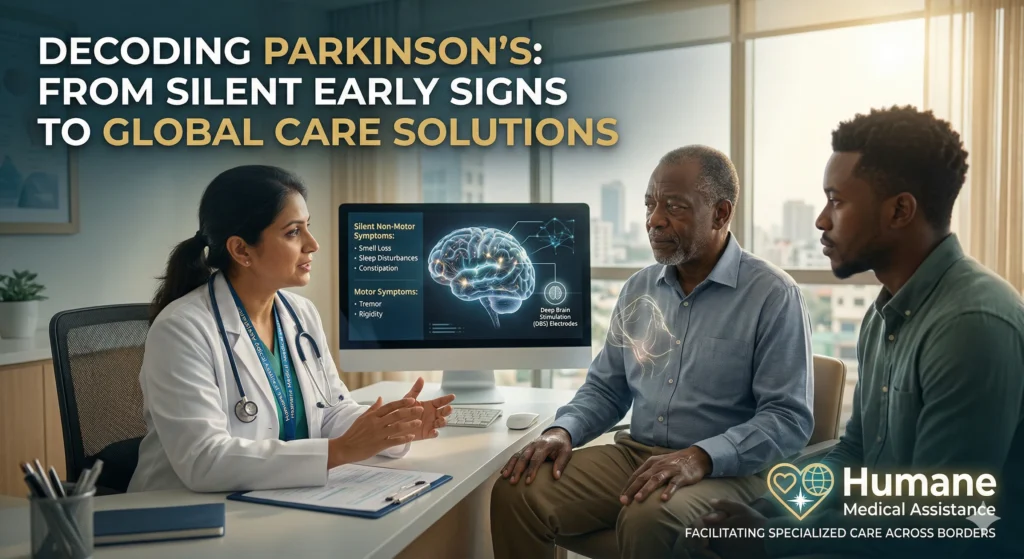
However, viewing Parkinson’s solely as a movement disorder misses a large part of its clinical picture. Experts note that more than half of the dopamine-producing neurons in the brain may already be lost by the time these visible motor symptoms appear.
The disease often announces itself through subtle, non-motor symptoms that are incredibly easy to dismiss as normal aging, stress, or general fatigue. These early warning signs can include:
- Sleep Disturbances: Restless sleep, vivid acting out of dreams (REM sleep behavior disorder), or severe insomnia.
- Loss of Smell (Anosmia): A diminished ability to smell certain foods, which can predate motor symptoms by years.
- Mood Changes: Unexplained anxiety, apathy, or depression that seems disproportionate to life events.
- Autonomic Dysfunction: Severe, chronic constipation and urinary urgency.
- Cognitive and Speech Changes: A slowing of thought processes, cognitive decline, or a noticeable softening of the voice (hypophonia).
Because these symptoms are non-specific, patients often bounce between different specialists—gastroenterologists for constipation, psychiatrists for mood changes—before a neurologist connects the dots.
The Invisible Burden: Isolation and Caregiving
The physical toll of Parkinson’s is profound, but the emotional and social impact can be equally devastating.
As the disease progresses, everyday activities getting up from a chair, turning while walking, or eating independently become monumental challenges. Due to physical limitations, slowed speech, and a condition known as “facial masking” (where the face loses its expressive mobility), patients often gradually withdraw from social interactions. Friends and family might misinterpret this withdrawal as disinterest or depression, leading to severe social isolation and stigma.
This places an immense, often unrecognized burden on family caregivers. Caregivers manage complex medication schedules, assist with basic hygiene and feeding, and must constantly monitor the environment to prevent falls. Furthermore, they must cope with the emotional exhaustion of watching a loved one’s independence slowly slip away. As one caregiver highlighted, the disease can also bring terrifying neuropsychiatric symptoms, such as severe anxiety and hallucinations, adding layers of distress and uncertainty to daily life.
Is There a Cure? The Million-Dollar Question
Currently, the answer to the “million-dollar question” is no. There is no permanent cure for Parkinson’s disease. It remains a progressive disorder, meaning symptoms will worsen over time.
However, management is highly possible, and early intervention can drastically improve a patient’s quality of life. Treatment requires a highly personalized, multidisciplinary approach:
- Medication: The primary goal is to increase dopamine activity. Medications like levodopa are the gold standard for replacing lost dopamine, while younger patients might start with dopamine agonists.
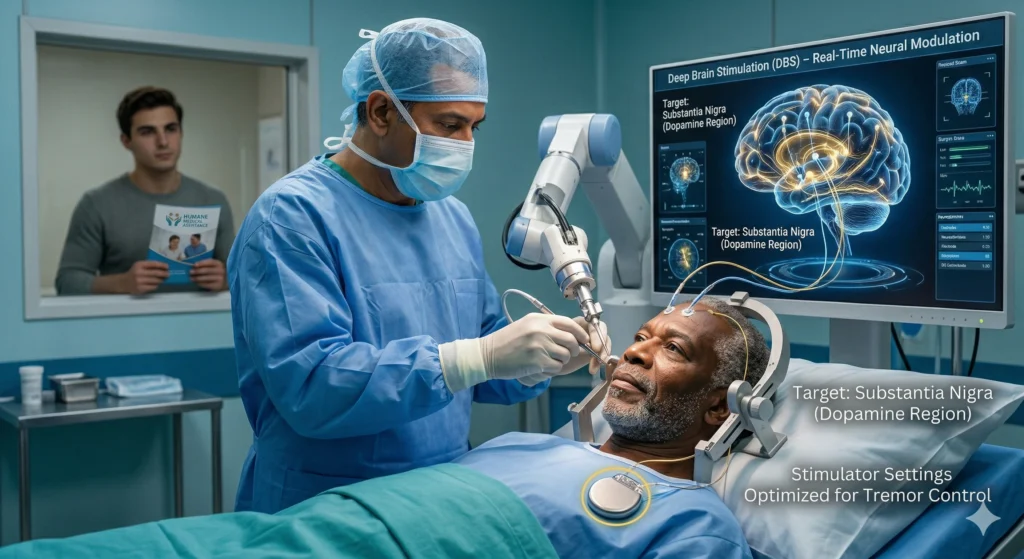
- Surgical Intervention: For advanced cases where tremors and severe motor fluctuations cannot be controlled by medication, therapies like Deep Brain Stimulation (DBS) offer remarkable results. DBS involves implanting electrodes in specific brain areas to regulate abnormal impulses.
- Rehabilitation: Consistent physiotherapy, occupational therapy, and speech therapy are crucial for maintaining mobility, swallowing function, and independence.
- Lifestyle Adaptations: Dietary modifications (like eating soft, high-fiber foods) and environmental changes (removing trip hazards, installing grab bars) are essential for safety.
While research into stem cell therapies (like induced pluripotent stem cells) and new drug delivery systems offers cautious optimism for the future, the current focus is on maximizing function and providing comprehensive support.
Seeking World-Class Neurological Care in India
Managing a complex, progressive condition like Parkinson’s requires access to top-tier neurological specialists, advanced diagnostic imaging, and comprehensive rehabilitation programs. For many patients globally, especially in regions like West Africa or the Middle East, accessing these specialized resources locally can be challenging.
This is where Humane Medical Assistance provides a vital bridge. We understand the profound impact Parkinson’s has on both the patient and their family. We are dedicated to facilitating seamless medical travel to India’s leading, internationally accredited neurology centers.
How Humane Medical Assistance Supports Your Journey:
- Expert Hospital and Specialist Selection: We connect international patients with highly experienced neurologists and neurosurgeons in India who specialize in movement disorders and advanced therapies like Deep Brain Stimulation (DBS).
- Comprehensive Care Coordination: Managing Parkinson’s requires a team. We help arrange not just surgical or medical consultations, but also robust physiotherapy and rehabilitation programs essential for long-term management.
- End-to-End Logistical Support: From the moment you decide to travel, our case managers handle the complexities. We assist with medical visas, coordinate airport transfers, arrange comfortable accommodations suited for patients with mobility issues, and provide dedicated language translation services.
- Cost-Effective Treatment Plans: Advanced neurological care, particularly procedures like DBS, can be financially prohibitive in many Western countries. India offers world-class medical expertise and cutting-edge technology at a fraction of the cost. We ensure transparent pricing and help you navigate the financial aspects of your care.
- Partnerships in West Africa: We actively collaborate with medical practitioners in regions like Cameroon to ensure continuity of care. When you return home, we facilitate ongoing communication between your local doctors and your specialists in India for optimal follow-up and medication management.
Don’t Face Parkinson’s in Silence
Parkinson’s disease may begin silently, but navigating its progression should never be done in isolation. Recognizing the early, non-motor signs is the first crucial step. The second is securing the right medical expertise and support network.
At Humane Medical Assistance, we believe that borders should not limit access to quality healthcare. If you or a loved one are experiencing the early signs of Parkinson’s, or if you are seeking advanced treatment options like DBS, contact us today. Let us guide you to the expert neurological care you deserve, providing support, clarity, and hope every step of the way.