The Unseen Connection: 1 in 8 Cancer Cases Worldwide are Linked to Preventable Infections
When we think about cancer risk factors, our minds almost instantly jump to familiar culprits: smoking, genetics, poor diet, sun exposure, or simply growing older. Rarely do we picture a common virus or a lingering bacterial infection as the catalyst for a life-threatening oncological diagnosis.
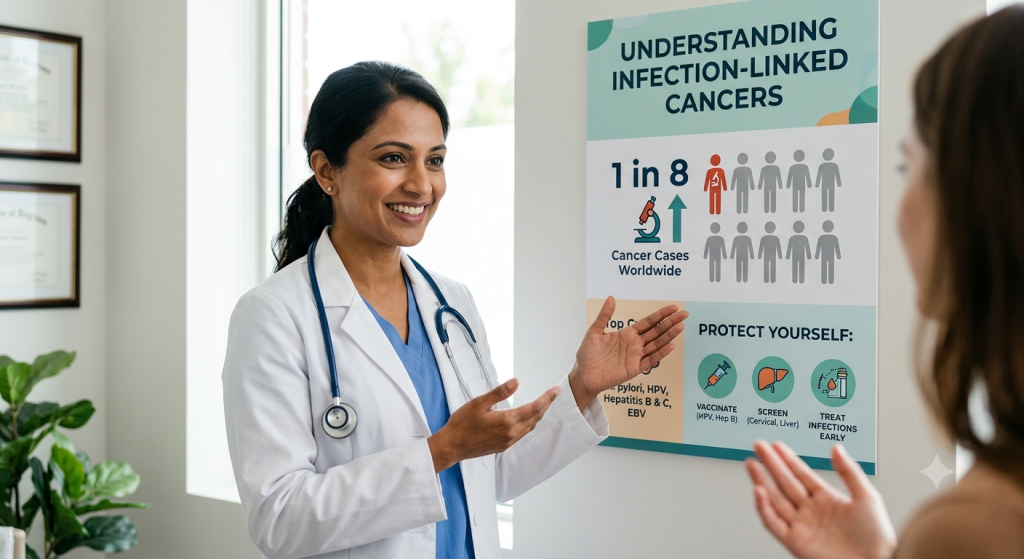
Yet, groundbreaking findings published in The Lancet Oncology by researchers at the International Agency for Research on Cancer (IARC) highlight a startling reality: roughly 1 in every 8 new cancer cases worldwide—totaling an estimated 2.3 million cases globally in 2024—is linked to infectious agents.
The thought that ordinary microorganisms can trigger cancer might sound alarming, but there is an empowering silver lining. Unlike genetics or age, many of these infections are preventable, treatable, or detectable before they ever turn cancerous. Understanding this link shifts our approach to cancer prevention, opening up powerful tools like vaccines, routine screenings, and targeted antibiotics.
How Can an Infection Lead to Cancer?
To understand how an everyday pathogen turns into a malignant disease, it helps to look at what happens inside the body over time. Getting an infection does not mean you are destined to develop cancer. In fact, most people who contract these infections never will.
The danger lies in persistence. When pathogens linger undetected in the human body for years or even decades, they disrupt normal cellular processes in three primary ways:
- Chronic Inflammation: Long-term inflammation damages cellular DNA over time. As tissues constantly attempt to repair themselves, the likelihood of cellular mutations increases significantly.
- Genetic Disruption: Certain viruses can insert their own genetic material into human cells, hijacking normal growth controls and instructing cells to divide uncontrollably.
- Immune Suppression: Some infections weaken the body’s natural defense mechanisms, making it much harder for the immune system to spot and destroy abnormal pre-cancerous cells.
Because these cellular changes happen silently over long periods, an infection caught today might prevent a cancer diagnosis twenty years down the line.
The Top 5 Pathogens Driving Global Cancer Risk
While IARC tracks 12 distinct cancer-causing infectious agents, a vast majority of the global burden is driven by just five key offenders:
+-----------------------------------------------------------------------------------------+
|                               TOP INFECTIONS LINKED TO CANCER                           |
+---------------------------+------------------------+------------------------------------+
| Pathogen                  | Approx. Annual Cases   | Primary Associated Cancers         |
+---------------------------+------------------------+------------------------------------+
| Helicobacter pylori       | ~760,000               | Stomach cancer, Gastric lymphoma   |
| Human Papillomavirus (HPV)| ~750,000               | Cervical, Throat, Anal cancers     |
| Hepatitis B Virus (HBV)   | ~360,000               | Liver cancer                       |
| Epstein-Barr Virus (EBV)  | ~260,000               | Nasopharyngeal cancer, Lymphomas   |
| Hepatitis C Virus (HCV)   | ~160,000               | Liver cancer                       |
+---------------------------+------------------------+------------------------------------+
1. Helicobacter pylori (H. pylori)
Responsible for approximately 760,000 cases annually, H. pylori is a common bacterium that colonizes the stomach lining. While many people host it without symptoms, chronic infection causes persistent gastric inflammation, drastically raising the risk of stomach cancers.
2. Human Papillomavirus (HPV)
Accounting for roughly 750,000 cases, HPV is a widely spread sexually transmitted virus. High-risk strains of HPV are responsible for virtually all cervical cancers, alongside a significant percentage of throat, anal, and penile cancers.
3. Hepatitis B (HBV) & Hepatitis C (HCV)
Together, these viruses cause over half a million liver cancer cases each year. Chronic viral hepatitis leads to ongoing liver inflammation and cirrhosis (scarring), which frequently serves as the precursor to hepatocellular carcinoma.
4. Epstein-Barr Virus (EBV)
Known primarily for causing mononucleosis (“mono”), EBV stays in the body permanently. In a small fraction of individuals, it is linked to nasopharyngeal cancer and specific types of lymphoma.
A Global Health Disparity
The burden of infection-linked cancers is not distributed evenly across the globe. Low- and middle-income regions face a disproportionately high share of these cases:
- East Asia alone accounts for more than 40% of the global total (around 990,000 cases), driven heavily by high rates of H. pylori and Hepatitis B.
- Sub-Saharan Africa, Southeast Asia, and Central/Eastern Europe also report rates significantly higher than the world average.
Why the disparity? It boils down to healthcare infrastructure. Regions with limited access to routine childhood immunizations, diagnostic testing, clean water, and affordable antiviral or antibiotic treatments naturally suffer higher rates of persistent infections.
How to Protect Yourself: Actionable Prevention & Care Strategies
The most vital takeaway from this global data is that knowledge provides an actionable defense. You can take direct steps to lower your risk through simple, effective medical interventions.
1. Harness the Power of Vaccines
- HPV Vaccine: Highly effective at preventing infection from the high-risk HPV strains that cause cervical and throat cancers. It is recommended for pre-teens and young adults before potential exposure, though adults can also benefit depending on clinical guidance.
- Hepatitis B Vaccine: A standard series of shots usually given in infancy, but unimmunized adults should get vaccinated—especially healthcare workers and high-risk groups.
2. Prioritize Regular Screenings
- Pap Smears & HPV Co-Testing: Cervical screening can detect pre-cancerous cellular changes early, allowing doctors to remove abnormal tissue long before cancer develops.
- Hepatitis Screening: Simple blood tests can detect Hepatitis B and C. Early detection allows for management or cure before severe liver damage occurs.
3. Test and Treat When Necessary
- Treating H. pylori: If you experience chronic acid reflux, indigestion, or stomach pain, speak with a physician. A simple breath, stool, or blood test can detect H. pylori, which can usually be cleared with a short course of targeted antibiotics.
- Direct-Acting Antivirals (DAAs) for Hepatitis C: Unlike Hepatitis B (which can be managed but not always cured), Hepatitis C can now be completely cured in most patients using modern oral antiviral treatments.
- HIV Management: While HIV itself isn’t a direct cause of cancer, it weakens the immune system. Modern Antiretroviral Therapy (ART) keeps the immune system strong, drastically reducing the incidence of opportunistic infection-linked cancers like Kaposi sarcoma or lymphoma.
The Takeaway: Redefining Cancer Prevention
For years, public health messaging around cancer prevention focused primarily on individual lifestyle modifications: stop smoking, wear sunscreen, eat more green vegetables, and exercise. While those habits remain fundamental to overall health, this latest research makes one thing clear: medical prevention is just as crucial as lifestyle prevention.
Testing positive for a cancer-linked infection is not a cancer sentence. It is simply an opportunity to take proactive medical measures. By staying up-to-date on vaccinations, getting routine screenings, and addressing lingering symptoms with a physician, you can take control of your health and significantly lower your overall risk.
Key Action Checklist for Your Next Doctor Visit
- [ ] Are my Hepatitis B immunizations up to date?
- [ ] Is the HPV vaccine recommended for me or my family members?
- [ ] Am I due for routine cervical or health screenings?
- [ ] Should I be tested for H. pylori or Hepatitis C based on my symptoms or medical history?