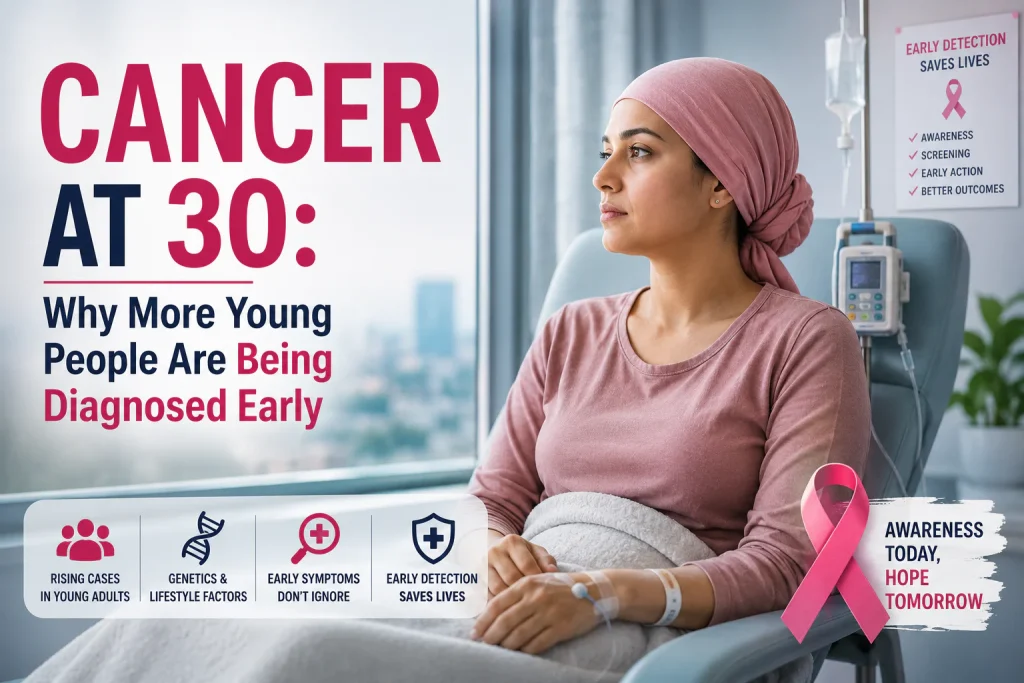
Cancer has long been thought of as a disease that mostly affects older people. That assumption is quickly becoming outdated. Oncologists in India, including Dr. Ankur Varshney, have been drawing attention to a troubling pattern: more people are now being diagnosed with cancer in their 30s sometimes earlier well before the age most people associate with the disease.
This shift isn’t unique to India. Across Sub-Saharan Africa, including Nigeria, Kenya, and Tanzania, doctors and cancer registries are documenting a similar rise in early-onset cancer among young adults. Understanding why this is happening and what it means for you or your family is the first step toward catching it early, when treatment is most effective and most affordable.
Why This Matters for Nigeria, Kenya and Tanzania
Cancer is now one of the fastest-growing causes of death across East and West Africa, and it’s increasingly affecting people well before retirement age. In many parts of Nigeria, Kenya, and Tanzania, cancer is still diagnosed late often at stage 3 or 4 because symptoms in younger patients are dismissed, misattributed to stress or infection, or simply never checked due to limited access to screening and diagnostic facilities in some regions.
This combination rising incidence in younger patients plus late diagnosis makes early awareness and access to quality cancer care more urgent than ever for families across the region.
The Numbers Tell the Story
Global and Indian cancer data both point in the same direction. India recorded an estimated 1.46 million new cancer cases in 2022, a figure projected to keep rising. Among adolescents and young adults specifically, national cancer registry data shows the highest concentration of new cases in the 35–39 age bracket, with breast, thyroid, oral, and tongue cancers among the most commonly diagnosed types in this age group.
The global picture mirrors this trend. Research tracking cancer rates over the past three decades has found a significant increase in early-onset cancers cases diagnosed in adults under 50 a shift serious enough that researchers are now studying it as a possible emerging global pattern rather than a local anomaly. Similar early-onset increases are being tracked in Sub-Saharan Africa, where rising urbanization and lifestyle changes closely resemble the patterns seen in urban India.
Why Is Cancer Rising Among Young People?
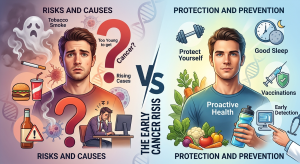
There’s no single cause. Instead, oncologists point to a cluster of overlapping risk factors that have become far more common in young, urban lives over the past two decades patterns that apply just as much in Lagos, Nairobi, and Dar es Salaam as they do in Delhi or Mumbai.
Diet and processed food. Traditional whole-food diets are increasingly being replaced by processed, packaged, and fast food in fast-growing cities. Diets high in these foods are linked to obesity, chronic inflammation, and elevated long-term cancer risk.
Rising obesity. Urban obesity rates are climbing sharply across both India and East/West Africa. Excess body fat is a well-established risk factor for several cancers, including breast, colorectal, and endometrial cancer.
Sedentary lifestyles. Desk jobs, long commutes, and screen-heavy daily routines mean many young adults move significantly less than previous generations even as calorie intake has often increased.
Delayed screening and awareness. Because cancer isn’t “expected” in someone’s 20s or 30s, symptoms are frequently dismissed or missed entirely until the disease has progressed. This pattern is especially pronounced in regions where routine cancer screening isn’t yet a standard part of healthcare a challenge many communities across Nigeria, Kenya, and Tanzania continue to face.
Environmental and genetic factors. Rising exposure to pollution, tobacco (including newer products like vapes), alcohol, and in some cases inherited genetic risk all add to the picture. Doctors increasingly recommend that people with a family history of cancer pursue earlier, more proactive screening rather than waiting for standard age-based guidelines.
What This Means If You’re Under 40
The goal of this data isn’t to cause alarm it’s to change how young adults think about their health. A few practical points oncologists consistently emphasize:
- Don’t dismiss persistent symptoms. Unexplained weight loss, lumps, prolonged fatigue, changes in bowel or bladder habits, or unusual bleeding shouldn’t be brushed off just because you feel “too young” for cancer.
- Know your family history. If close relatives have had cancer especially at a young age talk to a doctor about whether earlier or more frequent screening is right for you.
- Build preventive habits early. A whole-food diet, regular physical activity, avoiding tobacco and excess alcohol, and maintaining a healthy weight all meaningfully reduce long-term cancer risk.
- Don’t skip checkups just because you feel fine. Many cancers are silent in their earliest, most treatable stages. Regular screening even without symptoms remains one of the most effective tools for catching disease early.
Early Detection Changes Everything
The single biggest factor in cancer survival is how early it’s caught. Cancers diagnosed at an early stage are, in most cases, significantly more treatable and far less costly and physically taxing to treat than those caught later. This is exactly why the rise in early-onset cases matters so much: it’s a call for young adults, families, and healthcare systems alike to stop treating cancer as something that only happens “later in life.”
Advanced Cancer Treatments Available in India
One of the reasons India has become a leading destination for cancer patients from Africa and beyond is the range of advanced, internationally accredited treatment options now available across its major cancer centers. These aren’t experimental therapies they’re established, evidence-based treatments used at top hospitals in the US, UK, and Europe, offered in India at a fraction of the cost. Here’s an overview of what’s available:
Robotic and minimally invasive surgery. Robotic-assisted surgical systems allow surgeons to remove tumors with greater precision and smaller incisions than traditional open surgery. This typically means less blood loss, shorter hospital stays, and faster recovery particularly valuable for prostate, gynecological, colorectal, and head-and-neck cancers.
Immunotherapy. Rather than attacking cancer cells directly, immunotherapy works by training the patient’s own immune system to recognize and destroy cancer cells. It has become a standard treatment option for several cancers, including lung cancer, melanoma, and certain blood cancers, and is now widely available across India’s leading oncology centers.
Targeted therapy and precision oncology. Modern cancer care increasingly relies on genomic testing to identify the specific mutations driving a patient’s cancer, then matches them with drugs designed to target those exact mutations. This approach is more precise than traditional chemotherapy and often comes with fewer side effects, and Indian cancer hospitals now offer comprehensive genomic profiling to guide these decisions.
Bone marrow and stem cell transplants. For blood cancers like leukemia, lymphoma, and multiple myeloma, India has extensive experience with both autologous (using the patient’s own cells) and allogeneic (donor-based) stem cell transplants, performed at internationally accredited transplant centers.
Advanced radiation therapy. Technologies such as IMRT (Intensity-Modulated Radiation Therapy), IGRT (Image-Guided Radiation Therapy), and stereotactic radiosurgery (like CyberKnife and TrueBeam systems) allow radiation to be delivered with high precision, minimizing damage to surrounding healthy tissue. Some centers in India also offer proton beam therapy, one of the most advanced and precise forms of radiation available globally.
CAR-T cell therapy. A cutting-edge treatment for certain blood cancers, CAR-T therapy involves modifying a patient’s own immune cells to specifically hunt and destroy cancer cells. India has become one of the few countries outside the US and Europe offering this therapy, including indigenously developed CAR-T options at a significantly lower cost.
Advanced diagnostics. PET-CT scans, liquid biopsies, and molecular diagnostics allow for earlier, more accurate detection and staging of cancer critical for choosing the right treatment path and catching recurrence early.
Comprehensive supportive and palliative care. Beyond active treatment, India’s major cancer centers also offer nutritional support, pain management, psycho-oncology counseling, and survivorship programs, recognizing that cancer treatment involves more than just the tumor.
The combination of these advanced options, experienced oncology teams, and significantly lower costs than Western countries is a major reason patients from Nigeria, Kenya, Tanzania, and across the region increasingly choose India for cancer treatment often getting access to therapies that may not yet be available or affordable in their home country.
Accessing Advanced Cancer Care from Nigeria, Kenya and Tanzania
For patients across Nigeria, Kenya, Tanzania, and neighboring countries, one of the biggest barriers to beating cancer isn’t awareness it’s access. Advanced diagnostics like PET scans, targeted biopsies, and specialized oncology treatments such as precision chemotherapy, radiation therapy, and bone marrow transplants are not always available locally, and where they are, costs and waitlists can be prohibitive.
This is where medical travel to India has become a trusted path for thousands of cancer patients across Sub-Saharan Africa each year. India is home to internationally accredited cancer hospitals and specialist oncologists offering advanced, evidence-based cancer treatment often at a fraction of the cost of comparable care in the US, UK, or Gulf countries, with significantly shorter waiting times for diagnosis and treatment to begin.
Humane Healthcare, based in India, has spent years helping patients from Kenya, Nigeria, Tanzania, Uganda, Ethiopia, Sudan, and Rwanda access exactly this kind of care coordinating everything from oncologist appointments and hospital selection to travel, accommodation, and post-treatment recovery support. If you or a loved one has received a cancer diagnosis, or wants a second opinion, Humane Healthcare can help connect you with the right cancer specialists in India at transparent, affordable pricing.
Frequently Asked Questions
Why are more young people getting cancer today?
Rising obesity, processed-food diets, sedentary lifestyles, delayed screening, and environmental factors like pollution and tobacco use are the main contributors to increasing cancer rates among people under 40.
Is cancer increasing among young people in Africa?
Yes. Cancer registries and health data across Sub-Saharan Africa, including Nigeria, Kenya, and Tanzania, show a similar rise in early-onset cancer cases, closely mirroring trends seen in urban India.
What are the early warning signs of cancer that young adults should not ignore?
Unexplained weight loss, persistent lumps, ongoing fatigue, changes in bowel or bladder habits, and unusual bleeding are symptoms that should always be evaluated by a doctor, regardless of age.
Why do cancer patients from Africa travel to India for treatment?
India offers internationally accredited cancer hospitals, advanced diagnostic and treatment technology, and experienced oncologists at significantly lower cost than the US, UK, or Gulf countries, with shorter waiting times for treatment to begin.
How can I get help arranging cancer treatment in India from Nigeria, Kenya, or Tanzania?
Medical assistance companies like Humane Healthcare help coordinate oncologist consultations, hospital selection, visa support, travel, and accommodation for the full treatment journey.