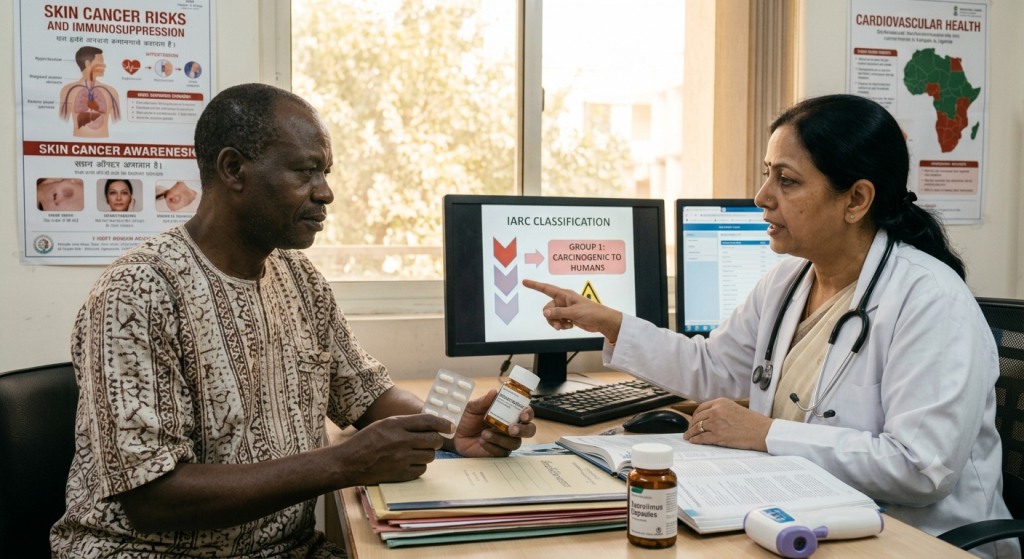
When news broke that the World Health Organization’s (WHO) specialized cancer research unit had added three extremely common, essential medications to its highest carcinogenicity classification, headlines naturally sparked concern.
The International Agency for Research on Cancer (IARC) officially placed hydrochlorothiazide, voriconazole, and tacrolimus into Group 1 (“Carcinogenic to Humans”) in Volume 137 of the IARC Monographs.
Because these drugs are taken by millions of people across the globe every day for high blood pressure, severe fungal infections, and organ transplant care, it is vital to cut through the noise. Medical experts, public health officials, and oncologists have issued a clear message: Do not panic, and do not stop taking prescribed medications without consulting your doctor.
Here is an in-depth breakdown of what this classification means, why these drugs were flagged, the biological mechanisms behind the risks, and what patients and healthcare providers should do next.
1. What Did the IARC Announce?
The International Agency for Research on Cancer (IARC) serves as the WHO’s authority on identifying environmental, chemical, and pharmaceutical hazards that could cause cancer. In its updated assessment, an international panel of 22 scientists evaluated extensive epidemiological data and mechanistic research before classifying three essential drugs into Group 1:
- Hydrochlorothiazide (HCTZ): A ubiquitous first-line diuretic (“water pill”) used to manage hypertension (high blood pressure) and fluid retention.
- Voriconazole: A powerful, life-saving broad-spectrum antifungal agent widely prescribed to treat invasive fungal infections, especially in immunocompromised individuals.
- Tacrolimus: A cornerstone immunosuppressant drug used to prevent organ rejection in kidney, liver, heart, and lung transplant recipients.
All three medications are featured on the WHO Model List of Essential Medicines, underscoring their critical role in global healthcare systems.
2. Deciphering IARC Group 1: Hazard vs. Risk
To understand this news without unnecessary alarm, it is critical to recognize how the IARC evaluates substances.
Hazard Identification vs. Real-World Risk:
- IARC evaluates hazard: Does convincing scientific evidence exist showing that an agent is capable of causing cancer under certain conditions?
- IARC does not evaluate risk: It does not calculate the mathematical probability of a patient developing cancer at their specific, prescribed daily dosage over a given period.
When IARC classifies an agent into Group 1, it means there is sufficient evidence in humans that the drug can cause cancer. However, Group 1 also includes substances like alcohol, solar radiation, tobacco, and processed meats. It signifies the strength of scientific evidence, not the absolute magnitude or speed of danger.
For life-saving pharmaceuticals, the clinical benefits of keeping blood pressure controlled, preventing fatal fungal infections, or stopping organ rejection far outweigh potential long-term secondary risks when properly monitored.
3. Detailed Breakdown of the Three Medications
A. Hydrochlorothiazide (HCTZ)
- Primary Indication: Hypertension, edema, heart failure management.
- Associated Cancers: Non-melanoma skin cancers, specifically squamous cell skin carcinoma and lip cancer.
- The Underlying Mechanism (Phototoxicity):Hydrochlorothiazide is a phototoxic compound. When absorbed into human tissues, the drug interacts with ultraviolet (UV) light from sunlight. This phototoxic reaction heightens skin sensitivity, generating reactive oxygen species that damage cellular DNA when exposed to sunlight. Over years of daily use, this accumulated oxidative stress and DNA damage increases the risk of cutaneous squamous cell carcinoma.
Epidemiological studies conducted across Denmark and the United States revealed higher rates of non-melanoma skin lesions among patients on long-term hydrochlorothiazide regimens compared to those on non-phototoxic blood pressure medications.
B. Voriconazole
- Primary Indication: Invasive aspergillosis, severe candidiasis, and complex fungal infections in immunocompromised or critically ill patients.
- Associated Cancers: Squamous cell skin carcinoma.
- The Underlying Mechanism (Phototoxicity & Photosensitization):Similar to hydrochlorothiazide, voriconazole exhibits high phototoxicity. Patients receiving long-term maintenance therapy—such as organ transplant recipients or individuals undergoing aggressive chemotherapy—frequently develop photosensitivity, sunburn-like erythema, and accelerated photoaging. Under continued UV radiation exposure, these phototoxic skin reactions significantly elevate the likelihood of developing aggressive squamous cell carcinomas.
C. Tacrolimus
- Primary Indication: Immunosuppression following solid organ or bone marrow transplantation; systemic therapy for severe autoimmune disorders.
- Associated Cancers: Non-Hodgkin lymphoma and post-transplant lymphoproliferative disorder (PTLD), with limited evidence for leukemia and skin cancers.
- The Underlying Mechanism (Immunosuppression):Unlike hydrochlorothiazide and voriconazole, tacrolimus does not rely on phototoxicity to exert carcinogenic risk. Instead, its risk stems directly from its core therapeutic function: suppressing the immune system.Tacrolimus inhibits calcineurin, preventing T-cell activation so the body will not reject a transplanted heart, liver, or kidney. However, T-cells are also responsible for immune surveillance—detecting and destroying oncogenic viruses (such as the Epstein-Barr virus) and mutated pre-cancerous cells. By dampening immune surveillance, prolonged exposure to potent immunosuppressants allows abnormal lymphoid cells to multiply uncontrolled, leading to post-transplant lymphoproliferative disorders and non-Hodgkin lymphomas.
4. The Indian Context: Why This Warning Matters Locally
The implications of the IARC assessment carry particular resonance in India and other tropical regions, where environmental and medical factors intersect:
High Solar and UV Exposure
In sunny climates, outdoor workers—including agricultural laborers, construction workers, and street vendors—receive intense year-round UV radiation. For individuals taking phototoxic drugs like hydrochlorothiazide, prolonged sun exposure drastically amplifies the phototoxic DNA damage responsible for skin carcinoma.
Irrational Prescribing and Off-Label Use
Dermatology and public health experts have pointed out that drugs like voriconazole are sometimes prescribed for routine, unlabelled indications, including hard-to-treat dermatophyte infections (such as Trichophyton indotineae). Curbing off-label overprescription is essential to reducing unnecessary patient exposure.
Lack of Routine Screening
In rural and low-resource settings, early skin changes (actinic keratosis, non-healing lip ulcers) are often ignored or diagnosed late. Combined with over-the-counter medication access and variable adherence to dispensing standards, public awareness becomes paramount.
5. Medical Guidance: What Patients and Doctors Should Do
Abruptly stopping any of these medications can lead to rapid, life-threatening complications—such as hypertensive crisis, stroke, fungal sepsis, or acute organ transplant rejection. Medical authorities advise a balanced, proactive approach:
Guidance for Patients
- Never Stop Treatment Abruptly: Continue taking your medicine exactly as prescribed. The immediate risk of uncontrolled high blood pressure or organ rejection is far higher than the statistical, long-term risk of secondary cancers.
- Practice Strict Sun Protection (for HCTZ and Voriconazole users):
- Wear broad-spectrum sunscreen (SPF 30 or higher) daily on exposed skin.
- Wear protective clothing, wide-brimmed hats, and UV-blocking sunglasses.
- Avoid peak sun hours (10:00 AM to 4:00 PM) whenever possible.
- Monitor Your Skin: Routinely check for new, non-healing skin sores, scaly patches, growing bumps, or changes in lip tissue. Report any abnormalities to your doctor promptly.
- Schedule Regular Check-Ups: Ensure you attend routine follow-up visits so your medical team can perform periodic dermatological and laboratory screenings.
Guidance for Healthcare Providers
- Informed Risk-Benefit Prescribing: Evaluate patient-specific risk profiles. For hypertension patients with high occupational sun exposure or a history of skin cancer, consider alternative non-phototoxic anti-hypertensive agents (such as ACE inhibitors or calcium channel blockers) where clinically appropriate.
- Promote Photoprotection: Educate every patient prescribed hydrochlorothiazide or voriconazole on sun safety measures from day one.
- Routine Surveillance: Maintain strict post-transplant surveillance for patients on tacrolimus to detect lymphoproliferative disorders or skin abnormalities early.
- Avoid Irrational Use: Reserve broad-spectrum antifungals like voriconazole strictly for documented, labelled indications.
The Takeaway
The IARC Group 1 classification provides crucial scientific clarity that will help refine clinical protocols, encourage wiser prescribing habits, and promote better sun-protection practices globally.
However, a Group 1 classification is a tool for risk management, not a signal for panicked discontinuation. When prescribed judiciously and paired with proper patient monitoring and lifestyle precautions, these life-saving medicines continue to do far more good than harm.