Recently, a video took the internet by storm. An American man visiting a hospital in Bengaluru, India, shared an experience that left him questioning everything he knew about Western healthcare. Looking around at the lush greenery, stunning architecture, and pristine cleanliness of the facility, he admitted to feeling “lied to” by the US healthcare system.
He received a comprehensive, state-of-the-art full-body health checkup for just ₹5,000 (roughly $50). Back home in the United States, he noted, the exact same diagnostic panel would have cost him anywhere between $3,000–$5,000. Furthermore, he highlighted the stark contrast in waiting times recalling a family member’s grueling four-hour wait in a US emergency room, compared with the swift, seamless, and deeply personalized care he received in India.
This viral story, covered by major news outlets like the Hindustan Times, isn’t just an isolated anecdote. It is a powerful testament to a massive global shift. For decades, the assumption was that the West held a monopoly on premium healthcare. Today, the reality is vastly different. Millions of patients from Africa, Uzbekistan, Russia, the Middle East, and even Western nations are bypassing local waitlists and exorbitant bills. They are choosing India.
But navigating a foreign medical system can be daunting. That is where Humane Medical Assistance steps in, acting as your bridge to world-class, affordable, and compassionate healthcare.
Here’s an in-depth look at why patients from around the world choose India, and how Humane Medical Assistance ensures your journey to recovery is smooth, safe, and successful.
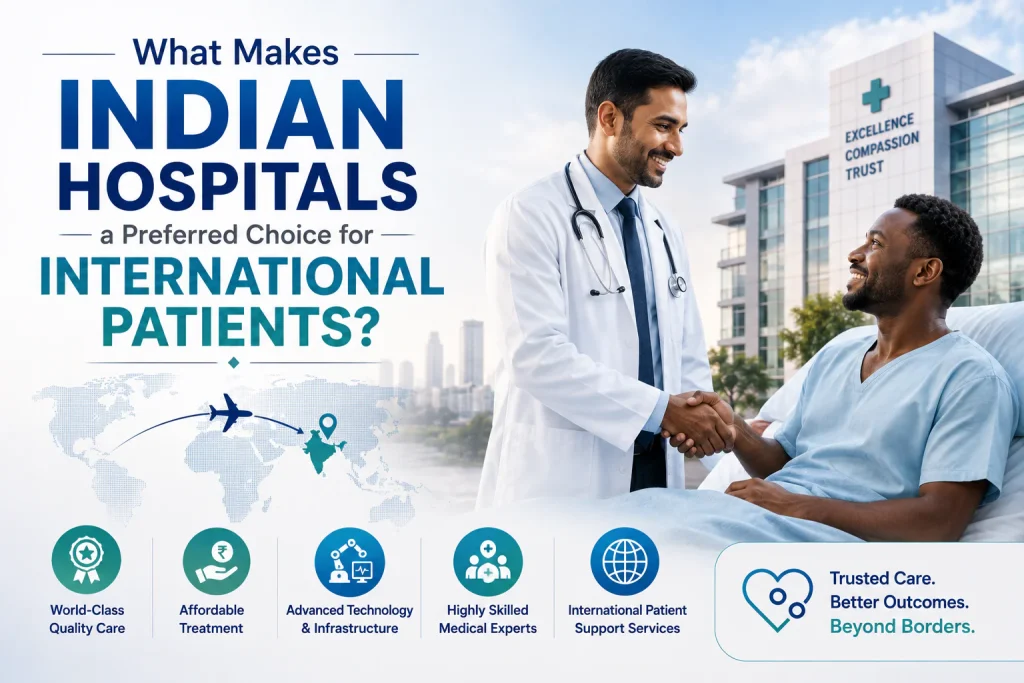
Why Patients from Around the World Choose India
The decision to travel across borders for medical treatment is never taken lightly. It requires immense trust. India has earned this global trust by meticulously building a healthcare ecosystem that rivals, and often surpasses, those of developed nations.
1. Internationally Accredited Hospitals
When travelling for medical care, quality assurance is the primary concern for any patient. India boasts one of the highest numbers of JCI (Joint Commission International) and NABH (National Accreditation Board for Hospitals & Healthcare Providers) accredited hospitals in the world.
What does this mean for an international patient? It means that the hospital adheres to the strictest global standards for patient safety, clinical care, infection control, and facility management. Whether you are travelling from Lagos, Tashkent, Moscow, or Dubai, you can rest assured that the surgical protocols, sterilisation processes, and intensive care units in India’s top corporate hospitals mirror the exact standards mandated in the US, UK, or Germany.
2. Highly Experienced and Globally Trained Specialists
The backbone of India’s medical dominance is its doctors. Indian medical professionals are globally renowned for their unparalleled clinical acumen. A significant percentage of senior consultants, surgeons, and specialists in top Indian hospitals have trained, practised, or held fellowships at prestigious institutions in the US, UK, Canada, and Europe before returning to India.
Furthermore, because of India’s massive population and status as a high-volume medical hub, Indian surgeons perform a staggering number of complex procedures every year. A cardiac surgeon in India might perform ten times the number of bypass surgeries in a month compared with their European counterpart. In surgery, repetition and volume breed mastery. From intricate paediatric heart surgeries to complex liver transplants and delicate neurosurgery, Indian specialists offer a level of seasoned expertise that is hard to find anywhere else.
3. Advanced Medical Technology
The days of medical technology being exclusive to the West are long gone. Today, Indian hospitals are often the first in Asia to adopt groundbreaking medical tech.
- Robotic Surgery: India is a global leader in Da Vinci robotic surgeries, offering minimally invasive procedures for oncology, urology, and gynaecology, resulting in less pain, minimal scarring, and faster recovery.
- Precision Oncology: Facilities are equipped with advanced CyberKnife, Proton Therapy, and TrueBeam STx systems, targeting tumours with sub-millimetre accuracy while preserving healthy tissue.
- AI and Advanced Diagnostics: From AI-assisted MRI and CT scans that detect anomalies invisible to the human eye, to advanced genomic sequencing for personalised cancer treatments, the technological infrastructure is truly cutting-edge.

4. Affordable Treatment Compared with Many Countries (The Cost Paradox)
The viral video from Bengaluru highlighted a crucial point: high cost does not always equal high quality. The affordability of Indian healthcare is often described as a “cost paradox”. Patients can receive premium, cutting-edge treatment at a fraction of the cost they would pay in their home countries.
On average, complex medical procedures in India such as a knee replacement, bone marrow transplant, or coronary artery bypass—cost 60–80% less than in the US, UK, or parts of the Middle East.
This cost difference is not due to a compromise in quality. It is the result of favourable exchange rates, lower administrative overheads, and government policies that subsidise the manufacturing of world-class generic pharmaceuticals and medical consumables. This allows patients to undergo life-saving treatments without falling into crippling medical debt.
5. Shorter Waiting Times
In many countries, public healthcare systems are buckling under the weight of long waiting lists. In Canada or the UK, a patient might wait several months for a hip replacement or an MRI. In parts of Africa and the CIS region, waiting for a visiting specialist can delay critical interventions.
In healthcare, time is often the difference between life and death especially in oncology, cardiology, and neurology. Indian corporate hospitals operate with incredible efficiency. International patients can often get a consultation within 24–48 hours of arrival and, if required, undergo surgery within a few days. The immediate access to critical care is a massive driver for global medical tourism to India.
6. Personalised Care and Patient Support
India’s cultural ethos is deeply rooted in the ancient Sanskrit philosophy of “Atithi Devo Bhava” (The guest is equivalent to God). This hospitality extends seamlessly into its healthcare system.
Unlike the “sterile” and “clinical” environment the American tourist critiqued back home, Indian hospitals prioritise holistic healing. International patient lounges, dedicated nursing staff, multi-cuisine cafeterias that cater to global dietary needs (Halal, vegetarian, continental), and lush, healing architectural designs are standard. The psychological comfort provided by warm, empathetic healthcare workers significantly boosts patient recovery rates.
A Global Healing Hub: Tailoring Care for Specific Regions
At Humane Medical Assistance, we recognise that patients from different parts of the world have unique clinical needs and cultural expectations.
For Patients from Africa
In countries like Nigeria, Kenya, Ethiopia, and Tanzania, while primary care is expanding, access to super-specialty treatments remains limited. Patients often travel to India for complex interventions such as oncology (cancer care), nephrology (kidney transplants), and advanced orthopaedics. We ensure seamless coordination for these intensive treatments, providing support systems that respect African cultural nuances and dietary preferences, making patients feel entirely at home.
For Patients from Uzbekistan and Russia
The CIS (Commonwealth of Independent States) region, including Uzbekistan and Russia, often faces a shortage of advanced surgical technology and specialised diagnostics. However, language is a massive barrier. Humane Medical Assistance provides dedicated, medically trained Russian-speaking interpreters who stay by the patient’s side from the first consultation to discharge. We facilitate highly sought-after treatments in hepatology (liver disease), neurology, and IVF, ensuring clear communication and zero medical misunderstandings.
For Patients from the Middle East
Patients from the UAE, Oman, Iraq, and Saudi Arabia often seek Indian healthcare for two reasons: access to highly specialised veteran surgeons and utmost privacy. For Middle Eastern patients, we organise VIP suites, ensure strict adherence to Halal dietary requirements, provide Arabic-speaking patient coordinators, and offer culturally sensitive care. Bariatric surgery, cosmetic/plastic surgery, and advanced cardiology are highly sought after by our Middle Eastern clientele.
How Humane Medical Assistance Helps International Patients
Travelling to a foreign country when you are unwell is overwhelming. Humane Medical Assistance was founded with a single mission: to take the logistical burden entirely off your shoulders so you can focus 100% on healing. We act as your guardian, advocate, and planner throughout your medical journey.
Here’s how we ensure a flawless medical trip:
1. Comprehensive Treatment Planning
Before you even book a ticket, we help you make an informed decision. You share your medical reports, and we consult with top specialists across multiple accredited hospitals to obtain multiple medical opinions. We provide you with a transparent, detailed treatment plan, outlining the proposed procedures, the doctor’s profile, recovery time, and a fixed cost estimate. No hidden fees, no surprises.
2. Medical Visa Assistance
India offers a specific “Medical Visa” (and Medical Attendant Visa) to ensure priority entry for patients. Our team provides the necessary Visa Invitation Letters (VIL) from the hospital and guides you through the online eVisa or embassy application process, ensuring quick approvals without bureaucratic delays.
3. Travel and Accommodation Coordination
We handle all your travel logistics. From airport pick-ups in comfortable, sanitised ambulances or private cars to booking accommodations that fit your budget. Whether you need a simple guesthouse near the hospital, a serviced apartment with a kitchen for your family, or a 5-star hotel, we secure safe, verified lodging.
4. Dedicated Interpreters and Language Support
Medical terminology is complex even in your native language. We provide dedicated interpreters for Arabic, Russian, French, Swahili, Uzbek, and more. Your interpreter accompanies you to doctor consultations, helps with admission paperwork, and ensures that you can communicate your pain, questions, and concerns effortlessly to the medical staff.
5. 24/7 Ground Support
From the moment you land to the moment you depart, a dedicated Case Manager is assigned to you. Need a local SIM card? Currency exchange? Help buying prescribed medicines? We are by your side 24/7 to ensure you are never left confused or stranded in a new city.
6. Post-Treatment Follow-up Care
True medical care doesn’t end when you are discharged. Once you return to your home country in Africa, Russia, Uzbekistan, or the Middle East, we arrange teleconsultations with your Indian surgeon to monitor your recovery. We assist with follow-up medication delivery and coordinate with your local doctors to ensure a seamless continuum of care.
FAQs: What You Need to Know
Q: Is it safe to travel to India for medical treatment?
A: Yes, it is highly safe. India’s top corporate hospitals are JCI and NABH accredited, meaning they follow the same safety, hygiene, and surgical protocols as hospitals in the US and the UK. Humane Medical Assistance further ensures safety by vetting hospitals, providing ground transport, and assigning a 24/7 care manager to you.
Q: How much cheaper is medical treatment in India compared with the US or UK?
A: Medical procedures in India generally cost 60–80% less than in Western countries. For example, a heart bypass surgery that might cost $100,000+ in the US typically costs between $5,000–$8,000 in a premium Indian hospital, inclusive of hospital stay and surgeon fees.
Q: Do doctors in India speak English?
A: Yes, English is the primary language of medical education and professional communication in India. All senior doctors, surgeons, and nursing staff in corporate hospitals are highly fluent in English. For non-English speakers, Humane Medical Assistance provides dedicated medical interpreters (Arabic, Russian, Swahili, French, etc.).
Q: Can I get a medical visa for India easily?
A: Yes. The Indian government actively promotes medical tourism. Humane Medical Assistance will provide you with the official Visa Invitation Letter from your chosen hospital, which expedites the medical visa process through the Indian embassy or the eVisa portal.
Q: What happens if I face complications after returning to my home country?
A: Humane Medical Assistance ensures continuous post-operative care. We schedule regular video consultations between you and your Indian surgeon. We also share detailed discharge summaries and post-operative care plans with your local physician in your home country to manage any rare complications effectively.
The Journey to Health Starts Here
The American patient who went viral for praising his Bengaluru hospital experience simply discovered what millions around the world already know: India is redefining the future of global healthcare. You do not have to endure endless wait times, sacrifice your life savings, or settle for subpar medical infrastructure. World-class, dignified, and affordable healthcare is within your reach.
Let us carry the burden of logistics while you focus on the journey of healing.
Contact Humane Medical Assistance today for a free, no-obligation medical opinion and treatment plan. Your health is our priority, no matter where in the world you call home.