When a medical emergency strikes, our primary survival strategy is often dangerously simple: denial. We blame a heavy lunch, a change in the weather, or a scratchy throat. We take an antacid, try to sleep it off, or wait for our family doctor to answer the phone. But when it comes to cardiac events, denial isn’t just a coping mechanism it is often a fatal mistake.
At Humane Medical Assistance, our mission is to empower you with the knowledge required to make swift, life-saving healthcare decisions. We connect patients globally with world-class hospitals because we know that in an emergency, where you go matters just as much as when you go.
Recently, a poignant firsthand account by writer Binu Alex highlighted the chaotic, often absurd ways we handle cardiac emergencies. Through his three deeply personal encounters with heart scares, a stark reality emerges: society is fundamentally unprepared for the realities of a heart attack. Today, we are breaking down the three critical heart lessons from his experiences, paired with expert medical insights, so you never have to guess in the dark during a medical crisis.
Key Takeaways
- The “Golden Hour” is Absolute: The first 60 minutes after heart attack symptoms begin are critical. Immediate medical intervention at an equipped, major hospital drastically increases survival rates and prevents permanent heart muscle damage.
- Skip the Local Clinic: In a suspected cardiac emergency, do not wait for a family doctor to answer their phone or visit a small, unequipped clinic. Go directly to a large, multi-specialty hospital with an active Cath Lab.
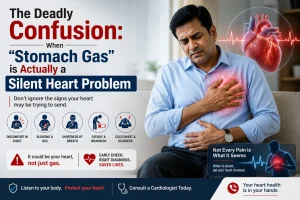
- Symptoms are Deceptive: Heart attacks do not always present as crushing chest pain. They frequently mimic a sore throat, acid reflux, severe indigestion, or jaw pain.
- Trauma Mimics Cardiac Arrest: Severe psychological stress, grief, or physical exertion can cause chest pain that is virtually identical to a heart attack.
- Prioritize Preventive Screenings: Advanced imaging, such as a CT Angiogram, can provide ultimate peace of mind by detecting arterial blockages long before they evolve into fatal emergencies.
The Psychology of Denial in Medical Emergencies
We all know what a heart attack is in theory. We have seen it dramatized on television: a sudden clutch of the chest, a dramatic collapse. But when a heart attack actually manifests in your living room, the theory goes out the window.
The human brain is wired to avoid panic. Consequently, when we experience discomfort, we immediately search for the least threatening explanation. It’s just heartburn. I slept in a bad position. I’m fighting off a cold. This psychological delay is the single greatest enemy of cardiac survival. In hepatobiliary and cardiovascular science, time is tissue. Every minute that blood flow is restricted, heart muscle begins to die. Overcoming our natural instinct to downplay symptoms is the first step in surviving a cardiac event.
Lesson 1: Never Treat Unexplained Pain with Home Remedies
The first lesson comes from a story of a man who mistook the onset of a heart attack for a common cold. While staying in Mumbai, the patient developed a scratchy, uncomfortable throat. Believing it to be the start of a viral infection, he relied on an old home remedy: a dose of brandy, and went to sleep. Hours later, the throat pain quietly migrated to his chest. His response? Another dose of brandy and a refusal to acknowledge the severity of the situation.
Fortunately, a quick-thinking friend ignored the patient’s protests and rushed him to a major medical center. The patient walked into the emergency room looking perfectly normal, much to the annoyance of the triage staff. However, medical evaluations revealed he was having a mild heart attack caused by three arterial blockages. Because he reached an advanced hospital (eventually being transferred to the Asian Heart Institute) before the blockages triggered a massive cardiac arrest, his life was saved.
The Medical Reality of Atypical Symptoms
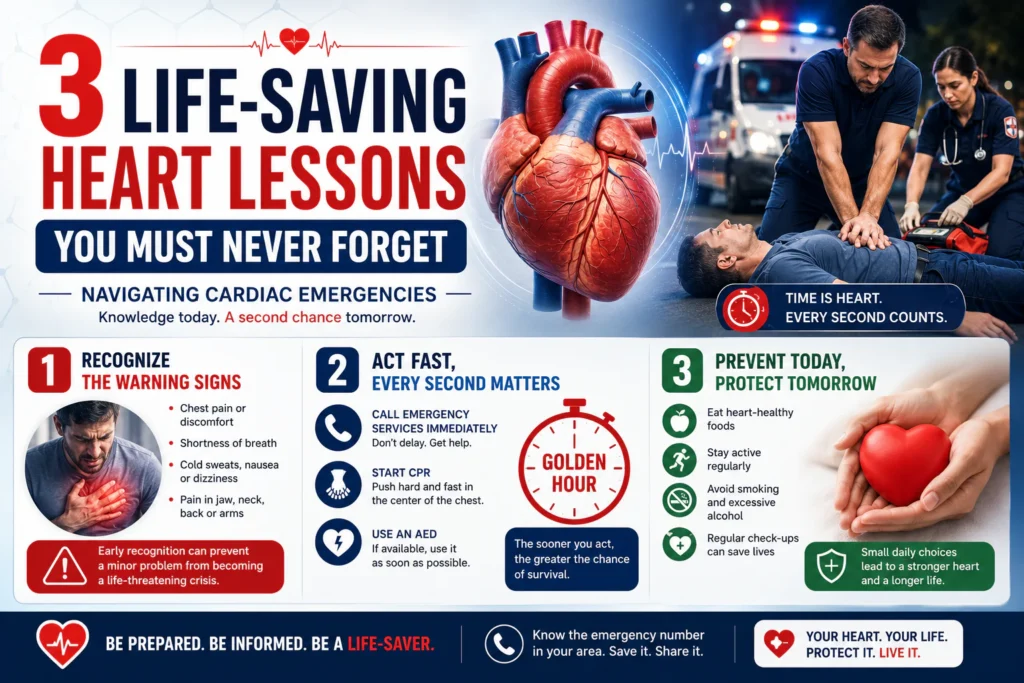
This story highlights a terrifying truth: heart attacks rarely follow the script. While crushing chest pain (angina) is common, many patients experience “referred pain.” Because the heart and the surrounding organs share nerve pathways to the brain, cardiac distress can be felt in areas entirely unrelated to the chest, including:
- The throat or jaw: Often described as a choking sensation or an unexplained toothache.
- The back and shoulders: A dull, persistent ache between the shoulder blades.
- The left or right arm: Numbness, tingling, or heaviness.
The Humane Medical Advice: Never attempt to “sleep off” unexplained, radiating pain in your upper body. Never rely on alcohol, painkillers, or home remedies to mask symptoms. If a sudden, unexplainable discomfort does not subside within 15 minutes, you must seek professional emergency care.
Lesson 2: Do Not Waste the “Golden Hour” on Small Clinics
The second lesson is a tragic reminder of what happens when the “Golden Hour” is squandered.
A neighbor, staying alone, mentioned to his wife earlier in the day that his chest felt tight. Because he enjoyed rich food, he dismissed the tightness as severe gas and acidity—a deadly, yet incredibly common, misinterpretation. By the evening, the pain became so overwhelming that he collapsed.
His neighbors panicked. Instead of calling for a specialized cardiac ambulance immediately, time was wasted trying to reach a local family doctor who was delayed. More time was lost attempting to carry the heavy, incapacitated patient down a flight of stairs to a private car. By the time they reached Sterling Hospital, the patient was dead on arrival.
The Fatal Flaw in Our Emergency Response
The tragic flaw in how the general public handles medical emergencies is a misunderstanding of where to go. When chest pain strikes, many people try to contact their general practitioner. But family doctors are not equipped for acute myocardial infarctions, nor are they always available at night. Others rush to small neighborhood clinics.
What people fail to realize is that in an emergency, you do not need medical advice; you need medical infrastructure.
You need a large, multi-specialty hospital equipped with:
- An active Emergency Department (ED) capable of running an instant ECG and drawing cardiac enzyme blood tests (Troponin).
- A Cardiac Catheterization Lab (Cath Lab) operating 24/7 to perform emergency angioplasties and insert stents to open blocked arteries.
- A dedicated ICU with specialized cardiologists on standby.
The “Golden Hour” refers to the critical 60-minute window following the onset of a heart attack. Re-establishing blood flow within this hour drastically reduces mortality and preserves heart function. Wasting this hour waiting for a local doctor to return a call, or driving to a clinic that lacks an ECG machine, can cost a patient their life.
Lesson 3: Psychological Trauma Can Mimic Cardiac Arrest
The final lesson deals with the aftermath of tragedy. Days after helping carry his deceased neighbor, the writer awoke at 3:00 AM with a slight, persistent pain in his chest. Terrified, he drove himself straight to the emergency room, fully believing he was having a heart attack.
The hospital staff ran an ECG, checked his blood pressure, and evaluated his vitals. The results? He was in perfect health.
When he later visited his doctor, the diagnosis was profound: Trauma. The psychological shock of watching a neighbor die, combined with the guilt of being unable to save him and the heavy physical lifting, manifested as actual, physical chest pain.
The Mind-Body Connection and Preventive Peace of Mind
Grief, severe anxiety, and traumatic shock can trigger a massive release of adrenaline and cortisol. This can cause the chest muscles to tighten, the heart rate to spike, and breathing to become shallow—symptoms that perfectly mimic a heart attack. (In severe cases, this emotional distress can even cause Takotsubo Cardiomyopathy, also known as “Broken Heart Syndrome,” where the heart muscle is temporarily stunned).
While the writer’s pain was not a heart attack, his decision to go to the hospital was 100% correct. You should never try to self-diagnose chest pain at 3:00 AM.
However, the lingering anxiety prompted him to take the ultimate step in proactive healthcare: he booked a CT Coronary Angiogram at an advanced facility. While it required navigating hospital bureaucracy, the scan provided a detailed, 3D look at his heart’s blood vessels, confirming there were zero blockages. The scan cost money, but it bought him absolute peace of mind.
At Humane Medical Assistance, we strongly advocate for proactive, preventive health screenings. Identifying a blockage during a routine Angiogram allows for safe, planned interventions—preventing the chaotic, midnight emergency room panic entirely.
The Humane Medical Protocol: What to Do in a Cardiac Emergency
If you or a loved one experience sudden, unexplained symptoms, memorize this protocol:
- Stop and Rest: Immediately cease all physical activity. Sit down and try to remain calm to lower the heart’s oxygen demand.
- Do Not Drive Yourself: Call local emergency services (like 911 or 108) for an ambulance. Paramedics can begin life-saving treatment (like administering oxygen and aspirin) in transit.
- Chew Aspirin (If Not Allergic): Chewing a standard 325mg aspirin can help prevent blood clots from expanding while you wait for help.
- Demand a Major Hospital: If you must use a private vehicle, bypass small clinics. Drive directly to the nearest major hospital known to have a Cardiac Cath Lab.
Frequently Asked Questions
What is the “Golden Hour” in a heart attack?
The Golden Hour is the critical 60-minute window immediately following the onset of a heart attack. Receiving emergency medical treatment—such as an angioplasty or clot-busting drugs—within this hour maximizes the chances of survival and minimizes permanent damage to the heart muscle.
Can a heart attack feel like gas or a sore throat?
Yes. Heart attacks frequently present with atypical symptoms. Due to shared nerve pathways, cardiac distress can easily be mistaken for severe acid reflux, indigestion, a scratchy throat, jaw ache, or a deep ache between the shoulder blades. Never ignore unexplained upper-body discomfort.
Why should I skip my family doctor during chest pain?
Family doctors and small local clinics do not have the immediate infrastructure such as a 24/7 Cardiac Catheterization Lab or specialized emergency triage required to halt a heart attack. In a cardiac emergency, you need advanced, immediate hospital intervention, not a consultation.
Can stress or panic feel like a heart attack?
Absolutely. Severe anxiety, grief, and psychological trauma can trigger rapid heart rates, chest tightness, and shortness of breath. However, because it is impossible to distinguish a panic attack from a heart attack without an ECG, you must always treat these symptoms as a medical emergency.
What is a CT Coronary Angiogram?
A CT Coronary Angiogram is a non-invasive imaging test that uses a CT scanner and a specialized contrast dye to look closely at the arteries supplying blood to your heart. It is highly effective at detecting plaque buildup and blockages before they cause a heart attack.
Secure Your Health with Humane Medical Assistance
Today, the world faces massive, complex health scares, but the fundamental lesson of medical emergencies never changes: preparation and access to the right infrastructure save lives. We should no longer be guessing in the dark, hoping we walk into the right hospital at the exact right time.
If you or a family member are managing a chronic heart condition, seeking a second opinion on a cardiac diagnosis, or looking to schedule advanced preventive screenings like a CT Angio, you do not have to navigate the healthcare system alone.
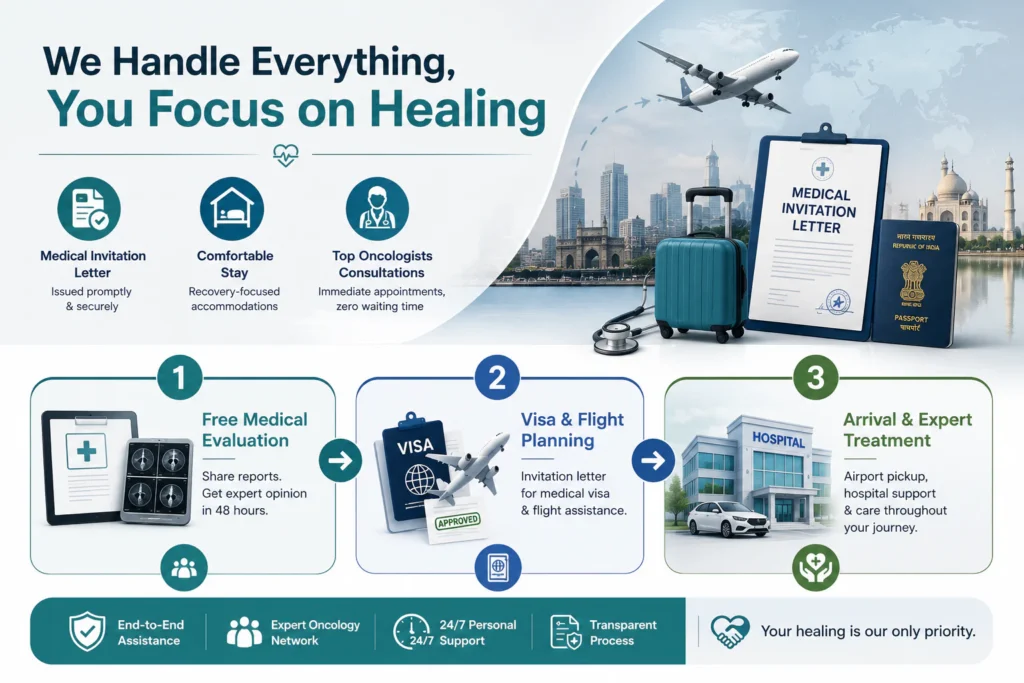
Humane Medical Assistance connects international patients with elite, pioneering medical facilities across the globe. We ensure you have access to world-class cardiologists, state-of-the-art infrastructure, and compassionate care when you need it most.
Don’t wait for an emergency. [Contact our Medical Care Advisors today] to explore your cardiac healthcare options.