
A remarkable achievement in orthopaedic surgery has recently captured attention in the medical world. In a rare and complex procedure, a 128-kg patient successfully regained the ability to walk after undergoing bilateral partial knee replacement surgery in India. This case highlights the remarkable advancements in modern joint replacement techniques and reinforces India’s growing reputation as a global destination for high-quality orthopaedic care.
For patients suffering from severe knee pain and mobility problems—especially those with obesity—this medical success offers new hope for restoring movement and improving quality of life.
The Patient’s Condition: Severe Osteoarthritis and Limited Mobility
The patient, a 51-year-old man weighing approximately 128 kilograms, had been suffering from severe osteoarthritis affecting both knees. The condition caused extreme pain, stiffness, and difficulty walking, severely impacting his daily life.
Osteoarthritis is one of the most common causes of knee joint damage. It occurs when the protective cartilage that cushions the ends of bones gradually wears away, leading to:
• Persistent knee pain
• Swelling and inflammation
• Reduced joint mobility
• Difficulty standing, walking, or climbing stairs
In obese patients, excess body weight increases the stress on knee joints, accelerating cartilage damage and worsening symptoms.
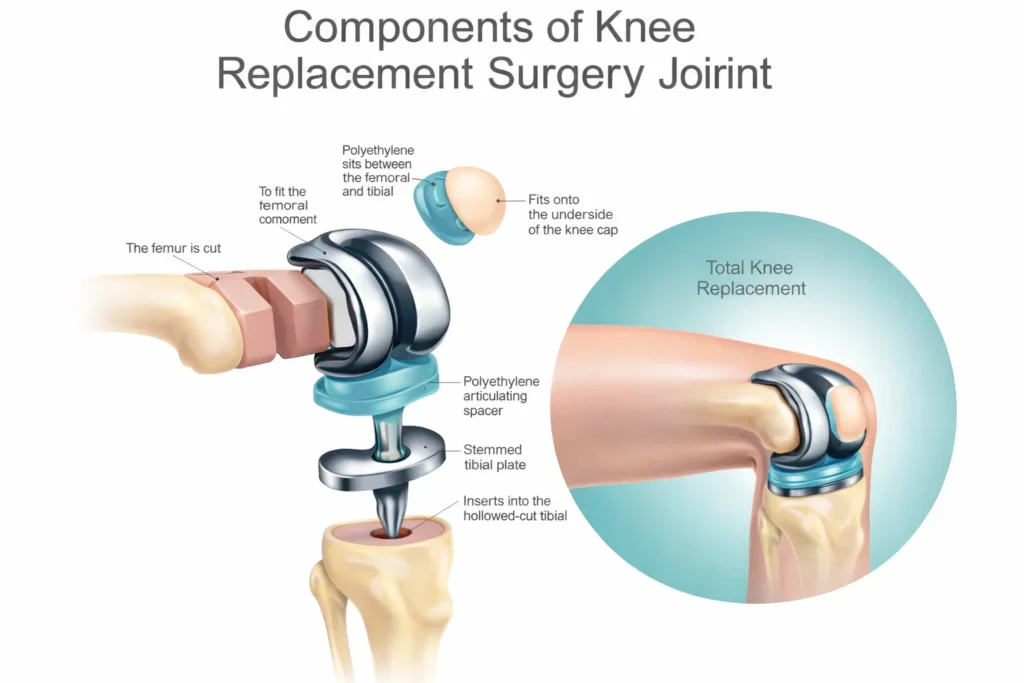
Why This Surgery Was Considered Rare
Performing bilateral partial knee replacement (both knees in a single surgery) on a high-BMI patient is extremely uncommon.
Most surgeons hesitate to perform this procedure on obese individuals because of several surgical challenges:
• Difficult access to the joint due to deep soft tissues
• Higher anaesthetic risks
• Increased chances of complications
• Complex implant alignment and ligament balancing
Cases involving patients weighing over 120 kg undergoing bilateral partial knee replacement in a single sitting are extremely rare worldwide.
Despite these challenges, the surgical team successfully performed the procedure using advanced minimally invasive techniques and meticulous surgical planning.
Understanding Partial Knee Replacement
Partial knee replacement, also known as unicompartmental knee replacement, is a surgical procedure in which only the damaged part of the knee joint is replaced instead of the entire joint.
Advantages of Partial Knee Replacement
Compared to total knee replacement, this procedure offers several benefits:
• Smaller surgical incision
• Less damage to surrounding tissues
• Faster recovery and rehabilitation
• Reduced blood loss during surgery
• More natural knee movement after recovery
This approach is particularly beneficial for patients whose arthritis affects only one compartment of the knee.
The Surgical Success
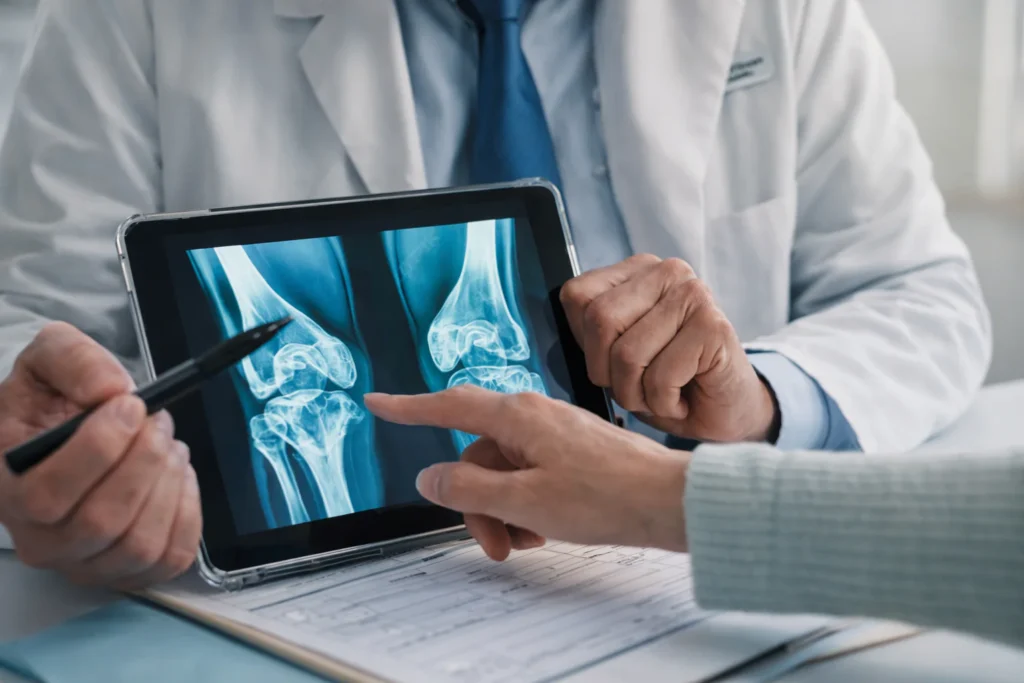
The surgery required exceptional precision and coordination between orthopaedic surgeons, anaesthesiologists, and critical care specialists.
Despite the complexity of the case, the outcome was extraordinary:
• The patient experienced minimal blood loss during surgery
• He was able to stand and walk with assistance on the same day
• Within the next day, he could walk independently with support
• The recovery was smooth and free from major complications
The case was later recognized as a record-setting medical achievement, highlighting the capabilities of modern orthopaedic surgery in India.
What This Means for Patients Worldwide
This successful surgery demonstrates that even high-risk patients who were previously considered unsuitable for partial knee replacement may benefit from modern surgical techniques when evaluated carefully.
For international patients suffering from:
• Severe knee osteoarthritis
• Obesity-related joint damage
• Limited mobility due to knee pain
India offers world-class orthopaedic expertise, advanced surgical technology, and affordable treatment options.
Many patients from Africa, the Middle East, and Asia travel to India each year for advanced procedures such as:
• Total knee replacement
• Partial knee replacement
• Robotic knee surgery
• Complex revision joint replacements
India: A Global Destination for Advanced Orthopaedic Care
India has emerged as a preferred destination for medical tourism in orthopaedic surgery due to several advantages:
• Highly experienced orthopaedic surgeons
• Internationally accredited hospitals
• Cutting-edge surgical technologies
• Significantly lower treatment costs compared to Western countries
• Comprehensive international patient support services
Patients often combine their treatment with rehabilitation programs and post-operative physiotherapy to achieve optimal outcomes.
Restoring Mobility, Restoring Life
Knee replacement surgery has the power to transform lives. For many patients who have struggled for years with chronic knee pain, advanced surgical procedures can restore independence, mobility, and confidence.
The story of this 128-kg patient walking again after rare bilateral partial knee replacement serves as an inspiring reminder of how modern medicine continues to push boundaries and deliver life-changing outcomes.
If you or your loved ones are suffering from severe knee pain or arthritis and are considering treatment in India, expert guidance and the right medical team can make all the difference.