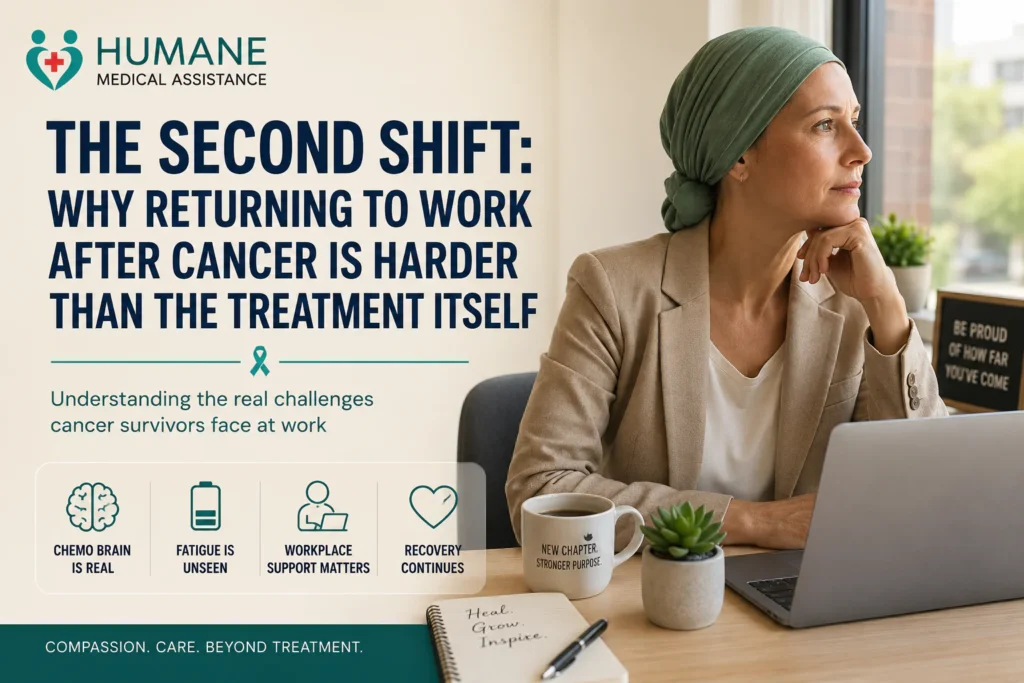
For many people, surviving cancer is expected to be the end of the battle. Family, friends, and colleagues celebrate the completion of chemotherapy, radiation, surgery, or immunotherapy as a major victory. However, cancer survivors often discover that a different challenge begins once treatment ends—the process of returning to work.
While employers and coworkers may assume life has returned to normal, many survivors face lingering physical, emotional, and cognitive effects that make workplace reintegration unexpectedly difficult. In fact, recent survivorship research suggests that returning to work after cancer can be one of the most stressful phases of recovery.
At Humane Medical Assistance, we work closely with international cancer patients who travel to India for advanced treatment. Many of them share a common concern: “When will I be able to return to work and feel like myself again?”
The answer is more complex than most people realize.
Why Is Returning to Work After Cancer So Difficult?
Returning to work after cancer is challenging because recovery does not end when treatment ends. Many survivors continue experiencing fatigue, anxiety, concentration problems, sleep disturbances, and emotional stress for months or even years after their final treatment session.
Cancer treatment affects the body, brain, and sense of identity. While medical scans may show remission, the recovery process often continues long after patients leave the hospital.
Recent studies indicate that many survivors experience a delayed adjustment period. During active treatment, patients often operate in survival mode. Once treatment is completed, the physical and psychological impact of everything they have experienced begins to surface.
This can create a gap between workplace expectations and the survivor’s actual capacity.
The Hidden Impact of “Chemo Brain”
One of the most common yet misunderstood challenges is chemotherapy-related cognitive impairment, often called “chemo brain.”
What Is Chemo Brain?
Chemo brain refers to cognitive changes that can occur during or after cancer treatment. Symptoms may include:
- Difficulty concentrating
- Short-term memory problems
- Slower information processing
- Trouble multitasking
- Word-finding difficulties
- Mental fatigue
Many survivors describe the experience as feeling mentally foggy or struggling to think as quickly as they once did.
Importantly, chemo brain is not simply forgetfulness. Modern cancer rehabilitation research suggests it often involves changes in how the brain processes information and manages sensory input.
For professionals returning to demanding jobs, these challenges can affect meetings, presentations, decision-making, and productivity.
The “Hero’s Welcome” Problem
Most workplaces genuinely want to support employees returning after cancer treatment. Unfortunately, well-intentioned encouragement can sometimes create unexpected pressure.
Comments such as:
- “You look amazing.”
- “It’s great to have you back.”
- “You beat cancer.”
may be intended as compliments. However, they can unintentionally send a message that recovery is complete.
Many survivors feel obligated to appear positive, energetic, and grateful, even when they are still struggling with fatigue or anxiety.
This phenomenon creates emotional tension. Employees may avoid discussing their ongoing challenges because they fear disappointing others or being viewed as weak.
As a result, many cancer survivors suffer in silence while attempting to meet expectations that no longer align with their current reality.
Why Fatigue Remains One of the Biggest Challenges
Cancer-related fatigue is different from ordinary tiredness.
Unlike normal fatigue, it often does not improve significantly with sleep or rest. Many survivors report waking up exhausted despite getting adequate sleep.
Work-related activities that once felt routine may suddenly require substantial energy.
For example:
- Commuting to work
- Participating in meetings
- Managing emails
- Handling workplace noise
- Maintaining concentration
Each task consumes physical and mental energy.
By midday, many survivors feel completely drained despite appearing healthy to others.
This invisible fatigue is one of the leading reasons why cancer survivors struggle during workplace reintegration.
Pacing: A Smarter Approach to Recovery
Historically, workplace culture has rewarded employees who push through challenges and maintain constant productivity.
Cancer rehabilitation experts increasingly recommend a different strategy called pacing.
What Is Pacing?
Pacing involves balancing activity and rest to prevent energy crashes.
Instead of waiting until exhaustion occurs, survivors learn to manage energy proactively throughout the day.
Practical pacing strategies may include:
- Scheduling demanding tasks during peak energy hours
- Taking short cognitive recovery breaks
- Limiting back-to-back meetings
- Reducing unnecessary multitasking
- Using flexible work arrangements
Research from chronic illness and rehabilitation programs shows that pacing can improve long-term function and reduce burnout.
For cancer survivors, recovery is not about working harder. It is about working smarter.
The Sensory Overload Challenge
Modern workplaces are often designed for maximum collaboration and constant communication.
Open-plan offices, frequent notifications, bright lighting, and continuous conversations can create sensory overload for individuals recovering from cancer treatment.
Many survivors find that environmental factors significantly affect their cognitive performance.
Common workplace triggers include:
- Background conversations
- Bright fluorescent lights
- Frequent interruptions
- Excessive screen time
- Continuous notifications
- Crowded office environments
These distractions can drain cognitive resources and intensify symptoms of chemo brain.
How Employers Can Help
Organizations can improve the workplace experience by:
- Providing quiet workspaces
- Allowing noise-canceling headphones
- Offering flexible schedules
- Reducing unnecessary meetings
- Providing written instructions after discussions
- Supporting hybrid work arrangements when appropriate
Small adjustments often have a significant impact on recovery and productivity.
The Challenge of Remote and Hybrid Work
Remote work became widely accepted following the global shift toward flexible working arrangements.
For cancer survivors, remote work offers important benefits, including reduced commuting stress and greater control over energy management.
However, remote work can also create unexpected challenges.
Many professionals recovering from cancer report feeling disconnected from their teams. Reduced visibility may affect networking opportunities, mentorship relationships, and career advancement.
Experts increasingly describe this as the “disability-proofing paradox.”
While remote work improves accessibility, it can sometimes lead to professional isolation if organizations fail to maintain meaningful inclusion.
The solution is not simply offering remote work. It is ensuring survivors remain actively connected to professional growth opportunities.
The Emotional Side of Returning to Work
Cancer changes perspectives.
Many survivors return to work with different priorities and values than they had before diagnosis.
Experiencing a life-threatening illness often causes individuals to reassess:
- Career goals
- Personal relationships
- Work-life balance
- Purpose and fulfillment
- Long-term ambitions
Tasks that once felt important may no longer seem meaningful.
This shift is not a lack of motivation. It is often a reflection of personal growth and changed life priorities.
Organizations that acknowledge this reality are better positioned to support long-term employee well-being.
Instead of asking, “How quickly can you return to normal?” employers should ask, “What does meaningful work look like for you now?”
Frequently Asked Questions
How long does it take to return to work after cancer treatment?
Recovery timelines vary significantly. Some patients return within weeks, while others require several months. Factors include cancer type, treatment intensity, overall health, and job demands.
Is chemo brain permanent?
For most survivors, cognitive symptoms gradually improve over time. However, some individuals experience long-term cognitive changes that require workplace accommodations and rehabilitation strategies.
Can cancer survivors work full-time?
Many cancer survivors successfully return to full-time employment. Flexible schedules, pacing strategies, and supportive workplace environments often improve outcomes.
What accommodations help cancer survivors at work?
Helpful accommodations may include flexible hours, remote work options, quiet workspaces, reduced multitasking, scheduled breaks, and clear written communication.
Recovery Is More Than Remission
Cancer recovery extends far beyond the final treatment session.
The return-to-work journey is often a second phase of healing—one that receives far less attention than surgery, chemotherapy, or radiation therapy.
Understanding the realities of fatigue, cognitive changes, emotional adjustment, and identity transformation can help survivors, families, and employers create a healthier path forward.
At Humane Medical Assistance, we believe cancer care does not end when treatment ends. True recovery includes helping survivors rebuild their confidence, careers, and quality of life.
For patients considering advanced cancer treatment in India, our team helps coordinate access to leading oncologists, internationally accredited hospitals, personalized treatment plans, and ongoing support throughout the recovery journey.
Because surviving cancer is not the end of the story—it is the beginning of a new chapter.