Cervical cancer develops in the cervix, the lower part of the uterus that connects to the vagina. Nearly all cases are caused by a persistent infection with high-risk strains of the human papillomavirus (HPV). HPV is a common sexually transmitted infection. Usually, the immune system clears the virus effortlessly. However, when the infection persists for years, the virus can trigger mutations in the DNA of healthy cervical cells typically the thin squamous cells or the column-shaped glandular cells. These genetic changes instruct the cells to multiply rapidly and survive beyond their natural life cycle, eventually accumulating to form a cancerous tumor
Understanding how this cellular mutation causes physical symptoms requires looking at how the tumor interacts with its environment. In the early, precancerous stages, cervical cancer typically presents no symptoms because the abnormal cells are confined to the surface.
As the tumor grows and becomes invasive, it disrupts surrounding healthy tissues, leading to noticeable symptoms. One of the most common early signs is abnormal vaginal bleeding.
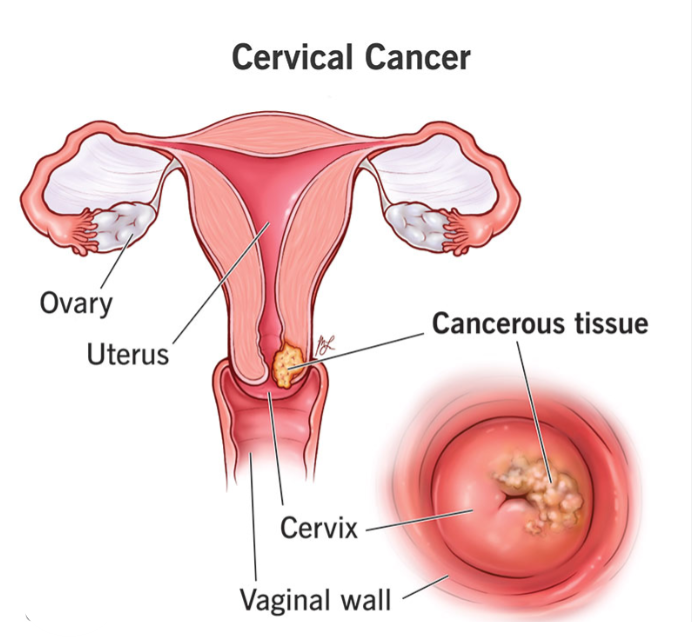
Tumors quickly develop a network of fragile, irregular blood vessels to sustain their rapid growth. Any physical contact such as during sexual intercourse or a routine pelvic examination can easily rupture these delicate vessels, causing unexpected bleeding.
Additionally, as the cancerous mass expands, the cells at its center may be deprived of oxygen and begin to die. This necrotic tissue, often coupled with a secondary bacterial infection, leads to a persistent, heavy, and sometimes foul-smelling vaginal discharge.
As the cancer advances further into the deeper layers of the cervix and spreads to adjacent structures, it presses against nerves, muscles, and organs in the pelvic region. This mechanical pressure and tissue invasion manifest as continuous pelvic pain, aching in the lower back, and severe discomfort during intercourse or urination.
For patients diagnosed with cervical cancer, India has emerged as a premier global destination for advanced oncology care. Leading Indian hospitals offer state-of-the-art medical infrastructure and multidisciplinary tumor boards that design personalized treatment plans. From minimally invasive surgeries to cutting-edge immunotherapies, the treatment landscape in India provides patients with world-class options focused on maximizing survival rates while preserving quality of life.
Robotic-Assisted and Minimally Invasive Surgery
For early-stage cervical cancer, surgical removal of the tumor is often the primary line of defense. Indian oncology centers extensively utilize robotic-assisted surgical platforms, such as the Da Vinci XI System. These advanced tools allow surgeons to perform radical hysterectomies and tumor excisions with unparalleled precision. Because robotic surgery requires only small incisions, patients benefit from significantly reduced blood loss, a lower risk of post-operative complications, and much faster recovery times compared to traditional open surgery.
High-Precision Radiation Therapy
When surgery is not viable, India offers the latest advancements in radiation oncology:
Targeted Therapy and Immunotherapy
For advanced or recurrent cervical cancer, Indian medical centers employ sophisticated biological therapies. Targeted therapies utilize specialized medications designed to identify and attack specific genetic mutations within the cancer cells, halting their ability to grow. Because these drugs focus strictly on the cancer’s unique mechanisms, they generally cause fewer side effects than systemic chemotherapy.
Simultaneously, immunotherapy supercharges the patient’s own immune system, helping it recognize and destroy evasive cancer cells.
Microvascular Interventional Chemotherapy
A groundbreaking option available at select advanced centers in India is Microvascular Interventional Localized Chemotherapy. Instead of flooding the entire body with toxic drugs, this procedure delivers fine chemo-particles directly into the specific artery supplying blood to the cervical tumor. These particles saturate the tumor with medicine and physically block the micro-capillaries. By cutting off the tumor’s blood supply while trapping the medication inside, this treatment shrinks the mass rapidly while sparing the patient’s overall immune system.
Advanced Ablation Techniques
For localized tumors or inoperable cases, Indian specialists are also utilizing thermal and electrical ablation technologies. Cryosurgical Ablation uses extreme freezing and thawing cycles to obliterate abnormal cervical cells. Similarly, NanoKnife technology uses targeted electrical currents to puncture and destroy cancer cells with millimeter precision, offering hope for patients with complex or hard-to-reach cases.
By combining these cutting-edge medical technologies with highly experienced oncologists and dedicated international patient care, India provides a formidable, comprehensive approach to conquering cervical cancer.
Global health organizations, led by the World Health Organization (WHO), have recently updated their HPV vaccination guidelines to improve global access and combat cervical cancer. The most significant shift is the endorsement of a single-dose schedule for younger demographics, which has been proven to provide comparable efficacy and durability of protection to previous multi-dose regimens.
Here are the current global guidelines established by the WHO:
The WHO’s primary target for HPV vaccination is girls aged 9–14, prioritizing immunization before the onset of sexual activity.
The transition to single-dose recommendations is heavily driven by the goal of expanding global vaccine coverage. By reducing the number of required doses, healthcare systems can alleviate supply shortages, lower costs, and simplify the logistics of vaccination especially in low- and middle-income countries where 90% of cervical cancer deaths occur.
While the WHO sets the overarching global framework, regional health authorities like the U.S. Centers for Disease Control and Prevention (CDC) maintain slightly different schedules that are widely referenced worldwide:
The overarching global strategy remains focused on maximizing the number of young girls fully vaccinated by age 15 to work toward the complete elimination of cervical cancer.
1. What are the early warning signs of cervical cancer?
A- In its earliest, precancerous stages, cervical cancer typically presents no symptoms at all. As the tumor grows and becomes invasive, the most common warning signs include abnormal vaginal bleeding (such as bleeding between periods, after sexual intercourse, or after menopause). Other symptoms include unusual, heavy, or bloody vaginal discharge, as well as unexplained pain in the pelvic region or discomfort during sex.
2. How long does it take for cervical cancer to develop?
A- Cervical cancer generally develops very slowly. It can take anywhere from 10 to 20 years for abnormal, precancerous cells in the cervix to mutate and grow into invasive cervical cancer. Because of this slow progression, routine medical screenings are highly effective at catching abnormalities years before they turn into cancer.
3. Is HPV the only cause of cervical cancer?
A- While long-lasting infections with high-risk strains of the human papillomavirus (HPV) are the primary cause of nearly all cervical cancers, not everyone with HPV will develop cancer. Additional risk factors dictate whether the virus is cleared by the body or progresses into cancer. These risk factors include smoking, having a weakened immune system (such as from an HIV infection), beginning sexual activity at an early age, and utilizing birth control pills for more than five years.
4. How is cervical cancer diagnosed and screened?
A- Screening is primarily conducted through two methods: a Pap test (Pap smear) and an HPV test. A Pap test collects cells from the cervix to look for precancerous or cancerous changes under a microscope, while an HPV test checks for the presence of the high-risk viral strains that cause these cellular changes. If these screening tests return abnormal results, a doctor will typically perform a biopsy—removing a small tissue sample to definitively confirm or rule out cancer.
5. Is cervical cancer curable?
A- Yes, cervical cancer is considered one of the most successfully treatable and curable forms of cancer if it is detected early. If the cancer is localized (meaning it has not spread outside the cervix), the five-year survival rate is approximately 92%. Early-stage treatment usually involves surgery to remove the cancer, while more advanced stages that have spread to surrounding lymph nodes or organs generally require a combination of chemotherapy, radiation therapy, or targeted therapy.
Share your medical concern with us and receive expert guidance from India's leading specialists. Our international patient care team will review your case, suggest the best treatment options, estimated costs, and assist you with hospital coordination, visa guidance, and travel support – completely free of charge.
✓ Trusted by patients from 50+ countries
✓ Confidential & secure
✓ No obligation
