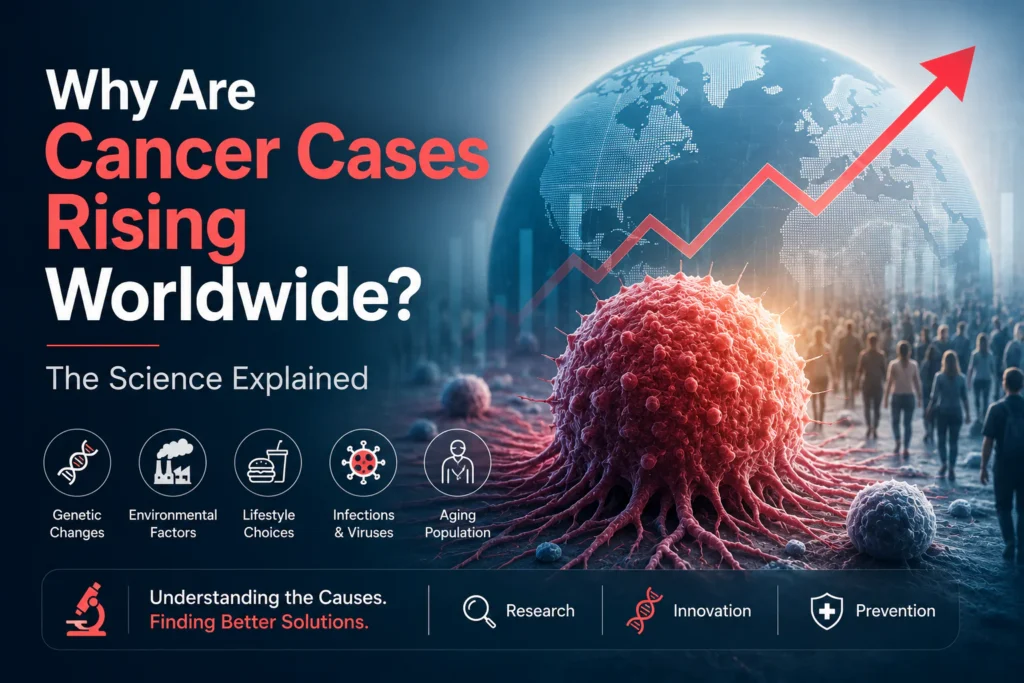
Cancer has become an escalating global health crisis. Decades ago, oncology wards primarily treated older patients. Today, however, the demographic reality looks vastly different. Global health organizations report a massive, unprecedented surge in new cancer diagnoses globally. Even more alarming, these numbers continue to climb among much younger populations. Consequently, scientists and medical experts are urgently searching for definitive answers. They need to understand exactly why this deadly disease is spreading so rapidly.
At Humane Medical Assistance, we witness the impact of this rising tide firsthand. As a medical tourism company in New Delhi, we receive daily inquiries from international patients. They seek urgent access to India’s top oncology centers. Therefore, we understand the incredible stress and confusion surrounding a new cancer diagnosis. We do not operate as a hospital, but rather as your dedicated medical travel partner. Our goal is to empower you with the latest medical insights. Below, we explore the primary scientific reasons why global cancer cases are rising at such an alarming rate.
The Aging Population Factor
The most significant driver of rising cancer rates involves global demographics. Quite simply, people are living much longer than they did a century ago. According to the World Health Organization, life expectancy has increased dramatically worldwide. Consequently, the global population features a massive, growing elderly demographic.
Why does age matter so much in oncology? Cancer is fundamentally a disease of cellular mutation. Over a long lifespan, human cells divide millions of times. Every single cell division carries a tiny risk of a genetic copying error. Furthermore, our aging immune systems become less efficient at identifying and destroying these mutated cells. Therefore, a larger elderly population naturally results in a higher overall number of cancer cases globally.
The Alarming Rise of Early-Onset Cancers
While aging explains part of the problem, it does not explain everything. The most concerning trend involves a sharp rise in early-onset cancers. Specifically, doctors define “early-onset” as a cancer diagnosis occurring in adults under fifty years old. Rates of breast, colon, and pancreatic cancers are spiking aggressively in millennials and Gen X populations.
Researchers attribute this disturbing trend to a complex mix of modern environmental and lifestyle factors. Today’s younger adults have experienced prolonged exposure to certain risk factors from a very early age. Consequently, their cellular DNA sustains damage much faster than previous generations. This reality forces public health officials to rethink their standard screening guidelines entirely.
The Impact of Modern Diets and Obesity
The modern global diet plays a massive, undeniable role in rising cancer rates. Over the past fifty years, human diets have shifted dramatically. People now consume vast quantities of ultra-processed foods, refined sugars, and chemical preservatives. These artificial foods lack essential dietary fiber entirely. Consequently, they severely damage the delicate balance of our gut microbiome. This internal damage is strongly linked to the rapid rise in gastrointestinal cancers.
Furthermore, this dietary shift has fueled a global obesity epidemic. Obesity is no longer just a cardiovascular issue; it is a major oncological risk factor. Excess visceral fat does not just sit inertly in the body. Instead, it actively secretes dangerous inflammatory proteins and hormones constantly. This chronic, low-grade systemic inflammation creates a perfect microenvironment for tumors to thrive.
Environmental Toxins and Air Pollution
Our modern environment exposes us to thousands of synthetic chemicals daily. Many of these chemicals are classified as known endocrine disruptors or direct carcinogens. For example, microplastics and forever chemicals (PFAS) now contaminate global water supplies extensively. While the long-term impact is still being studied, scientists suspect these toxins play a significant role in rising cancer rates.
Additionally, severe urban air pollution presents a massive health threat. In rapidly developing nations, industrial smog and vehicular exhaust fill the air constantly. Long-term exposure to these microscopic particulate matters (PM2.5) damages lung tissue deeply. Consequently, lung cancer rates are surging even among individuals who have never smoked a single cigarette.
Improved Diagnostic Technology
Finally, we must acknowledge a positive factor driving the rising numbers. Medical technology has advanced incredibly over the last two decades. Today, doctors utilize highly sophisticated imaging tools and genomic testing. Consequently, they can detect microscopic tumors much earlier than before.
In the past, many people passed away from undiagnosed cancers. Today, advanced screenings catch these diseases early, which naturally inflates the official statistics. While rising numbers seem frightening, early detection remains the absolute key to successful oncology treatment.
Geographic Excellence: Seeking Oncology Care in India
A cancer diagnosis requires immediate, advanced medical intervention. India currently stands globally as a premier, top-tier destination for expert oncology care. International patients travel to India frequently for world-class medical treatments today.
Cities like New Delhi, Mumbai, and Chennai offer exceptional, cutting-edge medical technology. For example, our partner hospitals utilize advanced robotic-assisted surgical systems daily. Consequently, expert surgeons perform minimally invasive tumor removals with absolute, sub-millimeter precision. Furthermore, they use advanced TrueBeam systems for highly targeted, effective radiation therapy. Effectively, this incredible technology destroys aggressive tumors while sparing healthy tissue completely.
Most importantly, advanced oncology treatments cost up to eighty percent less in India. Thus, you receive world-class care at a highly manageable, affordable price point. Ultimately, you never compromise on clinical excellence or safety.
Your Medical Travel Journey with Humane Medical Assistance
Navigating a foreign medical system feels incredibly overwhelming initially. Therefore, Humane Medical Assistance manages every single logistical detail for you completely. By doing so, we remove the stress so you can focus entirely on healing. First, our team provides the official Medical Invitation Letters promptly and securely. Undoubtedly, you absolutely need this specific letter to secure your Indian Medical Visa.
Furthermore, we arrange comfortable, recovery-focused local accommodations for you and your family. Next, our coordinators schedule your immediate clinical consultations with top Indian oncologists. Ultimately, this ensures you face absolutely zero waiting times for life-saving treatments.
1.Free Medical Evaluation:Clinical Assessment.
Initially, send your current medical reports directly to our expert team. Our oncology panel reviews your specific case within forty-eight hours. Subsequently, they provide a detailed treatment plan and a transparent cost estimate.
2.Visa and Flight Planning:Travel Logistics.
Secondly, we issue your official Medical Invitation Letter immediately. This critical letter allows you to apply for an Indian Medical Visa easily. Furthermore, we assist you in booking the safest, most direct flight routes.
3.Arrival and Expert Treatment:On-ground Support.
Finally, our dedicated care manager welcomes you at the destination airport. We handle your hospital registration and daily transportation completely. Moreover, we stand by your side throughout your entire clinical recovery.
Frequently Asked Questions
Why are cancer cases rising in younger adults specifically?
Early-onset cancers are rising due to prolonged exposure to modern lifestyle factors. Specifically, diets high in ultra-processed foods, rising obesity rates, and increased exposure to environmental toxins play a major role. These factors damage cellular DNA much earlier in life compared to previous generations.
Does early detection actually improve cancer survival rates?
Yes, early detection improves survival rates drastically. When doctors find cancer before it spreads, surgical removal and localized treatments are highly effective. Advanced screening technologies in Indian hospitals ensure accurate, early diagnoses for international patients.
Is it safe to travel to India for advanced cancer treatments?
Yes, medical travel to India remains incredibly safe and common. Top Indian corporate hospitals hold Joint Commission International (JCI) accreditation permanently. Therefore, they follow the strictest global medical and safety protocols. Thousands of international patients trust Indian doctors every single year.
How does Humane Medical Assistance support international cancer patients?
We act as your dedicated, independent medical travel bridge. Specifically, we connect you with India’s top oncology centers seamlessly and quickly. Furthermore, we procure your required Medical Invitation Letter for rapid visa processing. Most importantly, we do not charge you any service fees.